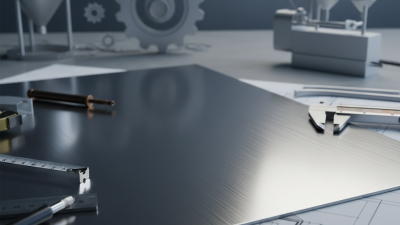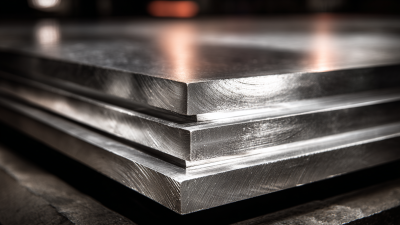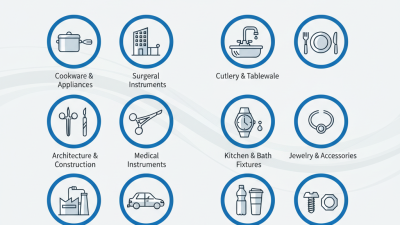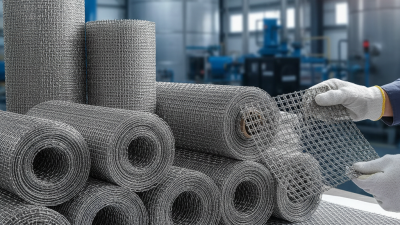
Choosing the best 304 stainless steel for global projects requires more than comparing prices per metric ton. Buyers must examine chemistry, production standards, surface finish, thickness, certification, and actual service conditions. A bright kitchen sheet, a welded process tank, and a coastal architectural panel may all carry the 304 label. Their performance can still differ.
J. R. Davis, a respected metallurgical author, defined stainless steels as “iron-base alloys containing a minimum of about 11% chromium.” That chromium forms the passive film protecting the surface from many corrosive environments. In practice, 304 stainless steel commonly contains chromium and nickel, offering balanced corrosion resistance, formability, and weldability. These qualities explain its popularity in food equipment, construction, medical facilities, and general fabrication.
But “304” is not always enough. Buyers should compare 304L for welded assemblies, 304H for elevated-temperature applications, and certified variants required by project specifications. Mill test certificates, EN 10204 documentation, ASTM or EN compliance, and traceable heat numbers deserve close attention. The cheapest coil can become expensive after failed polishing, unexpected distortion, or delayed customs clearance.
Real experience also brings an uncomfortable lesson. Standard 304 stainless steel can stain or corrode in chloride-rich locations, especially near seawater or chemical splash zones. It is not universally corrosion-proof. Supplier capability matters, too. Consistent annealing, controlled pickling, accurate thickness, and careful packaging often decide whether material performs well after installation.
This guide reviews the leading 304 stainless steel types for international buyers in 2026. It focuses on practical selection, dependable verification, and the details that purchasing teams sometimes overlook. Some choices remain application-specific. That is where careful judgment matters most.

304 stainless steel is an austenitic alloy used across many international markets. Its typical chemistry includes chromium, nickel, iron, and small carbon content. Chromium forms a protective oxide film on the surface. Nickel supports ductility and corrosion resistance. This balance makes 304 easy to form, weld, and maintain. It is not simply rust-proof.
Global buyers often compare three related forms: 304, 304L, and 304H. 304 suits general sheet, tube, tanks, and kitchen equipment. 304L contains lower carbon, which reduces carbide precipitation after welding. That matters in fabricated vessels and long welded assemblies. 304H uses higher carbon for elevated-temperature strength, but it needs careful specification. In practice, fabrication history matters as much as the material label. A certificate alone cannot reveal every service risk.
For coastal projects, chloride exposure deserves close attention. Salt spray can attack 304 faster than many buyers expect. In warm, wet areas, poor drainage may create stubborn surface staining.
Surface finish also changes cleaning performance and appearance. I have seen buyers choose 304 for every environment, then rethink the decision after installation. The cheaper grade may become expensive through cleaning, replacement, or downtime.
Ask for heat numbers, chemical results, mechanical data, and inspection records. Check whether the selected form matches the welding plan. One detail is often missed. 304 is strong and practical, but not universally suitable.
304 stainless steel is not a single universal product. It is classified by chemistry, form, finish, and applicable standards. The base grade contains chromium and nickel, giving it useful corrosion resistance for food equipment, architectural parts, tanks, and general fabrication.
The most familiar type is 304, used for balanced strength and corrosion resistance. 304L contains less carbon, so it reduces carbide precipitation after welding. This makes it practical for welded frames, pipes, and vessels. 304H has higher carbon content and is selected for elevated-temperature service. It is less common in ordinary fabrication. Some specifications also include nitrogen-modified variants for increased strength.
Form changes the buying decision. Sheets may be supplied with bright, brushed, or mill finishes. Tubes can be seamless or welded. Bars may be round, flat, or hexagonal. These are not different chemical grades, but buyers often treat them as separate types. That causes confusion. A purchasing team should check the grade designation, thickness, surface finish, heat treatment, dimensions, and test certificate. Standards may differ between regions, so ASTM and EN references should not be mixed casually. A certificate alone is not enough; the heat number should match the material marking. In practice, classification still feels messy when traders shorten 304, 304L, and 304/304L into one label. That shortcut saves time, but it can create costly mistakes.
| 304 Type | Common Designation | UNS / EN Reference | Typical Chemical Classification | Main Metallurgical Feature | Recommended Service Temperature | Typical Applications | Best Buying Consideration |
|---|---|---|---|---|---|---|---|
| 304 | Standard austenitic stainless steel | UNS S30400 EN 1.4301 |
Chromium: approximately 18–20% Nickel: approximately 8–10.5% Carbon: maximum 0.08% |
Balanced corrosion resistance, formability, weldability and strength. It is generally non-magnetic in the annealed condition. | Suitable for normal ambient and moderately elevated-temperature service. Exact limits depend on load, atmosphere and design code. | Food-processing equipment, kitchen equipment, architectural panels, tanks, tubing, fasteners and general fabrication. | Choose when a versatile, widely available grade is required for general corrosion-resistant fabrication. |
| 304L | Low-carbon 304 | UNS S30403 EN 1.4307 |
Chromium: approximately 18–20% Nickel: approximately 8–12% Carbon: maximum 0.03% |
Reduced carbon content minimizes chromium-carbide precipitation during welding and improves resistance to intergranular corrosion after welding. | Suitable for welded structures exposed to corrosive environments. High-temperature performance is generally lower than that of 304H. | Welded tanks, process piping, pressure-related fabrications, exhaust components, heat exchangers and chemical-processing equipment. | Usually the preferred 304 variant for heavily welded assemblies when post-weld solution annealing is impractical. |
| 304H | High-carbon 304 for elevated temperature | UNS S30409 EN 1.4948 |
Chromium: approximately 18–20% Nickel: approximately 8–12% Carbon: approximately 0.04–0.10% |
Higher carbon content supports improved creep and stress-rupture strength at elevated temperatures compared with standard 304. | Intended for elevated-temperature pressure and process service. The allowable temperature must be determined using the applicable design code. | High-temperature piping, pressure vessels, furnace components, refinery equipment and heat-treatment equipment. | Select when elevated-temperature strength is more important than maximum weldability and low-temperature sensitization resistance. |
| 304N | Nitrogen-strengthened 304 | UNS S30451 |
Chromium: approximately 18–20% Nickel: approximately 8–11% Nitrogen: typically about 0.10–0.16% |
Nitrogen increases yield strength while retaining the austenitic structure and good general corrosion resistance. | Appropriate for ambient and moderately elevated-temperature service; application-specific strength and code requirements should be checked. | Structural components, pressure-related parts, transportation equipment, chemical-processing assemblies and high-strength fabrications. | Choose when higher strength is needed without moving to a different stainless-steel family or substantially increasing section thickness. |
| 304 with 2B Finish | Cold-rolled commercial finish | ASTM A240 / A480 finish designation | Usually produced from 304 or 304L chemistry. Finish designation does not change the base alloy grade. | Smooth, reflective industrial surface produced by cold rolling, annealing, pickling and light skin passing. | Service temperature is governed by the underlying 304 chemistry and the engineering design, not by the surface finish. | General fabrication, tanks, appliances, food equipment, panels and parts that may receive additional polishing or forming. | A practical default for general-purpose sheet and coil where a smooth mill finish is acceptable. |
| 304 with No. 4 Finish | Brushed or satin finish | ASTM A480 finish designation | Usually produced from 304 or 304L chemistry. The visible grain is created by abrasive finishing. | Directional satin appearance with moderate scratch concealment and easier visual maintenance than a mirror-polished surface. | Service temperature is governed by the underlying alloy and application conditions. | Commercial kitchens, elevators, wall cladding, food-service equipment, handrails and visible architectural components. | Select when appearance, cleanability and controlled surface texture are important but a mirror finish is unnecessary. |
| 304 with BA Finish | Bright-annealed finish | Bright-annealed product designation | Usually produced from 304 or 304L chemistry. The bright appearance results from controlled annealing and surface protection during processing. | Smooth, bright and highly reflective surface with low visual roughness. | Service temperature is governed by the underlying alloy grade and product design. | Decorative panels, appliances, automotive trim, precision-formed parts and applications requiring a bright reflective surface. | Choose when a bright appearance and smooth surface are required without specifying a mechanically mirror-polished finish. |
| 304 Seamless Tube | Seamless tubular product form | ASTM A213, A269 or A789 may apply according to service | Base chemistry is normally 304 or 304L. The applicable product specification controls dimensions and testing. | No longitudinal weld seam; useful where cleanliness, pressure integrity or demanding forming requirements are important. | Temperature rating depends on grade, wall thickness, pressure code, fluid and operating conditions. | Instrumentation, heat exchangers, process tubing, hydraulic systems and sanitary installations. | Verify the required standard, outside diameter, wall thickness, hydrostatic or nondestructive testing and surface condition. |
| 304 Welded Tube | Welded tubular product form | ASTM A249, A269 or A270 may apply according to service | Base chemistry is normally 304 or 304L. Weld quality, heat treatment and testing depend on the specification. | Efficient production, consistent dimensions and broad availability; the weld zone must be suitable for the intended service. | Temperature rating depends on the product specification, weld condition, wall thickness and design requirements. | Sanitary piping, heat exchangers, structural tubing, water systems and general process equipment. | Confirm weld integrity, internal cleanliness, bead condition, dimensional tolerance and required surface roughness. |
For global buyers, “304 stainless steel” is not one uniform product. The main choices are 304, 304L, 304H, and nitrogen-strengthened 304N. ASTM A240 data typically lists 304 and 304L with a minimum tensile strength of 515 MPa and yield strength of 205 MPa. Their difference is carbon content. 304L limits carbon to 0.030%, reducing carbide precipitation after welding. This matters around tanks, food-processing frames, and long welded seams.
304H usually contains 0.04–0.10% carbon. It is designed for stronger performance at elevated temperatures, not simply better corrosion resistance. 304N adds nitrogen, which can improve yield strength without heavy cold working. However, nitrogen control and forming conditions need closer attention. EN 10088-2 and ASTM A240 requirements should be checked together, because equivalent grades may not have identical chemical limits or delivery conditions.
Real-world selection should reflect the service environment. The World Stainless Association reported approximately 58.4 million tonnes of crude stainless steel production in 2023, showing the scale of international sourcing. Yet volume can hide quality differences. In my experience, buyers often compare only the “304” label and overlook weld history, surface finish, and heat exposure. That is a costly shortcut. A polished sheet may look excellent under warehouse lighting, but chloride residue can still trigger staining. I would also avoid promising universal corrosion resistance; coastal air, cleaning chemicals, and fabrication defects can change the result quickly.
2026 Best 304 Stainless Steel Types for Global Buyers
Choosing the right 304 type starts with the working environment, not the lowest quotation. Standard 304 suits kitchen equipment, indoor panels, tanks, and general fabrication. For welded structures, 304L is often safer because its lower carbon content reduces carbide precipitation. This matters after repeated welding and heat exposure. 304H contains more carbon and supports elevated-temperature service, but pressure equipment codes must confirm its suitability. 304N can provide higher strength through nitrogen, although availability differs between markets.
Tips: Ask for the material grade, applicable standard, heat number, and mill test certificate. Check chemical composition, tensile results, thickness, and surface finish. For chloride exposure, test the real environment. Stainless steel is not automatically immune to staining. A polished surface can still fail near saltwater.
In practical sourcing, buyers should compare 304, 304L, and 304H against fabrication plans and service temperatures. Do not select 304L only because it sounds more advanced. It may be unnecessary for simple, unwelded parts. Conversely, standard 304 may create avoidable risks in heavily welded assemblies. Confirm dimensions after forming, since springback can affect fit. Independent positive material identification can catch labeling errors. Small details matter. One overlooked specification can delay production, and that lesson is easy to learn too late.
How to choose the right 304 type for your application: compare the representative midpoint of the specified chromium and nickel ranges by weight.
304 and 304H are commonly selected for general fabrication and elevated-temperature service, 304L is preferred for welded components because of its low carbon limit, and 304N is used when higher nitrogen-strengthened mechanical performance is required. Values shown are midpoints calculated from commonly used ASTM/ASME chemical-composition ranges; always verify the exact product standard and certificate.
Global Buying Standards, Quality Checks, and Supplier Factors
Global buyers should define the 304 grade before comparing prices. The common choices include 304, 304L, and 304H. Low-carbon 304L suits welded equipment, while 304H supports elevated-temperature service. Surface options also matter. A 2B finish is practical for industrial fabrication, while BA offers a brighter appearance.
World Stainless reported approximately 58.4 million tonnes of stainless steel production in 2023. That scale increases supply options, but it also increases verification risks. ASTM A240/A240M and EN 10088-2 provide useful reference points for chemical composition, mechanical properties, and dimensions. Ask for a material test certificate linked to each heat number. Small details matter.
A reliable inspection process should include thickness mapping, surface checks, and positive material identification. X-ray fluorescence can screen chromium and nickel, but it cannot accurately verify carbon. Optical emission testing is more suitable when carbon content affects the 304L or 304H decision. Check whether inspection instruments have current calibration records.
Supplier evaluation needs more than a polished website. Review traceability, packing quality, production capacity, and documented nonconformance handling. Request photos of edge protection and moisture barriers before shipment.
A low quotation may signal efficiency, or hidden compromises. It is not proof by itself. Buyers should also confirm tolerances, test standards, certificate language, and replacement procedures in writing.
One practical mistake is trusting certificates without matching heat numbers to the delivered coils or sheets.