
Global buyers entering 2026 need more than a low-price comparison of Round Slings. They need evidence, traceability, and practical performance. Grand View Research’s lifting equipment analysis points to continued growth in industrial handling demand. MarketsandMarkets also identifies automation, infrastructure investment, and safer material movement as major market drivers. These trends are changing purchasing decisions.
A strong 2026 shortlist should examine rated capacity, sling length, protective sleeves, stitching quality, and inspection records. Buyers should also compare local standards, including ASME B30.9 and relevant European lifting requirements. A sling may look identical on a warehouse shelf, yet differ greatly in fiber quality and manufacturing control. Small details matter. Label clarity matters too.
Mike Parnell, a recognized rigging-training specialist, has emphasized, “The weakest link in a rigging system is often the human element.” That warning remains highly relevant. Correct selection can fail when workers misuse, overload, drag, or poorly store a sling. Reports provide useful market direction, but they cannot replace hands-on inspection. This ranking therefore considers product construction, supplier transparency, documented testing, and field practicality. It is not perfectly universal. Buyer conditions vary by climate, load geometry, industry, and training level. That limitation deserves attention. The best Round Slings for one port, factory, or construction site may not suit another. Reliable purchasing begins with realistic application details, not attractive catalog language.
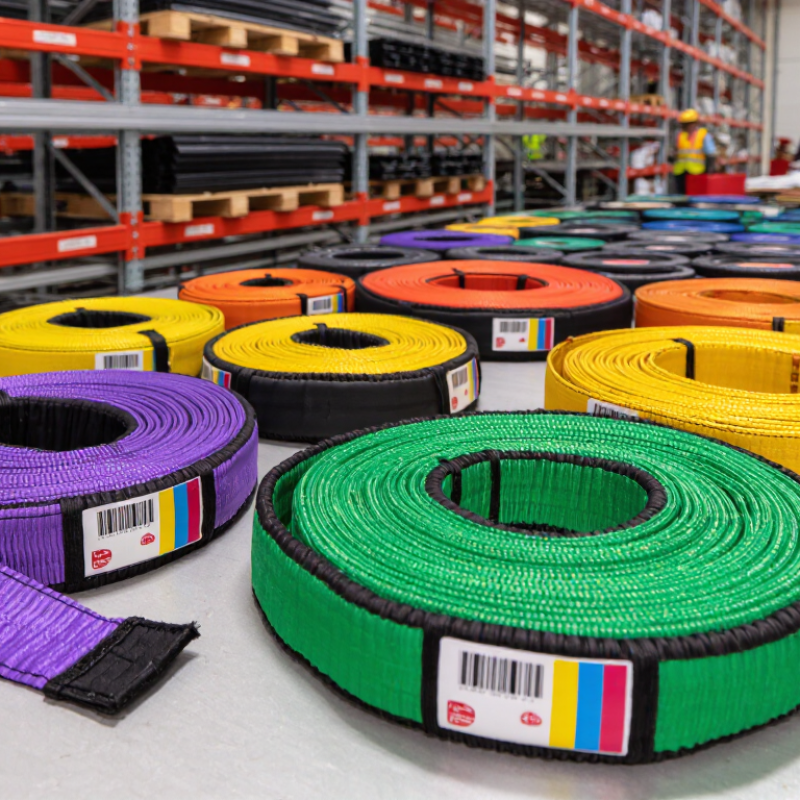
Round slings differ mainly in construction, cover design, capacity, and flexibility. Endless round slings form a continuous loop. They suit choker, basket, and vertical arrangements. Eye-and-eye slings offer two reinforced eyes for controlled connection. They are practical for repeated warehouse lifting.
High-tenacity polyester remains popular because it is flexible and resistant to many common workplace conditions. However, chemical exposure, sharp edges, heat, and abrasion can reduce performance quickly. A sling’s working load limit depends on its configuration. Basket, choker, and angled lifts can produce very different capacities. The angle matters. Never estimate it casually. Buyers should check the manufacturer’s data tag, inspection records, and applicable lifting requirements before use. Local conditions may expose weaknesses that a catalog cannot show.
Tips: Match the sling length to the load and lifting path. Use edge protection around corners. Keep the sling flat and untwisted. Inspect for cuts, melted fibers, loose stitching, discoloration, or damaged labels. Remove questionable slings from service. A clean appearance does not prove safety. Experienced teams also review how workers connect hooks and hardware, because handling errors often matter as much as material quality. No sling type is perfect for every site, and that limitation deserves honest attention.
What Are the 2026 Top Round Slings for Global Buyers?
Key Safety Standards for Round Slings in Global Markets
For global buyers, a top round sling is not simply the strongest-looking product. It must carry clear working load limit information, traceable identification, and tested performance. EN 1492-2 covers roundslings made from man-made fibres in many European markets. ASME B30.9 provides widely used requirements for sling selection, inspection, and operation in North America. These standards are not automatically interchangeable. Confirm the destination market before purchasing.
Read the label carefully. Check working load limits for vertical, choker, and basket configurations. Sling angles can sharply reduce capacity. Sharp edges need suitable protection, not improvised fabric scraps. Heat, chemicals, sunlight, and repeated abrasion can weaken fibres. OSHA 1910.184 also requires inspection and removal from service when serious damage appears. A damaged sling is never “nearly acceptable.”
The ILO’s 2023 report estimated 2.93 million work-related deaths worldwide in 2019, plus about 395 million non-fatal injuries. These figures are not sling-specific, but they show why lifting controls deserve attention. Field inspections often find missing tags, unclear capacity charts, or storage beside solvents. Small failures matter. Buyers should request conformity documents, inspection guidance, and batch traceability before shipment. A certificate helps, but it cannot replace competent inspection. That remains an uncomfortable truth.
The design factor is the ratio between minimum breaking force and rated working load limit (WLL). EN 1492-2 specifies a 7:1 design factor for textile round slings, AS 4497 specifies a 6:1 factor for roundslings, and ASME B30.9 specifies a 5:1 factor for synthetic roundslings. These values are not product rankings; buyers should confirm the applicable standard edition, WLL tables, inspection rules, labeling, and local lifting regulations before purchase.
For global buyers, the best round sling is not always the strongest one. Choose by fit, not maximum strength. Check the working load limit for vertical, choker, and basket configurations. These ratings can differ sharply. A 3-meter sling may suit compact machinery, while a 6-meter sling can improve balance around wide cargo. Longer is not always safer.
Load weight comes first. Then geometry. A basket hitch can provide greater capacity than a vertical hitch. Use that rating only when both legs share the load evenly. Keep the lifting angle within the supplier’s guidance. A narrow angle can overload each leg. Use edge protection around sharp corners, rough steel, and heated surfaces. Protect the sling, not just the cargo.
Inspect the cover before every lift. Look for cuts, melted fibers, pulled stitching, chemical damage, or crushed sections. Remove questionable slings from service. Do not guess. In real handling work, people sometimes select capacity from memory, then discover the load is longer, off-center, or heavier than stated. That habit needs correction. Confirm the load data, hitch method, sling length, and site conditions with a competent lifting professional. A reliable selection is documented, checked, and still questioned before the hook leaves the ground.
For global buyers in 2026, round sling selection begins with material choice. A sling’s performance starts with its fiber, not its color or label. High-tenacity polyester remains practical for many lifting applications. It offers low stretch and good resistance to common outdoor conditions. Polyamide can absorb more energy, but moisture may change its behavior. In humid ports or outdoor yards, that difference matters. Request fiber specifications, capacity charts, and traceable test records.
Construction deserves equal attention. A tightly woven cover should protect load-bearing fibers from abrasion and dirt. Look for balanced stitching, reinforced eyes, and smooth transitions at bearing points. Uneven seams can expose weak areas. The sling should bend naturally around a load, without hard folds or crushed sections.
I have seen capacity decisions made from appearance alone. That habit is unreliable. Measure width, cover condition, and identification markings before use.
Performance depends on angle, edge contact, temperature, chemicals, and hitch type. A vertical rating cannot be copied into a choker or basket lift. Use edge protection when steel corners could cut or compress the sling. Heat and chemical exposure require specific compatibility checks. Buyers should compare working load limits, test methods, inspection guidance, and replacement criteria. A long warranty does not prove superior lifting performance. The specification may still be incomplete. A field trial with representative loads can reveal handling problems that laboratory figures miss.
For global buyers, a top round sling is not defined by price or appearance. It must show traceable materials, rated capacity, length, batch number, and inspection history. EN 1492-1 requires clear marking and safety information for textile lifting slings. ASME B30.9 also emphasizes periodic inspection, removal criteria, and safe operating practices. A supplier should provide test certificates linked to each production batch, not generic documents.
Inspection records deserve close attention. Check for cuts, melted fibers, chemical staining, pulled stitching, and damaged labels. A clean surface can still conceal internal fiber damage. In practical audits, inconsistent label colors and missing serial numbers often reveal weak control systems. Suppliers should explain inspection frequency, sampling methods, and corrective actions. Independent laboratories operating under ISO/IEC 17025 can strengthen test reliability, although laboratory status alone does not prove product quality.
Supplier evaluation should include factory audits, operator training, calibration records, and raw-material traceability. The International Labour Organization reported nearly 2.93 million work-related deaths and 395 million non-fatal injuries worldwide in its 2023 safety report. These figures are not sling-specific, but they show why documented control matters.
Buyers should also compare declared capacity with actual test results. This step is sometimes skipped. That is a mistake. Certificates may look complete, yet poor storage, unclear rejection procedures, or rushed inspections can still create serious risk.