
2026 Top Small Umbrella Types for Global Buyers

Small Umbrella products are entering 2026 with sharper expectations. Global buyers now want compact protection, not merely a smaller canopy. Grand View Research identifies product innovation, portability, and weather resistance as important forces supporting umbrella-market growth. Fortune Business Insights also projects continued expansion, although market estimates vary by region, category, and distribution channel.

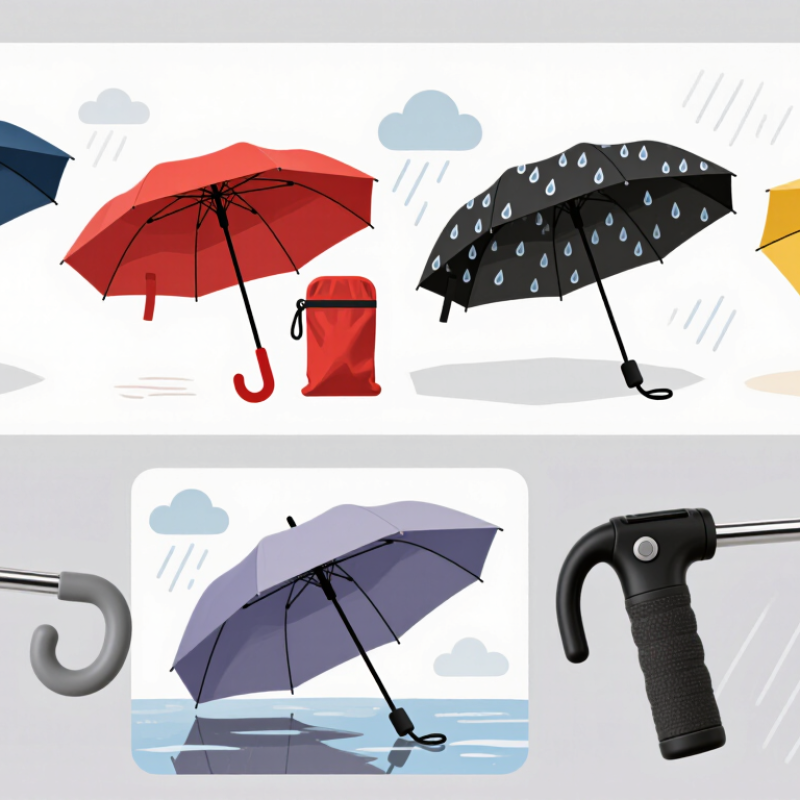
This guide examines the leading Small Umbrella types for international sourcing: three-fold travel umbrellas, five-fold pocket models, windproof compact umbrellas, reverse-opening designs, and UV-protection versions. Each type solves a different problem. A five-fold umbrella may fit inside a 16-centimeter pouch, yet its short ribs can reduce stability. A vented windproof model may survive stronger gusts, but it often needs a larger bag. Small details matter. Handle grip, shaft corrosion, automatic mechanisms, canopy tension, and drying time can influence real customer satisfaction.

“Portability should never be achieved by sacrificing everyday usability,” says Gerard van der Laan, co-founder of Dutch umbrella brand Senz°. His design philosophy remains useful for buyers comparing compact formats. Still, no umbrella is universally superior. That is the uncomfortable part. A lightweight model can feel fragile, while a reinforced frame may become too heavy for commuting. Buyers should test samples in realistic conditions, review failure rates, and compare supplier claims with independent inspection results. Euromonitor’s consumer research also highlights the growing value of convenience and functional design across personal accessories. The best 2026 choice will therefore depend on climate, retail price, shipping limits, and customer habits—not appearance alone.
2026 Top Small Umbrella Types for Global Buyers

Small Umbrella Categories and Their Defining Features

Compact folding umbrellas remain the practical choice for commuters and travel retailers. Their telescopic shafts fit handbags, laptop cases, and vehicle consoles. A 90–105 centimetre open canopy usually balances portability and basic rain coverage. Grand View Research estimates the global umbrella market could grow at about 3.7% annually from 2023 to 2030. This supports steady demand for space-efficient designs.

Ultra-mini umbrellas reduce folded length further, often below 20 centimetres. They are convenient, but their narrow canopies can leave shoulders exposed. Buyers should check rib strength, shaft alignment, and closure quality before ordering large quantities. Reverse-folding umbrellas use an inward-closing canopy. Wet fabric stays enclosed, which helps in cars and small entryways. However, the double-layer construction may increase weight and drying time.

Automatic compact umbrellas open quickly with one button. Manual models usually offer simpler mechanisms and easier maintenance. In product inspections, I would test opening cycles, seam leakage, and resistance around the runner. Wind performance also needs careful interpretation. Laboratory claims do not always reflect crowded streets or sudden gusts. Allied Market Research has identified convenience, portability, and changing weather patterns as important umbrella-market demand factors. Recycled polyester can improve the material story, but buyers should request traceability documents rather than trust vague claims. Small umbrellas are useful. They are not always durable.

2026 Top Small Umbrella Types for Global Buyers

Typical dimensions help buyers compare small umbrella categories. Values represent common retail specifications rather than any company or brand.

Mini folding umbrellas prioritize pocket portability, while compact, flat, automatic, and reverse-folding designs provide progressively more canopy coverage or operating convenience. Actual dimensions vary by model.

Compact Umbrella Designs for Different Travel Needs

Compact umbrellas in 2026 are becoming more travel-specific, not simply smaller. A daily commuter may prefer a five-fold model that fits beside a phone. Its short handle and quick opening suit crowded trains and narrow sidewalks. However, extra folding points can increase mechanical wear. It disappears easily. That trade-off matters.

For beach walks or city sightseeing, a compact wind-resistant umbrella needs a flexible frame and a secure wrist strap. Choose a canopy with enough coverage for one adult and a small shoulder bag. Vent panels can reduce sudden lifting during gusts. They cannot replace careful handling in severe weather. I have found that a slightly larger folded length often feels more dependable.

Air travelers may value an ultra-light umbrella with a protective sleeve and a simple manual opening system. Manual designs usually reduce battery concerns and avoid unnecessary parts. For hiking, a compact umbrella with a pointed tip, textured grip, and quick-drying fabric can be more practical. Yet a very light frame may feel unstable in strong wind. Check the ribs, stitching, and shaft before every trip. Small defects are easy to ignore until rain starts.

A useful choice depends on movement, storage, and expected weather. Measure your luggage pocket before ordering. Also, do not trust folded size alone; canopy width and weight affect real comfort.

Materials, Frames, and Mechanisms Used in 2026 Models

Small umbrellas in 2026 are becoming compact engineering products, not simple rain accessories. Grand View Research’s 2024 Umbrellas Market report estimates the global market at about USD 7.8 billion in 2023, with steady growth expected through 2030. That expansion increases demand for lighter materials, stronger ribs, and dependable opening systems.

Many new models use recycled polyester pongee for the canopy. It offers a smooth hand feel and supports tighter folding. Water-repellent coatings are also changing, with buyers asking suppliers to document chemical composition and durability. Fiberglass ribs resist bending and corrosion, while aluminum shafts reduce weight. Steel remains useful for low-cost strength, although it can add noticeable bulk. Small detail. Handle texture matters when hands are wet.

Manual frames usually offer fewer failure points and simpler repairs. Automatic open mechanisms improve convenience, but springs and release buttons require careful cycle testing. Some 2026 designs combine aluminum shafts with fiberglass ribs, balancing portability and flexibility. The ASTM F963 standard is not an umbrella standard, so professional buyers should request product-specific tests for opening cycles, wind resistance, fabric leakage, and sharp edges. Intertek’s 2024 consumer-products testing guidance emphasizes traceability and performance verification across supply chains. In practice, specifications can look impressive but still miss daily handling problems. A compact umbrella may fold beautifully and fail after repeated wet storage. Supplier sampling should include real-use checks, not only laboratory measurements.

Weather Protection, Portability, and Everyday Performance

Small umbrellas now serve more than sudden showers. Global buyers compare weather protection, portability, and daily comfort before placing an order.

Compact folding umbrellas fit handbags, work bags, and vehicle compartments. Their closed length often measures below 30 centimeters. A six- or eight-rib frame can balance weight and coverage. However, smaller canopies leave shoulders exposed during wind-driven rain. That trade-off deserves honest product testing.

Wind-resistant models use flexible ribs and reinforced joints. They may recover after bending, but no small umbrella defeats every gust. Reverse-opening designs reduce dripping when users enter cars or buildings. They can still feel awkward in crowded sidewalks. UV-protection umbrellas add value in hot climates, especially with coated fabrics and darker interiors. ISO 811 hydrostatic-pressure testing can help assess fabric water resistance, although it does not measure the complete umbrella.

Weather demand is becoming less predictable. The World Meteorological Organization reported 2023 as the warmest year on record, with extreme weather affecting many regions. This supports practical, multi-weather designs rather than single-purpose products. Grand View Research identifies rising demand for portable and innovative umbrellas within the wider umbrella market. Yet market forecasts vary by research method and region. Buyers should check canopy diameter, packed weight, frame recovery, handle grip, and drying time. These details matter more than attractive specifications. A lightweight model may be easier to carry, but tiring to hold in strong rain. Small choices matter.

2026 Top Small Umbrella Types for Global Buyers - Weather Protection, Portability, and Everyday Performance

Umbrella Type Typical Canopy Diameter Folded Length Typical Weight Wind Performance Weather Protection Best Everyday Use Main Advantages Common Limitations
Manual Folding Umbrella 90–105 cm 22–30 cm 220–350 g Moderate; depends on frame and venting Good for light to moderate rain Daily commuting, handbags, backpacks Lightweight, compact, usually lower cost, simple mechanism Requires two hands to open; smaller coverage than full-size umbrellas
Automatic Folding Umbrella 95–110 cm 28–34 cm 300–450 g Moderate; moving parts require careful construction Good protection for routine rain Public transport, business travel, quick entry and exit Fast one-button operation; convenient when carrying items Heavier and more mechanically complex; may cost more
Reverse-Opening Umbrella 95–108 cm 30–36 cm 350–500 g Moderate to good, depending on rib structure Good rain protection; helps contain dripping water after use Cars, offices, elevators, crowded entrances Can close from the outside inward; useful in confined spaces Bulkier and heavier; can be slower to dry
Windproof Vented Umbrella 95–115 cm 27–34 cm 300–480 g Good; vents can reduce pressure buildup Good for rain with occasional strong gusts Coastal areas, exposed streets, changeable weather Better stability than basic compact designs; improved durability Vented canopy may allow some spray through; no umbrella is storm-proof
Ultra-Compact Travel Umbrella 85–98 cm 15–22 cm 150–260 g Low to moderate Adequate for short, light rain showers Air travel, emergency carry, small purses and daypacks Very small and easy to store; lowest carrying burden Reduced canopy coverage and lower resistance to strong wind
UV-Blocking Compact Umbrella 90–105 cm 22–30 cm 230–380 g Low to moderate Rain protection plus shade; performance depends on fabric testing Sunny climates, walking, outdoor waiting areas Dual-purpose use; coated fabric can improve shade and water resistance Coatings may add weight; dark fabrics can become warm in direct sun
Mini Golf-Style Umbrella 115–135 cm 70–95 cm 400–650 g Good; larger frame generally improves stability Very good single-person coverage Walking, outdoor work, golf and extended exposure Largest coverage among small-format options; comfortable shoulder protection Too long for many handbags; less convenient on crowded transport
Kids' Compact Umbrella 70–85 cm 40–55 cm 220–350 g Low to moderate Suitable for light rain and supervised use School journeys and family travel Child-sized handle and canopy; bright visibility options are available Limited coverage and greater vulnerability to rough handling

Reference note: Dimensions and weights are typical market ranges for small umbrellas and vary by canopy material, frame design, handle type, and manufacturing specification. Wind performance is comparative rather than a universal certified rating; actual results depend on gust speed, direction, and correct use.

Global Buyer Criteria for Selecting the Right Small Umbrella

Global buyers need more than a small umbrella that fits inside a bag. The right choice depends on climate, travel habits, and expected use. A folded length of 25 to 30 centimeters suits commuters and airline travelers. However, extremely light models may feel fragile during repeated opening. Check the frame material, rib connections, and shaft stability. A canopy around 95 to 105 centimeters can protect one adult without becoming difficult to carry.

Water repellency matters, but it is not the only performance measure. Buyers should inspect fabric density, stitching, handle comfort, and the closing mechanism. In humid markets, quick-drying fabric can reduce unpleasant odors. In sunny regions, UV-resistant materials may add practical value. Wind performance should be tested realistically, not judged by advertising language. A compact umbrella may survive a sudden shower but struggle in strong gusts. That limitation should be stated honestly. Packaging also deserves attention, especially when products travel through long supply chains. Poor packaging can bend ribs before the customer uses the umbrella.

Tips: Request product samples before placing large orders. Measure the folded size with the cover included. Ask suppliers for material details, test methods, and inspection records. Compare opening cycles, not just appearance. A simple repeated-use test can reveal loose joints or difficult buttons. Keep spare units for quality checks. No checklist is perfect. Buyer feedback may expose problems that factory testing misses, especially with wet hands, crowded bags, or frequent daily use.

Go to Top