2026 Top Weld Mesh Types for Global Buyers

Global buyers choose weld mesh for fencing, construction, agriculture, and industrial projects. The right type depends on its setting, expected load, exposure, and installation method. A mesh panel beside a coastal warehouse faces different conditions from reinforcement mesh inside a concrete slab.

This guide compares common options, including galvanized, stainless steel, PVC-coated, and reinforcing mesh. It also considers welded wire rolls and panels used for animal enclosures or site boundaries. Details matter. Wire diameter, aperture size, weld consistency, and coating thickness can affect fit, durability, and maintenance. Product names alone are not enough; buyers should request clear specifications and check that samples match the order.

For international shipments, packaging and documentation deserve attention too. Panels may need edge protection, while rolls need secure wrapping to prevent deformation in transit. Buyers can compare test reports, stated tolerances, and quality-control records, but should confirm that documents apply to the exact product being purchased. Small differences count. A suitable mesh for one climate or application may underperform in another, and no single type suits every project. This overview offers a practical starting point for comparing products and asking suppliers focused questions before placing an order.
2026 Top Weld Mesh Types for Global Buyers

What Weld Mesh Is and How Its Structure Is Formed

2026 Top Weld Mesh Types for Global Buyers

What Weld Mesh Is and How Its Structure Is Formed

Weld mesh is a grid of metal wires joined where they cross. Longitudinal wires run in one direction; transverse wires sit across them at regular intervals. At each meeting point, the wires are typically joined by resistance welding, creating a fixed, square or rectangular pattern. Unlike woven mesh, its wires do not bend over and under each other.

Wire diameter, spacing, and material shape how the mesh performs. A tighter grid can help contain smaller objects, while thicker wires may offer greater rigidity. For example, a panel with 50-millimetre openings feels and behaves differently from one with 100-millimetre openings. Mesh is commonly supplied in sheets or rolls, depending on its intended use. Coatings may be applied to help resist corrosion, but coating quality and weld coverage can vary. A tidy grid is not proof of uniform weld strength. That detail deserves a closer look.

Which Materials and Coatings Are Used in Weld Mesh

2026 Top Weld Mesh Types for Global Buyers
Which Materials and Coatings Are Used in Weld Mesh

Weld mesh is commonly made from low-carbon steel, stainless steel, or aluminum. Low-carbon steel offers strength and easy fabrication, making it a practical choice for fencing, partitions, and concrete reinforcement. Stainless steel resists corrosion well, especially in damp or coastal settings, but usually costs more. Aluminum is lighter and naturally forms a protective oxide layer, though it may not suit every load-bearing application. The right material depends on the environment, required strength, and expected service life.

Coatings add another layer of protection. Galvanized mesh receives a zinc coating, either before welding or after the wires are joined. Post-weld galvanizing can cover weld areas and cut edges more thoroughly, but the finished surface may look less uniform. PVC-coated mesh adds a colored polymer layer over galvanized wire; check that it is firmly bonded and free from cracks. Powder coatings are another option for a smooth finish, though damaged spots can expose the steel beneath. No coating is magic. Inspect welds, edges, and coating thickness, and ask how the mesh will be used. A neat sample helps, but real exposure can still surprise you.

What Are the Main Types of Weld Mesh in 2026

In 2026, the main welded mesh types are best understood by material, finish, and intended use. Plain carbon-steel mesh is widely used for cages, partitions, and general fencing. It comes in rolls or rigid panels, with square or rectangular openings. Check wire diameter and aperture together; a small opening alone does not make a panel strong. Practical detail matters. Galvanized mesh resists rust through a zinc coating. Some products are galvanized before welding, while others are coated afterward. Post-weld coating can better cover weld points, though finish and coating quality still vary. PVC-coated mesh adds a colored outer layer and a smoother touch, but damaged coating may expose the steel beneath.

Stainless-steel welded mesh suits wet, washdown, or chemically demanding settings, but the right grade depends on exposure and cleaning chemicals. It costs more. For concrete work, welded reinforcing mesh is supplied in sheets or rolls to help control cracking. It must be supported and positioned as the design specifies, not simply laid on the ground. Heavy-gauge panels also serve in machine guards and animal enclosures, where edge finish and opening size affect safety. I would not choose by catalog name alone. Compare dimensions, weld consistency, coating thickness, and stated tolerances, then inspect a sample if possible. A mesh that looks neat in a photograph may still be too flexible for a long, unsupported span.

Where Different Weld Mesh Types Are Commonly Used

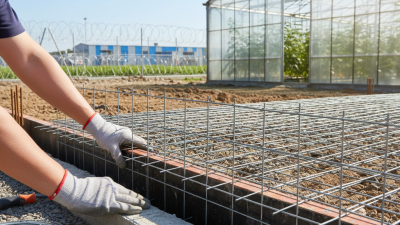
Where different types are used depends on load, exposure, and installation method. Welded reinforcing mesh is common in concrete slabs, driveways, warehouse floors, and road pavements. Its regular grid helps crews position steel before a concrete pour. Not a cure-all. Thick bars or complex foundations may need another reinforcement layout.

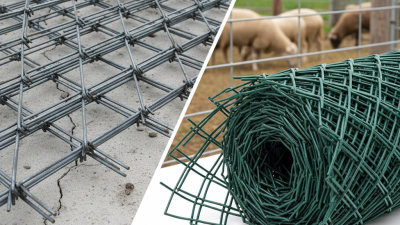
Galvanized welded mesh suits boundary fences, animal enclosures, and storage partitions where weather resistance matters. PVC-coated mesh is often chosen for garden fencing, while stainless-steel mesh is useful in damp, hygienic, or corrosive settings, such as food-processing areas.

Worldsteel reported 1,849.7 million tonnes of crude steel production in 2023 in World Steel in Figures 2024. This is not a mesh-demand figure; it indicates the scale of the steel supply base. UN DESA’s World Urbanization Prospects: The 2018 Revision projects that 68% of the global population will live in urban areas by 2050. That growth can increase demand for building and infrastructure materials.

Still, site exposure can change the choice. A coastal fence may corrode sooner than expected. Specification matters.

How Global Buyers Can Compare Weld Mesh Specifications and Standards

Global buyers should compare welded mesh by measured properties, not product names alone. Start with aperture size and wire diameter, and confirm whether dimensions are nominal or subject to stated tolerances. A 50 mm opening can describe different products if the wire thickness or measurement method changes. Ask for a dimensioned drawing and verify sample measurements with suitable calipers.

Material and finish affect performance in service. Check the steel grade, coating type, and coating mass or thickness, where applicable. For outdoor use, consider moisture, salt exposure, and expected maintenance. A bright surface is not proof of a durable coating. Request relevant test reports and a material certificate, then match them to the actual production batch.

Standards vary by destination and application. Compare the supplier’s cited standard and edition with the project specification; do not assume two similar references set identical requirements. Confirm weld integrity, dimensional tolerances, sampling frequency, and acceptance criteria in writing. Short checks help. A clear report should identify the test method and results, not just say “passed.” Packaging and transport can also bend panels or distort rolls, so inspect goods on arrival. Even careful checks leave some uncertainty, especially when production lots vary. That deserves a second look.

2026 Top Weld Mesh Types for Global Buyers - How Global Buyers Can Compare Weld Mesh Specifications and Standards

Weld Mesh Type Typical Wire Diameter Typical Aperture / Spacing Material and Finish Common Applications Standards to Check Key Buyer Comparison Points
Uncoated mild-steel welded mesh About 1.0–6.0 mm About 6–100 mm; square and rectangular openings are available Low-carbon steel wire; normally supplied without a corrosion-resistant coating Indoor partitions, machine guards, fabrication, screening, and general-purpose panels Confirm the applicable wire and finished-product requirements for the intended use; dimensions and tolerances should be stated on the purchase specification. Check wire diameter, opening size, sheet or roll dimensions, weld integrity, flatness, and whether the mesh will receive a coating after fabrication.
Hot-dip galvanized after welding About 1.5–6.0 mm About 12–100 mm, depending on product design Carbon-steel mesh fabricated first and then hot-dip galvanized; coverage includes the welded intersections Outdoor fencing, agricultural enclosures, racks, and general corrosion-exposed applications ISO 1461 may apply to hot-dip galvanized coatings on fabricated iron and steel articles. Confirm coating requirements and measurement method with the buyer’s specification. Specify coating mass or thickness, coating appearance, uncoated areas, dimensional changes after galvanizing, and any repair acceptance criteria.
Welded mesh made from galvanized wire About 1.0–4.0 mm About 6–100 mm Wire is zinc-coated before welding; weld points may have reduced coating protection Light-duty fencing, cages, storage, and indoor or moderately exposed uses ASTM A641/A641M covers zinc-coated carbon-steel wire. EN 10244-2 is a relevant European reference for metallic coatings on steel wire. Check the stated product scope and edition. Ask how weld locations are protected, and compare coating class, wire core diameter, finished diameter, coating uniformity, and intended exposure conditions.
Stainless-steel welded mesh About 0.5–6.0 mm About 6–100 mm; finer openings may be available for specialty uses Stainless-steel wire; grade selection should reflect corrosion exposure, temperature, and cleaning conditions Food-processing equipment, chemical handling, marine-adjacent uses, filtration, and architectural panels ASTM A580/A580M covers stainless-steel wire. EN 10088 provides European stainless-steel designations and material information. Verify the required grade and product form. Confirm alloy grade, wire diameter, aperture, weld quality, surface condition, and whether cleaning or passivation is required. Do not select by the term “stainless” alone.
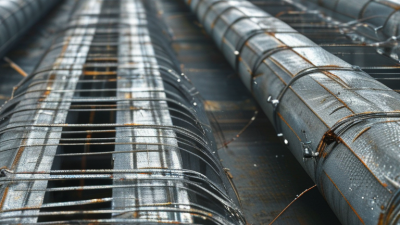
Welded wire reinforcement mesh Commonly about 4–12 mm, subject to structural design Common layouts include 100, 150, or 200 mm spacing; project-specific patterns are also used Plain or deformed carbon-steel wires; supplied as sheets or rolls where permitted by the design Concrete slabs, walls, pavements, and other reinforced-concrete applications ASTM A1064/A1064M covers carbon-steel wire and welded wire reinforcement. The governing structural code and project drawings determine design and acceptance requirements. Compare wire size and spacing in both directions, steel grade, sheet dimensions, laps, reinforcement area, and compliance documentation against the structural drawings.
Welded mesh fencing panels About 3–8 mm Often about 25–200 mm; aperture and panel geometry vary by security and site requirements Usually carbon steel, with a specified galvanized finish or a multi-layer coating system Perimeter fencing, security enclosures, sports facilities, and industrial sites EN 10223-4 addresses welded mesh fencing. Coating standards may also be relevant; verify the required fence system, exposure class, and local regulations. Check panel height and width, wire diameter, opening size, edge configuration, post and fixing compatibility, coating system, and installation requirements.
Welded mesh gabions About 3–6 mm, depending on basket size and design Common openings include approximately 50 × 50, 75 × 75, or 100 × 100 mm Typically coated steel wire; coating and any polymer layer must suit the site environment Retaining structures, erosion control, channel works, and landscape features EN 10223-8 covers welded mesh gabions. Check any required wire-coating standards and the project’s civil-engineering specifications. Compare wire and coating specifications, basket dimensions, diaphragms, lacing or connection method, stone size compatibility, and design requirements for the site.

Buyer note: Dimensions shown are indicative market ranges, not universal requirements or guarantees of compliance. Actual specifications vary by manufacturer, market, and application. Confirm units, tolerances, material certificates, coating test methods, standard editions, and local building or safety requirements in the purchase order.

Go to Top