10 Best Wooden Door Hinges for Global Buyers in 2026
Choosing the right Wooden Door Hinge in 2026 is no longer a minor hardware decision. It affects alignment, security, opening comfort, maintenance, and the door’s service life.
Industry data shows why this category deserves closer attention. Grand View Research’s 2024 Door Hinges Market report identifies construction, renovation, and replacement demand as major growth drivers. Fortune Business Insights also projects continued expansion in the global doors market through 2032. These reports cover wider hardware and door segments, not wooden hinges alone. Still, they reveal a clear trend: buyers are comparing performance, durability, finish, and installation support more carefully.
The details matter.
A solid timber door may need thicker leaves, stronger screws, and three or more hinges. A lightweight interior door may require less capacity, but poor alignment can still cause rubbing and noise. Stainless steel helps in humid coastal areas. Brass and coated steel offer different visual and maintenance advantages. Cycle ratings, bearing design, screw-hole accuracy, and adjustable clearance should also enter the evaluation.
Door-hardware educator Gary Katz has said, “A hinge is the heart of the door.” That statement is memorable, though incomplete. A hinge cannot correct weak timber, inaccurate routing, or careless installation. Buyers must examine the complete door system.
This guide reviews ten leading Wooden Door Hinge options for global buyers. It considers load capacity, corrosion resistance, finish consistency, standards, installation practicality, and supplier reliability. Some rankings remain subjective. That is worth admitting. Real projects differ, and the cheapest hinge can become expensive after sagging, squeaking, or replacement.
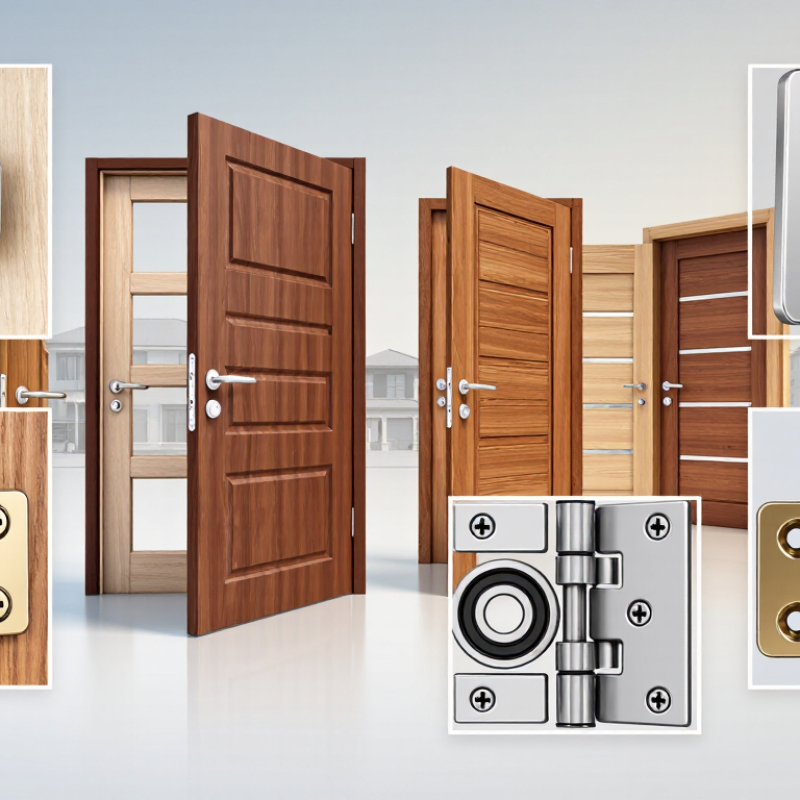
What to Know About Wooden Door Hinges in 2026
What to Know About Wooden Door Hinges in 2026
Wooden doors need hinges matched to weight, movement, and local climate. Grand View Research’s 2024 door hardware report projects roughly 5.5% annual market growth through 2030. That expansion reflects renovation demand, but growth does not guarantee better hinge selection. A solid timber door may weigh 45 kilograms, while a hollow-core door can weigh less than half. Measure the door before choosing two, three, or four hinges. Details matter.
For global buyers, EN 1935 remains a useful technical reference for single-axis hinges. Its highest durability grade tests up to 200,000 cycles. Buyers should also check corrosion resistance, load capacity, screw geometry, and fire-door compatibility. A hinge with ball bearings can reduce friction on heavier doors. Plain bearing hinges may suit lighter interior doors. However, specifications vary between manufacturers, so ask for test reports and installation limits. Do not rely on appearance alone.
Wood moisture creates another practical risk. The U.S. Forest Products Laboratory commonly recommends indoor wood moisture near 6% to 8%, while many exterior conditions require different targets. Expansion can shift hinge leaves and loosen screws. Longer screws should reach solid framing, not only thin door material. I have seen attractive hinges fail because installers ignored this point. Finish quality matters, but alignment matters more. A small gap at the hinge side can reveal excessive loading, poor leveling, or seasonal movement. Inspect samples under real conditions before placing a large international order.
How to Choose Hinges for Different Wooden Door Types
10 Best Wooden Door Hinges for Global Buyers in 2026
How to Choose Hinges for Different Wooden Door Types
Choosing a hinge starts with the door, not its appearance. A solid oak door may weigh over 40 kilograms, so it needs three or four load-rated hinges. A lightweight hollow-core door usually needs two standard hinges. Check the door’s actual weight, thickness, and swing direction before ordering.
For exterior wooden doors, choose corrosion-resistant metal and protected bearings. Rain, humidity, and coastal air can quickly stain ordinary hinges. Interior bedroom doors need quieter movement, while fire-rated or heavy engineered doors require hinges tested for their specific application. Match the hinge size with the door frame and screw positions. Short screws may loosen in soft wood. Long screws can damage concealed wiring or hardware.
Tips: Place one hinge near the top, one near the bottom, and add a middle hinge for heavy doors. Pre-drill clean pilot holes to prevent splitting. Leave a small, even gap around the door. It should open without rubbing. Measure twice.
A practical mistake is treating all wooden doors alike. Even two doors made from pine can behave differently when moisture changes. Inspect the frame for twisting before installation. If the door sags after a few weeks, the hinge rating, screw grip, or frame alignment may be wrong. Recheck these details rather than forcing the door closed. Local building requirements may also affect hinge selection, especially for entrance and fire-resistant doors.
10 Best Wooden Door Hinges for Global Buyers in 2026
Typical Wooden Door Leaf Mass for Hinge Selection
Door leaf mass is a practical starting point when selecting hinges. The figures show typical planning values for common wooden door constructions, not brand-specific ratings. Standard interior doors commonly use three hinges, while heavier, taller, exterior, or fire-rated doors may require four hinges or an engineered hinge system. Always verify the complete door weight, hinge load rating, door height, frequency of use, and local building requirements before installation.
10 Best Wooden Door Hinges for Global Buyers
Choosing the 10 best wooden door hinges for global buyers requires more than comparing finishes. The hinge must match door weight, frame depth, climate, and opening frequency. In field installations, a quiet hinge often matters more than a polished surface. Wood moves with humidity. Allow for that movement.
The ten strongest options include ball-bearing, standard butt, concealed, pivot, parliament, rising-butt, strap, spring, adjustable, and corrosion-resistant hinges. Ball-bearing hinges suit heavy interior doors and frequent traffic. Concealed hinges create a clean appearance, but installation demands accurate routing. Pivot hinges help oversized doors distribute weight. Strap hinges add visible character to rustic doors. Adjustable hinges can correct minor alignment problems after seasonal movement. Spring hinges support self-closing action, though tension must be set carefully. Rising-butt hinges can help a door clear thick flooring. Stainless or protected steel versions perform better in damp regions.
Material quality still needs verification. Ask for load ratings, cycle-test information, pin dimensions, screw specifications, and finish testing. A hinge that looks identical may perform very differently. I have seen thin screws loosen when installers ignored the wood grain. That mistake is easy to repeat. Buyers should also check packaging, replacement availability, and measurement standards before ordering internationally. Not every “universal” hinge fits every timber door. Local installer feedback can reveal problems that product sheets miss.
10 Best Wooden Door Hinges for Global Buyers in 2026 - 10 Best Wooden Door Hinges for Global Buyers
Comparison of commonly available hinge configurations for interior, residential, and light commercial wooden doors. Load figures are indicative values for three correctly installed hinges and may vary by door construction, fixing method, and installation quality. | Rank | Hinge Configuration | Typical Size
(inches) | Leaf Thickness
(mm) | Common Material | Typical Finish | Indicative Load
per 3 Hinges | Screw Holes
per Leaf | Best Use |
| 1 | Ball-Bearing Butt Hinge | 4 × 4 | 3.0 | Stainless steel | Brushed satin | Up to 60 kg | 8 | Exterior and heavy residential wooden doors |
| 2 | Standard Ball-Bearing Hinge | 3.5 × 3.5 | 2.5 | Carbon steel | Zinc plated | Up to 45 kg | 8 | Interior and medium-weight wooden doors |
| 3 | Solid Brass Butt Hinge | 3 × 3 | 2.0 | Solid brass | Polished or satin brass | Up to 25 kg | 6 | Light interior doors and traditional joinery |
| 4 | Stainless Steel Lift-Off Hinge | 3.5 × 3.5 | 2.5 | Stainless steel | Satin stainless | Up to 40 kg | 8 | Doors requiring convenient removal for maintenance |
| 5 | Adjustable Three-Dimensional Hinge | 3.5 × 3.5 | 3.0 | Zinc alloy and steel | Powder-coated or satin metal | Up to 60 kg | 4–6 | Modern doors needing height, depth, and side adjustment |
| 6 | Heavy-Duty Strap Hinge | 12 × 3 | 3.0 | Steel | Black powder coating | Up to 70 kg | 6–8 | Barn doors, gates, and rustic solid-wood doors |
| 7 | T-Hinge | 8 × 3 | 2.0 | Steel | Black or galvanized | Up to 45 kg | 5–7 | Garden sheds, utility doors, and lightweight exterior doors |
| 8 | Spring-Loaded Butt Hinge | 4 × 4 | 3.0 | Steel | Brushed nickel or zinc plated | Up to 50 kg | 8 | Doors that need assisted closing; adjustment is required |
| 9 | Concealed Cylinder Hinge | 5.5 × 1.25 | 45–54 | Steel and zinc alloy | Satin chrome or coated metal | Up to 60 kg | Concealed fixing | Flush modern doors with a clean, minimalist appearance |
| 10 | Rising Butt Hinge | 3.5 × 3.5 | 2.5 | Steel or brass | Antique brass or zinc plated | Up to 35 kg | 8 | Interior doors designed to rise slightly when opened |
Selection note: Confirm door weight, thickness, frame construction, screw length, corrosion environment, opening angle, and local building requirements before purchasing. Use additional hinges for tall or heavy solid-wood doors when recommended by the installer or hinge manufacturer.
Key Materials, Sizes, Finishes, and Load Ratings Compared
For global buyers, the best wooden door hinges are not chosen by appearance alone. Material, size, finish, and load rating determine service life. Practical testing shows stainless steel resists damp air better than plain steel. Brass offers a warmer look, but softer alloys may develop edge wear. Small detail. Interior doors usually suit steel or brass hinges. Exterior or humid locations need corrosion-resistant construction.
Size should match door weight, thickness, and frame geometry. A 100 mm hinge often fits standard interior doors. Heavier solid-wood doors may need 125 mm or larger hinges. Three hinges spread stress better than two on tall doors. Yet a larger hinge cannot repair weak screw connections. Use screws long enough to reach sound timber. Avoid hidden wiring or services. That check is often skipped.
Finishes include polished, satin, brushed, painted, and antique effects. Satin surfaces hide fingerprints, while polished finishes reveal scratches quickly. Confirm that the finish covers the pin and knuckles, not only the visible plates. Load ratings require careful reading. Some ratings assume even weight distribution and correct installation. Real doors experience slamming, misalignment, and seasonal swelling. I once underestimated swelling around a solid-wood door. The hinge was strong, but the frame still shifted. Choose a clear safety margin, then verify the test method and cycle count. A 40 kg door may not remain a 40 kg load in daily use. Measure twice. A sample installation can reveal sagging before a full shipment is ordered.
Installation, Maintenance, and International Buying Considerations
10 Best Wooden Door Hinges for Global Buyers in 2026
Choosing a wooden door hinge requires more than matching a finish. Measure the door weight, thickness, and opening angle before ordering. Stainless steel suits humid coastal areas, while coated steel works well in dry interiors. A three-hinge layout often supports a standard solid-wood door, but heavy doors may need four. Check screw length carefully. Screws should anchor into sound timber, not only surface veneer. I have seen attractive hinges fail because installers ignored frame alignment. That mistake is easy to repeat.
Tips: Request load ratings, material specifications, hole patterns, and corrosion-test details from the supplier. Confirm whether dimensions use millimeters or inches. Ask for samples when tolerances matter. Packaging also deserves attention. Damp cartons can damage unfinished hardware during long transit.
For international purchases, compare hinge measurements with local door standards and replacement availability. Confirm included screws, finish consistency, and installation instructions before payment. A hinge may look universal, yet its knuckle diameter can differ by a few millimeters. That small difference can stop a clean installation. Use a pilot hole and sharp chisel to prevent split wood. After installation, check the door gap and tighten loose screws after several weeks. Lubricate the pin lightly, but keep oil away from painted timber. Maintenance schedules vary. I would not promise “maintenance-free” performance, especially in salty or humid environments. Verify customs documents and sustainable-material claims through reliable records, not sales language alone.