
China Top 10 Integrated Supply Chain Management Companies

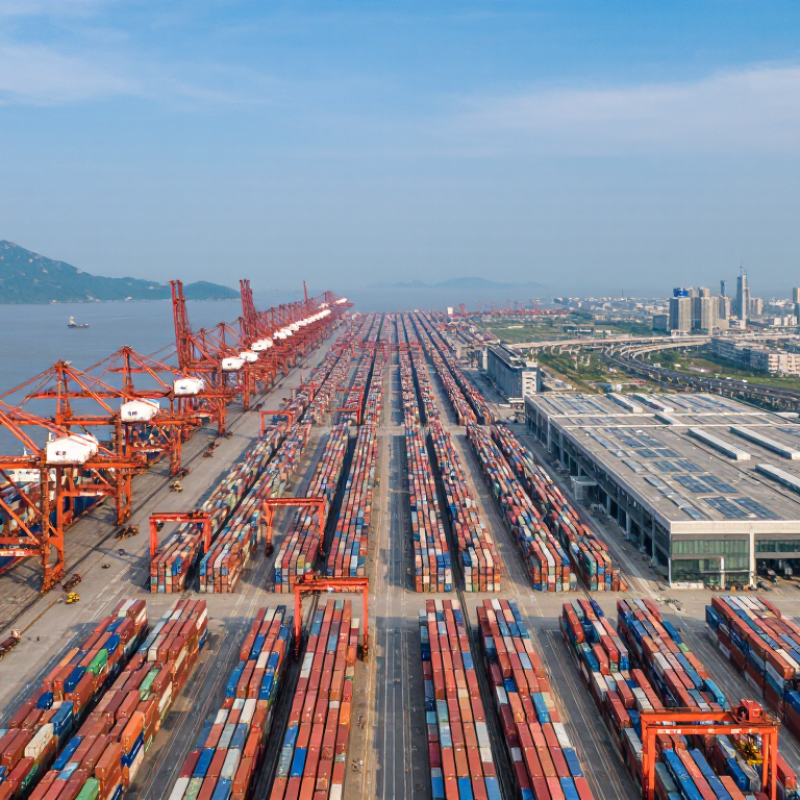
China’s supply chains are becoming more connected, data-driven, and demanding. At a busy port, one delayed container can disrupt factory schedules, warehouse labor, and customer delivery promises. This is where Integrated Supply Chain Management becomes commercially important.

The World Bank’s Logistics Performance Index 2023 ranked China 19th globally, highlighting its strong logistics infrastructure and growing coordination needs. McKinsey reported that 73% of surveyed companies pursued dual sourcing after recent disruptions, while 60% increased inventory levels. These findings show why Chinese manufacturers increasingly need integrated planning, procurement, logistics, warehousing, and digital visibility.

The companies featured in this article are assessed through practical indicators. These include nationwide coverage, technology capability, industry experience, service reliability, and supply chain integration. Their work may involve supplier coordination, real-time tracking, inventory optimization, customs support, and warehouse automation. Some providers focus on large industrial networks. Others serve e-commerce, healthcare, food, or cross-border operations.

As MIT professor Yossi Sheffi wrote in The Resilient Enterprise, “The goal is not to eliminate risk, but to manage it.” That principle remains highly relevant in China’s complex market. Yet no ranking is perfect. Public data differs between companies, and service quality can vary by region, contract, and customer sector. This list should support careful comparison, not replace due diligence. It offers a practical starting point for identifying China’s top 10 Integrated Supply Chain Management companies and understanding where each provider may create measurable value.

China Top 10 Integrated Supply Chain Management Companies

What Integrated Supply Chain Management Means in China

China’s integrated supply chain management connects purchasing, production, warehousing, transport, and customer delivery through one coordinated operating system. It is more than moving cartons. Teams share demand signals, inventory data, supplier capacity, and delivery risks. In practice, a factory planner may adjust a production run after seeing regional sales change overnight. A warehouse then changes picking priorities. A carrier receives a revised loading schedule.

This approach matters because China’s manufacturing network is large, dense, and uneven. Coastal plants may have mature suppliers, while inland facilities face longer lead times and fewer transport options. Integrated management helps companies compare these conditions before promising delivery dates. Digital control towers, barcode scans, and supplier scorecards can improve visibility. Human judgment still matters. Data can be delayed, incomplete, or entered incorrectly. One wrong inventory figure may send materials to the wrong site.

Strong management also requires clear accountability. Procurement should understand production constraints. Logistics teams should measure damage, punctuality, and emissions, not only freight cost. Managers need practical contingency plans for port congestion, extreme weather, and sudden demand changes. Regular supplier reviews can expose quality drift before it becomes a customer complaint. The method is powerful, but not automatic. Some companies invest in software and neglect training. That is a mistake worth questioning. An integrated supply chain works best when reliable data, experienced staff, and honest communication support every handoff.

Criteria for Ranking China’s Top 10 Supply Chain Companies

China Top 10 Integrated Supply Chain Management Companies

Ranking China’s top supply chain companies requires more than measuring revenue. A credible assessment should examine end-to-end performance, operational experience, and verified customer outcomes. The World Bank’s Logistics Performance Index 2023 placed China 19th globally, with a score of 3.7. This indicates strong infrastructure, but also room for improvement in customs and delivery reliability.

The ranking should assign weight to on-time delivery, inventory turnover, order accuracy, and cost-to-serve. These indicators reveal what happens beyond polished presentations. China’s total social logistics costs reached approximately RMB 352.4 trillion in 2023, according to the China Federation of Logistics and Purchasing. The logistics cost-to-GDP ratio was about 14.4%. Therefore, efficient network design deserves serious attention. A warehouse with visible stock levels matters. So does a truck arriving within its booked time window.

Digital capability should be tested through real operating evidence, not software claims. Evaluators can review control-tower coverage, shipment tracking accuracy, forecasting performance, and cybersecurity controls. Resilience also matters. Companies should show supplier diversification, emergency capacity, and recovery times after disruption. Sustainability indicators may include emissions per shipment, renewable energy use, and packaging reduction. Public data remains uneven. That is a weakness in this method. Independent audits, customer interviews, and several years of performance records can reduce bias, although no ranking is perfectly objective.

China Top 10 Integrated Supply Chain Management Companies - Criteria for Ranking China’s Top 10 Supply Chain Companies

The company identities and brand-specific information are intentionally omitted. Scores are presented as a comparative assessment based on publicly disclosed operating capabilities, service coverage, technology adoption, reliability, sustainability practices, and supply chain integration.

Rank Anonymous Provider Integrated Service Coverage
(20%)
China Network Reach
(15%)
International Connectivity
(15%)
Digital Supply Chain Capability
(15%)
Reliability & Control
(15%)
Sustainability & Compliance
(10%)
Industry Expertise
(10%)
Overall Score
(100)
1 Provider 01 19.0 14.5 14.4 14.2 14.1 8.8 9.1 94.1
2 Provider 02 18.6 14.3 14.2 13.8 14.0 8.7 8.9 92.5
3 Provider 03 18.4 14.2 13.8 13.6 13.7 9.0 8.8 91.5
4 Provider 04 17.9 14.0 13.7 14.0 13.4 8.5 8.7 90.2
5 Provider 05 17.8 13.7 13.6 13.4 13.5 8.4 8.6 89.0
6 Provider 06 17.5 13.8 13.3 13.1 13.2 8.3 8.4 87.6
7 Provider 07 17.2 13.5 13.1 12.9 13.0 8.2 8.3 86.2
8 Provider 08 16.9 13.2 12.8 12.7 12.8 8.1 8.2 84.7
9 Provider 09 16.5 13.0 12.6 12.4 12.6 7.8 8.1 83.0
10 Provider 10 16.2 12.8 12.4 12.2 12.4 7.7 7.9 81.6
Ranking methodology: Integrated service coverage evaluates transportation, warehousing, customs, distribution, procurement, and supply chain planning. China network reach measures domestic coverage across major manufacturing and consumption regions. International connectivity considers cross-border transportation, overseas facilities, and multimodal coordination. Digital capability covers visibility platforms, data integration, automation, forecasting, and exception management. Reliability includes service consistency, risk controls, delivery performance, and operational resilience. Sustainability and compliance include emissions management, responsible sourcing, safety, and regulatory controls. Industry expertise considers experience in manufacturing, retail, automotive, electronics, healthcare, and other complex sectors.

Profiles of China’s Top 10 Integrated Supply Chain Companies

Profiles of China’s Top 10 Integrated Supply Chain Companies

China’s leading integrated supply chain companies serve manufacturers, retailers, and international traders. This profile compares ten representative operators by network coverage, technology, service range, and delivery reliability. Their work often connects procurement, warehousing, transportation, customs coordination, and final distribution.

Several companies focus on nationwide warehouse networks near major ports, industrial parks, and consumer markets. Others specialize in cold-chain logistics, supporting food and pharmaceutical distribution with temperature monitoring. Some manage cross-border flows through bonded warehouses, digital documentation, and carefully scheduled freight connections. Their strongest systems provide shipment visibility from supplier pickup to customer delivery. That matters when one delayed component can stop an entire production line.

Technology is central, but it does not solve every problem. Warehouse platforms can forecast demand, track inventory, and flag unusual delays. Experienced teams still need to verify data and contact suppliers directly. In practice, forecasts may fail during holidays, severe weather, or sudden market changes. Human judgment remains important. Smaller customers may also receive less flexible pricing or slower system integration than large accounts. A reliable provider should explain these limits clearly, publish service standards, and review performance through measurable indicators such as order accuracy, damage rates, response time, and on-time delivery. These ten profiles therefore reflect operational capability, not marketing language alone. Each company shows strengths, yet every model requires continuous adjustment.

Comparison of Services, Technology, Industries, and Market Reach

China Top 10 Integrated Supply Chain Management Companies

China’s top ten integrated supply chain companies differ sharply in service depth. Most coordinate procurement, warehousing, transport, inventory, and delivery. Stronger providers also manage supplier audits, demand planning, returns, and trade documentation. In practice, service quality depends on local teams, not only corporate promises. A warehouse near a coastal production cluster can reduce transfer time by one day.

Technology separates broad platforms from traditional logistics operators. The more capable companies connect warehouse management, transport planning, order systems, and supplier data. Real-time dashboards can show stock levels, delayed containers, and delivery exceptions. Some use forecasting tools to adjust safety inventory before seasonal demand rises. However, automation is not always intelligent. Poor data can produce precise but misleading forecasts. Manual checks still matter.

Industry coverage also reveals meaningful differences. Some providers serve electronics and machinery, while others focus on retail, healthcare equipment, food, or automotive components. Market reach should be measured by operating locations, partner networks, customs experience, and last-mile control. A provider may offer nationwide coverage but rely heavily on subcontractors outside major cities. That can weaken consistency. Buyers should compare delivery performance, system integration time, reporting accuracy, and escalation procedures. Public information is often incomplete, so independent references and site visits remain valuable. No ranking is perfect.

Key Trends Shaping China’s Integrated Supply Chain Industry

China’s integrated supply chain industry is moving from low-cost coordination toward resilient, data-led operations. The shift is visible in factories, warehouses, ports, and regional delivery hubs. Companies now connect purchasing, production, inventory, transport, and returns through shared digital platforms. This enables faster decisions when demand changes suddenly.

Artificial intelligence helps forecast orders, detect unusual stock movements, and adjust delivery routes. Internet-connected sensors monitor temperature, vibration, and equipment use during storage and transport. Yet automation is not enough. Experienced planners still question incomplete data, especially when suppliers report delays late. Some firms are testing digital twins to model capacity before expanding facilities. The results can help, but models sometimes appear more accurate than reality.

Another major trend is supply chain localization. Manufacturers are building closer supplier networks across inland and coastal regions, reducing dependence on one production cluster. Low-carbon logistics is gaining attention as well. Electric delivery fleets, shared warehouses, route consolidation, and recyclable packaging can reduce emissions and operating waste. Compliance teams increasingly track energy use and supplier standards with auditable records. Trust matters.

Small suppliers remain a difficult gap. Many lack compatible software, trained analysts, or funding for rapid upgrades. Integrated networks may therefore become uneven, despite impressive dashboards. Industry leaders are responding with shared data standards, supplier training, and gradual investment. The transition is practical, but not perfectly smooth.

Go to Top