How to Choose the Best MIG Wire for Your Welding Needs?
Choosing the right MIG wire is crucial for welding projects. The performance of your weld can depend on the wire you select. According to industry data, approximately 70% of weld defects result from incorrect material choices. MIG wire plays a crucial role in enhancing weld quality and ensuring durability.
The market for welding consumables, including MIG wire, is projected to grow significantly. Reports indicate a compound annual growth rate (CAGR) of 5.1% from 2021 to 2028. This growth highlights the increasing demand for specialized wires that cater to specific applications. While versatility is essential, not all MIG wires are suitable for every metal or project.
Understanding the nuances of MIG wire types is key. Solid wires, flux-cored wires, and metal-cored wires each have unique benefits and drawbacks. Welders must assess their specific needs carefully. This requires knowledge of the materials and processes involved. It is easy to overlook these details, yet they can make or break a project. Balancing experience and product choices is essential for achieving successful welding outcomes.

Understanding MIG Welding and Its Applications
MIG welding, or Metal Inert Gas welding, is a widely used technique. It employs a continuous fed wire electrode. This process allows for improved speed and efficiency. It is suitable for both beginners and experienced welders. Understanding its basic principles is vital for effective application.
MIG welding suits various materials like steel and aluminum. It is often used in automotive repair and construction. The versatility makes it popular in many industries. However, choosing the right MIG wire can be tricky. Factors like thickness, material type, and desired joint strength come into play. Not every wire will fit every project. Mistakes in selection can lead to weak welds or defects.
Practicing on scrap materials is critical. It helps in understanding settings and wire choices. Monitoring the weld appearance can also refine skills. Reflecting on errors enhances the learning process. With the right knowledge and practice, MIG welding can achieve impressive results.
How to Choose the Best MIG Wire for Your Welding Needs?
| Wire Type |
Diameter (inches) |
Material |
Shielding Gas |
Application |
| ER70S-6 |
0.030 |
Mild Steel |
Argon/CO2 |
General Fabrication |
| ER308L |
0.035 |
Stainless Steel |
Argon |
Food Industry |
| ER5356 |
0.045 |
Aluminum |
Argon |
Marine Applications |
| ER70S-3 |
0.045 |
Mild Steel |
CO2 |
Structural Steel |
| ER100S-1 |
0.030 |
High Strength Steel |
Argon/CO2 |
Heavy Fabrication |
Factors to Consider When Selecting MIG Wire
Choosing the right MIG wire can significantly impact your welding projects. Several factors should be evaluated when making this decision. The wire diameter is critical. It directly affects the heat input and penetration of the weld. Thicker wires are best for heavy materials, while thinner wires are suited for lighter ones. Experimenting with different diameters can help you discern what works best for your specific needs.
Another essential factor is the wire composition. Different materials, such as steel or aluminum, require compatible wires. Each type has unique properties affecting melting points and strength. Pay attention to the shielding gas as well. The gas protects the weld from contamination. This choice can alter the weld quality and appearance significantly. Many welders overlook this decision, leading to subpar results.
Welding position matters too. Flat, horizontal, vertical, and overhead positions can change how the wire performs. Some wires work better in specific orientations. It's beneficial to test different wires in various positions. Collect feedback on your results to refine your selection. Understanding these factors is vital to enhancing your welding experience and achieving reliable results.
Types of MIG Wire and Their Specific Uses
When selecting MIG wire, understanding the types available is crucial. The most common types include ER70S-6, ER70S-3, and ER100S-1. Each serves distinct purposes.
ER70S-6 is ideal for welding mild steel with rust or mill scale. It offers excellent arc stability and produces less spatter, which can simplify cleanup.
ER70S-3, on the other hand, is a more versatile option. It’s suitable for clean surfaces and various metal types. This wire provides less strength than ER70S-6, making it a good choice for thinner materials.
ER100S-1 is used for higher strength applications, often in structural fabrication. It requires more precise handling and may need adjustments in welding technique.
Choosing the right wire can feel overwhelming. It’s essential to consider the specific job and the metal involved. A mismatched wire can lead to poor results, such as weak welds or increased defects. Reflecting on past projects can reveal insights into what wire works best under different conditions. Trying different types might help find the best match.
Determining the Right MIG Wire Diameter for Your Projects
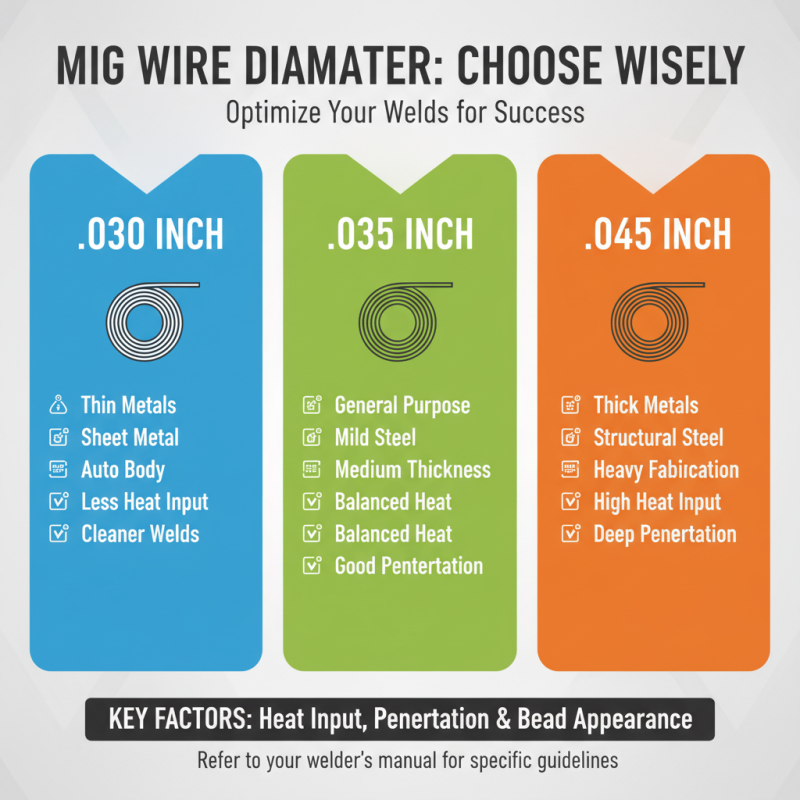
Choosing the right MIG wire diameter is crucial for successful welding. The diameter affects the heat input, penetration, and bead appearance. Common sizes for MIG wire include .030, .035, and .045 inches. Each one serves different welding tasks and materials.
For lighter materials, like thin steel, a smaller diameter, such as .030, is ideal. It provides better control and less heat input. When working with thicker metals, larger diameters are better. They produce deeper penetration and stronger welds. However, using a larger wire on thin materials can lead to burn-through.
Think about your welding technique, too. If you are a beginner, starting with .030 may help you refine your skills without overwhelming heat. Remember that practice is key. Sometimes the ideal choice may not feel right. Adjust your settings based on what you observe during welding. This trial and error approach is part of becoming proficient. Always stay informed about wire types that fit your specific projects.
Tips for Maintaining Quality During MIG Welding with Wire Choices
When selecting MIG wire, the impact on your welding quality is significant. The right wire type can make a huge difference in the overall finish. It's essential to consider the wire's diameter. Thicker wires can deliver more heat, which is advantageous for thicker materials. However, using too thick a wire on thin sheets can lead to burn-through.
Maintaining quality during MIG welding involves regular checks of the wire feed mechanism. A consistent feed speed ensures a steady arc. If the wire gets tangled or jammed, it disrupts the welding process. Keep an eye on the gas shielding as well. Contaminants can affect the weld's integrity, so ensure the gas is uncontaminated and appropriately mixed.
While focusing on the welding bead, imperfections can occur. It may be tempting to rush through the process, but taking time ensures better results. Uneven feeding might lead to inconsistent welds. Monitoring your technique will help you catch mistakes early. Always be ready to adjust your approach based on the material and environment.
Comparison of MIG Wire Types for Welding Applications