
Why Choose a Double Stainless Steel Sink for Your Kitchen?

Choosing the right sink affects daily cooking, cleaning, and kitchen maintenance. A double stainless steel sink offers two separate basins for practical multitasking. One side can hold soaking dishes, while the other remains available for rinsing vegetables or washing hands. This simple division can make a crowded kitchen feel more controlled.

Sink Double Stainless Steel models are valued for their durability, hygiene, and flexible use. Stainless steel resists rust, tolerates hot cookware, and usually cleans easily with mild soap. Experienced installers also consider bowl depth, cabinet space, drainage, and faucet placement before recommending a model. A deep basin can hide large pans, but it may feel uncomfortable for shorter users. Bowl size matters.

The best choice depends on your habits, not just appearance. Families may appreciate separated washing and rinsing areas. Home cooks may prefer one large bowl for baking trays. Sound-reduction pads can limit the sharp noise of running water, although they do not remove it completely. Thicker steel often feels more stable and may resist dents better, but quality depends on construction and installation.

It is not perfect, though. Two basins can restrict space for oversized cookware. Water spots may also appear without regular drying. Checking product specifications, warranty terms, and verified installation guidance supports a more reliable decision. A well-selected double sink should fit your routine, cabinet structure, and cleaning expectations—not merely match the countertop.
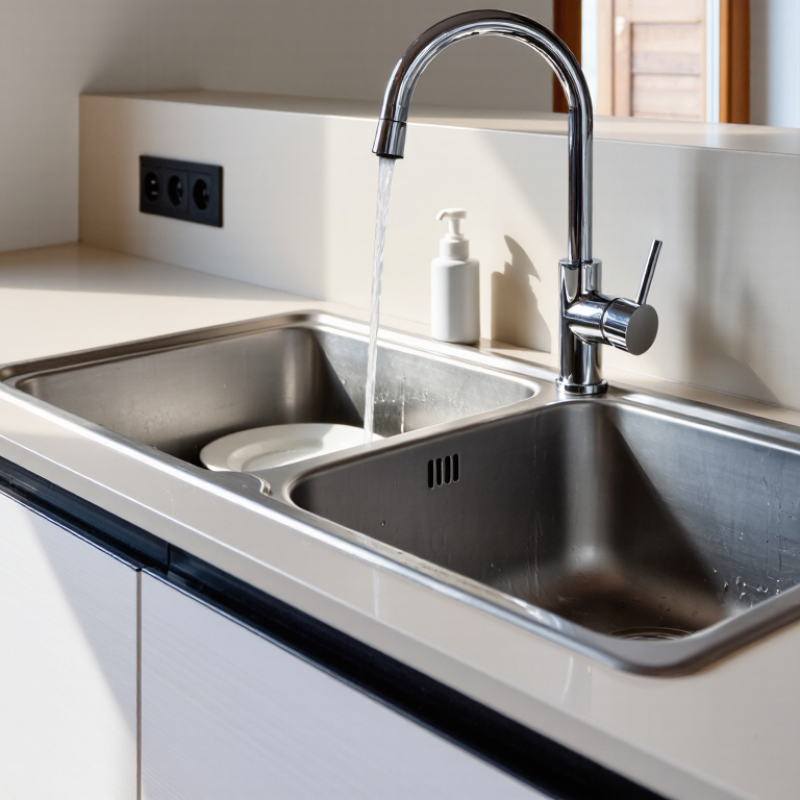
Why Choose a Double Stainless Steel Sink for Your Kitchen?

What Is a Double Stainless Steel Sink?

A double stainless steel sink is a kitchen basin divided into two separate bowls. One continuous rim connects them, while a central divider keeps water and food apart. Most models use corrosion-resistant stainless steel, often with a brushed surface that hides light scratches. The exact steel grade matters. Kitchen-grade 304 stainless steel is widely valued for its durability and resistance to everyday moisture. However, construction quality also depends on thickness, welding, drainage, and surface finishing. Not every shiny sink is equally durable.

The two-bowl design supports separate kitchen tasks. You can soak vegetables in one compartment while rinsing dishes in the other. One side may hold soapy water, while the second side remains available for clean preparation. This separation can make busy meal preparation feel less crowded. Bowl sizes are not always equal. A larger bowl suits pots and baking trays, while a smaller bowl handles quick washing. That sounds useful, but an oversized divider can limit large cookware.

Stainless steel also tolerates heat better than many common sink materials. Its nonporous surface is easier to clean after handling raw ingredients, provided it is washed properly. Drying the bowls helps reduce water spots and mineral buildup. A low-quality sink may sound loud when water hits its surface, though sound-absorbing pads can reduce the noise. I find this detail easy to overlook. Cabinet space, faucet position, and countertop depth should be checked before choosing the final configuration.

Why Choose a Double Stainless Steel Sink for Your Kitchen?

A double stainless steel sink has two separate basins in one unit. This layout allows you to wash dishes in one bowl while rinsing, soaking, or preparing food in the other. Stainless steel is durable, corrosion-resistant, hygienic, and easy to clean.

Chart explanation: Double stainless steel sinks are commonly available in nominal widths from approximately 24 to 36 inches. Larger models generally provide more room for washing cookware, while compact models can suit smaller kitchens. Actual cabinet requirements and bowl dimensions vary by sink design.

How Double-Basin Design Supports Kitchen Tasks

Why Choose a Double Stainless Steel Sink for Your Kitchen?

A double stainless steel sink divides kitchen work into two practical zones. One basin can hold soaking vegetables, while the other stays available for rinsing plates. This separation reduces crowding during busy meal preparation. It also helps keep raw ingredients away from clean dishes, although careful cleaning remains essential.

The design supports a smoother washing routine. Dirty cookware can soak in one bowl while glasses drain in the other. A colander fits comfortably into one basin for rinsing pasta or leafy greens. Stainless steel also handles heat, daily impacts, and frequent scrubbing when maintained properly. In my experience, the divider becomes especially useful during large family meals. Still, the center section can limit space for oversized pans. That is an honest drawback.

Tips

  • Choose two basins with enough depth for your usual cookware.
  • A low divider may make washing large trays easier.
  • Dry the surface after use to reduce water marks.
  • Avoid harsh abrasives, which can leave fine scratches.
  • Check the sink cabinet dimensions before installation. Small planning mistakes are surprisingly common.

Key Benefits of Stainless Steel Construction

Why Choose a Double Stainless Steel Sink for Your Kitchen?

A double stainless steel sink supports realistic kitchen routines. One bowl can hold soaking cookware, while the other remains available for rinsing vegetables or washing hands. This separation feels useful during busy meal preparation. The International Stainless Steel Forum’s Stainless Steel in Figures 2024 reports more than 58 million tonnes of crude stainless steel production in 2023. That scale reflects a mature, widely engineered material rather than a passing design trend.

Stainless steel construction offers a smooth, nonporous surface that resists absorbing food residue and everyday moisture. It also tolerates temperature changes better than many rigid sink materials. A 304-grade specification is common for indoor kitchen applications because it balances corrosion resistance, strength, and cost. Check the actual grade, thickness, and sound insulation before purchasing.

Small details matter. A brushed finish can make water spots less obvious, although it will not hide every scratch. Rounded corners simplify wiping around the basin divider. The double layout can also reduce cross-contact between raw ingredients and clean dishes, but it does not replace proper cleaning. Stainless steel is hygienic, not self-sanitizing. That distinction is easy to overlook. The sink may still look dull if hard-water deposits remain for weeks. Periodic cleaning with a mild product and a soft cloth protects the finish better than aggressive scouring.

Important Features to Consider Before Choosing

Why Choose a Double Stainless Steel Sink for Your Kitchen?

A double stainless steel sink is practical when washing and rinsing happen together.

One basin can hold soapy cookware, while the other keeps vegetables away from dirty water. Before choosing, check the bowl size carefully. Equal bowls look balanced, but unequal bowls may handle baking trays better. I prefer a deeper basin, although it can strain shorter users.

Material quality needs attention.

Stainless steel with chromium content above 10.5% resists corrosion, according to the World Stainless Association. A thicker gauge usually reduces vibration and dents, but gauge numbers can confuse buyers. Ask for the actual thickness. Also inspect the underside coating and sound-absorbing pads. A sink can look solid and still sound sharply metallic under running water.

Drain placement affects daily comfort.

Rear drains create more cabinet storage, while central drains simplify installation. Confirm the cabinet width, countertop cutout, and waste-pipe position before ordering. The U.S. Environmental Protection Agency’s WaterSense program reports that labeled plumbing products have saved trillions of gallons of water nationwide. Pairing the sink with a certified efficient faucet can support that goal. However, water efficiency does not fix poor bowl design. I once underestimated splash control; a shallow second basin became annoying within days. Smooth corners clean faster, but extremely tight corners may trap crumbs. Small details matter.

How to Install and Maintain a Double Stainless Steel Sink

Why Choose a Double Stainless Steel Sink for Your Kitchen?

A double stainless steel sink separates washing from rinsing, which makes busy kitchen work easier. One bowl can hold soapy dishes, while the other stays available for vegetables or clean cookware. Choose a size that fits the cabinet, countertop, and your daily habits. Deep bowls are useful, but they may require more bending. Measure carefully. A small error can become expensive.

Before installation, shut off both water supply valves and clear the cabinet completely. Check that the sink fits the opening without forcing it. Apply the recommended sealant beneath the rim, then lower the sink gently into place. Secure the clips evenly, but do not overtighten them. Stainless steel can bend. Connect the drain baskets, tailpieces, and P-trap, keeping the joints aligned. Turn the water on slowly and inspect every connection with a dry paper towel. It reveals small leaks quickly.

Maintenance is simple but needs consistency. Rinse food particles away after use, then clean both bowls with mild dish soap and a soft sponge. Dry the surface along its grain to reduce water spots. Avoid chlorine products, abrasive powders, and steel wool; they can damage the protective finish. I once left a wet cast-iron pan in a sink overnight, and the stain took patience to remove. That mistake still matters. For stubborn marks, use diluted vinegar briefly, rinse thoroughly, and dry the sink afterward. Check the drain strainer and trap regularly, especially when odors or slow drainage appear.

Why Choose a Double Stainless Steel Sink for Your Kitchen? - How to Install and Maintain a Double Stainless Steel Sink

Category Dimension or Feature Typical Data or Recommended Practice Practical Benefit or Instruction
Kitchen workflow Two-bowl configuration One bowl can be used for washing while the other is used for rinsing, soaking, or draining. Separates tasks and helps reduce cross-contact between food preparation and dirty dishes.
Common overall size Approximately 760–860 mm wide × 480–530 mm front-to-back The cabinet, countertop opening, plumbing, and manufacturer template must be checked before purchase. Provides useful capacity while fitting many standard kitchen layouts.
Bowl proportions Equal 50/50 or offset 60/40 split Equal bowls offer balanced use; an offset design gives one bowl more space for larger cookware. Choose the split according to the size of the pans, trays, and cookware used most often.
Bowl depth Typically 180–230 mm Deeper bowls increase capacity, but the available cabinet space and user comfort should be considered. Balances splash control and capacity without making the sink uncomfortable to use.
Stainless-steel construction Common thickness: 0.8–1.2 mm A thicker sheet generally provides greater rigidity and can reduce drumming when combined with sound insulation. Offers corrosion resistance, impact tolerance, and a surface that is easy to clean.
Surface finish Brushed, satin, or polished finish Brushed and satin finishes usually make minor water marks and fine scratches less noticeable than highly polished surfaces. Use a soft cloth and wipe in the direction of the grain to preserve the appearance.
Mounting options Top-mount, undermount, or flush-mount The mounting style must match the countertop material, cabinet construction, and sink installation template. Top-mount installation is generally simpler; undermount installation creates a continuous countertop edge.
Drain arrangement Two drains connected to a common waste system The drain openings, waste fittings, trap configuration, and local plumbing requirements must be compatible. Allows both bowls to drain while helping keep the cabinet plumbing organized.
Pre-installation check Measure cabinet, countertop, cutout, faucet holes, and plumbing clearance Turn off the water supply and use the supplied template rather than estimating the opening. Prevents an incorrect cutout, interference with cabinet supports, and difficult pipe connections.
Installation sequence Mark → cut → dry-fit → seal → secure → connect → test Dry-fit all components before applying sealant; follow the sink and plumbing fitting instructions. A planned sequence improves alignment and reduces the risk of leaks or countertop damage.
Sealing and support Continuous waterproof seal around the rim Use a sealant suitable for the sink and countertop materials, and provide mechanical support where required. Helps prevent water from entering the cabinet or damaging the countertop substrate.
Leak test Run water into each bowl and inspect every joint Fill each bowl partially, drain them separately, and check the strainers, connectors, trap, and supply lines. Identifies leaks before the cabinet contents and surrounding materials are exposed to water.
Daily cleaning Warm water, mild dish soap, and a soft sponge Rinse away soap and food residue, then dry the surface with a soft cloth. Reduces water spots, residue buildup, and unpleasant odors.
Stain and limescale care Clean promptly after hard-water deposits or acidic food contact Use a cleaner specifically suitable for stainless steel and rinse thoroughly after use. Helps maintain the finish and limits mineral or food-related discoloration.
Products to avoid Steel wool, harsh scouring powders, and chlorine-based cleaners used improperly Do not leave metal tools, abrasive pads, or chemical residues on the stainless-steel surface. Prevents scratches, surface dulling, and possible corrosion from chemical exposure.
Noise reduction Sound-deadening pads or undercoating Many sinks include sound insulation; additional pads or undercoating can further reduce noise and vibration. Makes running water, dish impact, and waste-disposal vibration less noticeable.
Routine inspection Check seals, drains, hoses, and cabinet area periodically Look for moisture, loose fittings, damaged sealant, blocked strainers, or slow drainage. Early maintenance can prevent hidden leaks, cabinet damage, and drainage problems.
Go to Top