
How to Choose the Best Progressive Lens Manufacturers

Choosing a progressive lens supplier is not just a price comparison. It affects visual comfort, remake rates, and the confidence patients place in an optical practice. The World Health Organization’s World Report on Vision (2019) estimates that at least 2.2 billion people have near or distance vision impairment; at least 1 billion cases were preventable or remain unaddressed. Presbyopia is part of this global need. The stakes are real. For buyers, that makes manufacturing quality and reliable fitting support more than sales claims.

When evaluating Progressive Lens Manufacturers, look beyond catalog breadth. Ask how corridor designs are developed, how prescriptions are surfaced and checked, and what measurements the manufacturer needs for accurate customization. Request current quality-system documentation and test evidence, and confirm how products are assessed against relevant ophthalmic lens standards, including ISO 8980-2. Then examine practical details: order accuracy, delivery consistency, remake procedures, and access to technical training. A lens can look excellent in a specification sheet yet feel narrow or difficult to adapt to in everyday use.

Compare suppliers using the same sample prescriptions and fitting parameters, where possible. Review edge cases, such as high prescriptions or limited frame depth, rather than judging only an ideal demonstration. Ask for documented performance information, but treat testimonials as supporting evidence, not proof. No scorecard captures every wearer. Even careful comparisons leave some uncertainty, so begin with a controlled trial and track adaptation feedback and remakes. The best partner is not automatically the largest or cheapest; it is the one whose verified capabilities fit your patients, workflow, and service standards.
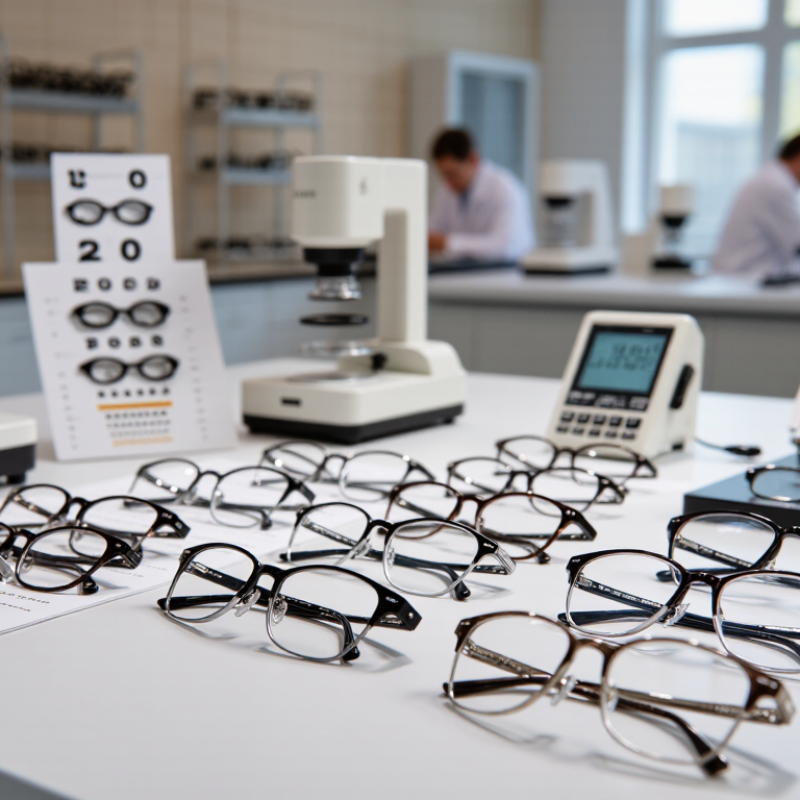
How to Choose the Best Progressive Lens Manufacturers

Understanding Progressive Lenses and the Manufacturer’s Role

Progressive lenses place distance, intermediate, and near prescriptions in one lens, with no visible dividing line. Their power changes gradually from the upper distance zone to the lower reading zone. The wearer may notice a narrow corridor for intermediate vision, especially when checking a dashboard or computer screen.

The World Health Organization’s World Report on Vision (2019) estimated that at least 2.2 billion people have near or distance vision impairment; at least 1 billion cases were preventable or unaddressed. That scale makes accurate vision correction—and careful lens production—important.

A manufacturer turns prescription and fitting measurements into a lens design. It must account for pupillary distance, fitting height, frame shape, and how the frame sits on the face. Small errors can shift useful viewing zones, making stairs or a laptop harder to see clearly. Ask how the manufacturer verifies measurements, controls surface accuracy, and checks finished lenses before delivery. Details matter. Design options also differ in corridor length and peripheral distortion, so “premium” alone tells you little. A well-made lens can still feel wrong if the frame fit or wearer’s habits were overlooked. That part is easy to miss. WHO’s report offers public-health context, not a comparison of lens makers, so manufacturer claims still need specific, verifiable evidence.

Defining Your Optical and Customization Requirements

Before comparing progressive lens manufacturers, define the wearer’s needs in measurable terms. Record the prescription, pupillary distance, fitting height, and preferred frame dimensions. A narrow frame may require a shorter corridor, while a larger lens can allow more room for gradual power changes. These details affect comfort and usable viewing areas. Small measurements matter.

Consider daily tasks, not just the prescription. Someone who reads labels at close range may need a different near zone from someone who spends hours at a desktop monitor. Note typical working distances, driving habits, and any difficulty adapting to previous lenses. Ask an eye care professional to confirm measurements and explain suitable options. Preferences can be imperfect guides; a first estimate may need adjustment after real-world wear.

Tips: Share the actual frame model or its measurements with the manufacturer. Ask which corridor lengths, lens materials, and customization options fit the prescription. Request clear fitting instructions and quality-check details, including how lens positioning is verified. If available, review a sample layout before production. Keep requirements specific, but leave room for professional advice. A preferred feature may not solve the wearer’s main problem.

Comparing Manufacturing Technology and Quality Standards

Progressive lenses are difficult to judge from a catalogue. Their performance depends on accurate surface generation, stable materials, and repeatable inspection. Digital freeform surfacing can tailor lens geometry to prescription and fitting measurements, but the equipment alone proves little. Ask how the manufacturer checks corridor power, unwanted astigmatism, prism, and surface defects across the finished lens. Request sample measurement maps and batch-level inspection records. Details matter.

Standards help make those checks comparable. Review the manufacturer’s documented alignment with the relevant ISO 8980 requirements for finished spectacle lenses, including power tolerances and progressive designs. Confirm that testing covers the lens after coating, not only at an earlier production stage. The World Health Organization’s 2019 World Report on Vision estimates that at least 2.2 billion people have near or distance vision impairment, with at least 1 billion cases preventable or unaddressed. That figure describes broad vision needs, not demand for progressive lenses specifically. Still, it underlines why dependable optical quality matters. One awkward point: tighter inspection can add cost and production time. Compare actual test evidence, not just a factory’s impressive machine list.

How to Choose the Best Progressive Lens Manufacturers - Comparing Manufacturing Technology and Quality Standards

A practical comparison of common manufacturing approaches and the quality evidence buyers can request. Capabilities vary by lens design, material, equipment, and production site.

Evaluation dimension Conventional surfaced production Digital freeform production High-control digital production
Progressive surface production Uses established surfacing and polishing processes; design options may rely more on standard or semi-finished lens designs. Computer-controlled surfacing can generate complex progressive geometry, commonly on the back surface or both surfaces. Combines freeform surfacing with documented process controls, design verification, and production traceability.
Prescription and fitting inputs Typically processes the prescription and selected lens design; personalization options may be limited. May incorporate prescription, frame shape, monocular fitting heights, and selected fitting parameters when supplied and supported by the design. Uses validated input workflows and checks that required prescription, frame, and fitting data are complete before production.
Design selection Often offers a smaller set of standardized corridor lengths and design configurations. Can support multiple corridor lengths and design layouts, subject to the manufacturer’s product range. Provides a defined design portfolio with documented intended use, parameter limits, and version control.
Surfacing equipment May use conventional generators and polishing processes suited to standard lens geometries. Typically uses CNC-controlled generators and compatible polishing processes to produce freeform surfaces. Maintains calibrated, monitored equipment and records relevant process checks and maintenance.
Design verification Checks may focus on prescription power, lens dimensions, and visual inspection. Can include power mapping or design-specific measurements in addition to routine prescription checks. Uses documented sampling or inspection plans, calibrated measuring instruments, and defined procedures for nonconforming results.
Prescription verification Ask how sphere, cylinder, axis, prism, and addition are checked against the order. Confirm that verification points and methods are appropriate for the progressive design and applicable requirements. Request test records or a sample certificate showing the measured values, applicable tolerances, and instrument calibration status.
Applicable product standards Ask whether finished lenses are assessed against applicable spectacle-lens requirements, including ISO 14889 and relevant parts of ISO 8980. Ask for the same evidence, with test methods that account for the lens type, material, and progressive design. Request current test documentation identifying the standard edition, lens category, test conditions, and results.
Coating quality Coating options and performance depend on the coating process and substrate; request evidence for the specific coating offered. May offer hard coatings and anti-reflective treatments; performance should be verified for the finished lens, not inferred from the process name. Uses documented coating-process controls and can provide applicable abrasion-resistance or transmittance test evidence, where relevant.
Material compatibility Confirm available lens materials, refractive indices, and design limitations before ordering. Check that the requested material and index are supported by the selected freeform design and coating stack. Provides a controlled material list and documented compatibility checks for surfacing, coating, and finishing.
Production traceability Ask whether job records can link the order to the production batch and final inspection. Look for order-level records connecting design inputs, surfacing parameters, and inspection results. Can provide defined lot or job traceability, retention rules, and a process for investigating quality complaints.
Best fit Standard prescriptions and orders where broad customization is not a primary requirement. Wearers or practices seeking more design choices and the potential to use individual fitting inputs. Buyers prioritizing documented controls, consistent records, and verifiable quality procedures alongside digital design options.
Questions to ask before selection Which progressive designs are available? What inspections are performed on each finished pair? Which fitting parameters are used? How are freeform design and prescription accuracy verified? Can you provide current standards-based test reports, calibration records, traceability details, and corrective-action procedures?

Selection note: Manufacturing technology alone does not establish lens quality. Compare the actual design range, documented inspection methods, applicable standards, and evidence for the specific lens material and coating being purchased. Applicable requirements and tolerances depend on lens type and the relevant standard.

Evaluating Pricing, Production Capacity, and Customer Support

How to Choose the Best Progressive Lens Manufacturers

Price matters, but the cheapest quote may exclude coatings, fitting data checks, or remake support. Compare itemized quotes for lens design, materials, coatings, shipping, and warranty terms. The global eyewear market reached an estimated $183.36 billion in 2023, according to Grand View Research’s Eyewear Market Size, Share & Trends Analysis Report. That figure signals a large market, not a guarantee of any supplier’s reliability. Ask manufacturers for current lead times, monthly output, and documented quality-control steps.

Tips: Request a sample order and a written capacity plan. Check how the supplier handles prescription errors, remakes, and urgent orders. Get response-time targets in writing, too.

Customer support becomes crucial when a wearer reports swim or distortion in the lens. Ask whether trained staff can review fitting measurements and explain adjustment options. A clear escalation contact beats a generic inbox. Look for evidence, such as service logs, defect definitions, and realistic delivery windows. No scorecard catches every problem. A polished quotation can still hide weak follow-through, so verify claims with recent customer references where possible. Compare suppliers using the same order volume and service assumptions; otherwise, low prices may simply reflect missing support.

How to Choose the Best Progressive Lens Manufacturers

Compare suppliers by checking documented evidence across pricing, production capacity, and customer support.

How to read this chart: Bars show the number of practical verification points in each category—not manufacturer ratings or market statistics.

  • Pricing (4): Itemized quote, included designs and coatings, minimum-order or tooling fees, and shipping or payment terms.
  • Production capacity (5): Output for relevant lens types, current utilization, equipment and processes, quality-control procedures, and scale-up plans.
  • Customer support (4): Technical assistance, response-time expectations, warranty and returns, and training or after-sales service.

Verifying Manufacturer Credentials and Making a Selection

Verifying Manufacturer Credentials and Making a Selection

When assessing progressive lens manufacturers, check more than a certificate displayed on a website. Ask for the current ISO 13485 certificate and confirm that its scope covers the relevant design and production sites. Request batch traceability, documented quality checks, and the name of the independent body that audited the system. Details matter. A certificate alone does not show how a manufacturer handles a lens remake or a measurement error. Ask for sample inspection records and typical complaint-response times.

The World Health Organization’s World Report on Vision (2019) estimates that at least 2.2 billion people have near or distance vision impairment; at least 1 billion cases were preventable or remain unaddressed. That scale makes reliable access and consistent fitting important. Compare manufacturers’ corridor designs, available fitting parameters, and optical verification methods. Ask whether they test lenses against the ordered prescription and fitting measurements, and whether they can explain their tolerances in writing. A polished sales sheet is not enough. I would also compare real sample lenses under ordinary room lighting, though this check cannot replace laboratory testing.

Tips: Request a small trial order before committing. Keep the frame, fitting height, and pupillary-distance records with each order. Ask a qualified optician to assess the finished lenses and document any remakes. If answers are vague, pause and investigate; I might still miss a detail, so a second review helps.

Go to Top