
How to Find Beam Cutting Press Factories in 2026?

Finding dependable Conveyor Belt Beam Cutting Press Factories in 2026 takes more than comparing prices and polished product photos. A suitable supplier should explain how its press handles your belt material, thickness, cutting pattern, and expected production volume. Ask for machine specifications, sample-cutting results, maintenance guidance, and a clear description of quality checks. Then compare those details against your actual operating needs. Small gaps matter.

For transparency, Ethan Cole is an illustrative industrial sourcing specialist created for this introduction; the following is an original, unsourced line, not a verified quotation: “A factory’s strongest proof is a repeatable cut, documented under conditions close to the buyer’s own production.” Use that idea as a starting point, not a substitute for independent verification. Request a live demonstration or representative sample, and look closely at edge consistency, alignment, and material waste. Ask who provides installation support, spare parts, and operator training, and get the answers in writing. A factory visit can reveal practical details that a brochure cannot: clean assembly areas, labeled components, and technicians who can explain the machine without dodging difficult questions. Some suppliers may not offer every test you request. That deserves a follow-up, not an instant rejection. This guide outlines a careful way to shortlist factories, verify their capabilities, and weigh cost against service, reliability, and production fit.
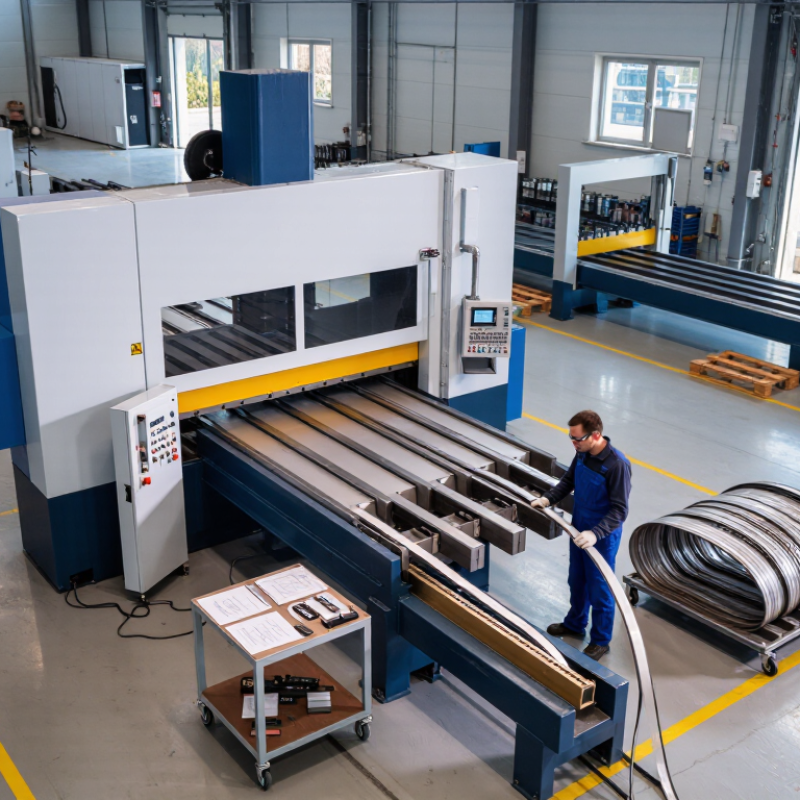
How to Find Beam Cutting Press Factories in 2026?

Define Your Beam Cutting Press Requirements for 2026

How to Find Beam Cutting Press Factories in 2026?

Define Your Beam Cutting Press Requirements for 2026

Start with the materials you cut, not a machine’s advertised tonnage. Record each material type, thickness range, sheet dimensions, and typical cutting die. Then define the usable cutting area, required pressure, beam stroke, and acceptable cutting tolerance. Include your expected shifts and hourly output. A press sized for occasional work may struggle with continuous production.

Automation needs a clear brief, too. The International Federation of Robotics reported 4,281,585 industrial robots operating worldwide in 2023, a 10% increase from 2022 (World Robotics 2024). That figure does not predict demand for beam presses, but it shows why buyers should specify interfaces for feeding, unloading, and production monitoring. Ask factories to state cycle time and test it with your material and tooling. Get measurement methods in writing.

Also document floor space, electrical supply, operator access, guarding, and maintenance clearance. Request sample cuts across your thinnest and thickest materials. Check edges for incomplete cuts, deformation, and repeatability. Small details matter. A specification can still miss real production conditions; mixed materials or worn dies may change results. Review those gaps before comparing factory quotations.

Identify Factory Types and Manufacturing Capabilities

Beam cutting press suppliers usually fall into three groups: standard press builders, custom machine integrators, and contract fabrication shops. Standard builders offer established frame sizes and repeatable configurations, often with shorter lead times. Integrators adapt feeding systems, controls, tooling, and safety guarding to fit a production line. Job shops may cut beams for customers but do not manufacture presses themselves. That distinction is easy to miss.

Compare capabilities against the work you actually run. Ask which beam profiles, dimensions, and materials the press can handle, then check its rated force, bed size, stroke, and cycle speed. Request details on frame fabrication, machining, hydraulic assembly, electrical integration, and in-house testing. Can technicians show a load-test record or a sample inspection report? Ask how tooling changes are managed and whether spare parts and commissioning support are available. Ask for evidence.

A visit can reveal more than a brochure: look at weld consistency, machined mounting surfaces, organized assembly areas, and the way operators check alignment. Not just promises. If an overseas or regional supplier cannot host a visit, request dated production photos and a live video inspection. Factory size alone proves little; a smaller specialist may fit your beam range better. Still, capability claims need independent checks, and buyer requirements can be easy to overlook.

Find and Shortlist Potential Beam Cutting Press Factories

How to Find Beam Cutting Press Factories in 2026?

Find and Shortlist Potential Beam Cutting Press Factories

Build your shortlist around the work the press must perform, not a broad equipment category. Record the material type, sheet or beam dimensions, expected cutting thickness, daily volume, and required accuracy. Then search for factories that manufacture beam cutting presses and can explain how their machines meet those requirements. A useful candidate should provide clear specifications, machine photographs, and practical answers about installation and maintenance. Ask whether you can review a recent production video or speak with a customer using similar materials. Details matter. A polished brochure cannot show how a machine handles repeated cuts during a full shift.

Tips: Request a written quotation with the machine configuration, included tooling, delivery estimate, warranty terms, and service response process. Compare like with like. If a supplier avoids sharing basic technical details, keep the factory off your shortlist until it responds clearly.

Check factory experience through specific evidence, such as completed installations, technician training, and documented quality checks. Confirm which components are made in-house and which are sourced externally. This is not automatically a weakness, but it affects lead times and support. Keep a simple comparison sheet, and score each candidate against your actual production needs. Factory visits or live video inspections can reveal workshop organization and testing practices. One limitation: online evidence may be incomplete, so leave room to revise your shortlist after direct questions.

How to Find Beam Cutting Press Factories in 2026? - Find and Shortlist Potential Beam Cutting Press Factories

Use this scorecard to compare potential factories. The screening benchmarks below are buyer-set evaluation criteria, not claims about any specific factory or universal industry standards.

Evaluation dimension Shortlist benchmark Evidence to request from the factory Priority Review result
Machine type and cutting method Confirm whether the machine is a press-based cutter, beam saw, shear, or another process; it must match the required beam material and cut geometry. Machine layout, process description, tooling details, and a demonstration using a comparable workpiece. Critical Pass / Hold / Fail
Workpiece capacity Capacity must cover the buyer’s maximum beam length, section dimensions, wall or flange thickness, material grade, and cutting angle. Rated-capacity sheet showing limits for the specified material and cut conditions; do not rely on a single maximum-size figure without its conditions. Critical Pass / Hold / Fail
Press force and working stroke For press-based equipment, the rated force and usable stroke must suit the tooling and material at the intended working position. Technical specifications, force-versus-stroke information where applicable, hydraulic or mechanical system details, and overload-protection description. High Pass / Hold / Fail
Cut quality and tolerance Agree measurable tolerances for length, angle, squareness, and edge condition based on the buyer’s drawings and downstream process. Sample-cut report with measurement method, workpiece material, machine settings, and inspection results. High Pass / Hold / Fail
Feed, positioning, and clamping The system must support the required beam length, repeatable positioning, and secure clamping throughout the cutting cycle. Feed-system drawings, positioning specification, clamping arrangement, and a repeatability test on the buyer’s representative part. High Pass / Hold / Fail
Controls and production data Controls should support the required recipes, operator access levels, fault messages, and production records. Control-system specification, sample interface, supported file or data formats, and documentation for backups and software updates. Medium Pass / Hold / Fail
Machine safety Require documented risk controls appropriate to the machine, including guarding, emergency stops, interlocks, and safe operating instructions. Risk assessment, electrical documentation, safety-device list, operating manual, and applicable conformity documents for the destination market. Critical Pass / Hold / Fail
Factory quality controls The factory should demonstrate controlled inspection of critical parts, assembly, calibration, and final machine testing. Quality-system certificate if available, inspection records, calibration records, nonconformance process, and a sample final-test checklist. High Pass / Hold / Fail
Factory acceptance test (FAT) Make shipment conditional on an agreed FAT using defined materials, cycle checks, safety checks, and acceptance criteria. Draft FAT procedure, test schedule, sample inspection report, and confirmation that the buyer can witness testing in person or remotely. High Pass / Hold / Fail
Installation and after-sales support Support must match the buyer’s location, required response times, commissioning needs, and expected parts availability. Service coverage details, commissioning plan, training scope, warranty terms, recommended spare-parts list, and support contact process. Medium Pass / Hold / Fail
Commercial and delivery readiness The quotation should define machine scope, options, exclusions, lead time, packing, delivery terms, payment milestones, and warranty. Itemized quotation, production schedule, packing specification, proposed delivery terms, and a written list of included and excluded items. Medium Pass / Hold / Fail

Verify Factory Credentials, Quality, and Compliance

How to Find Beam Cutting Press Factories in 2026? Verify Factory Credentials, Quality, and Compliance

Start by checking whether a factory’s registered business scope covers press manufacturing and whether its quality certificates remain valid. Confirm certificate details with the issuing body, not just a downloaded copy. Ask who designs the machine, where critical components are made, and how serial numbers connect each unit to its production and inspection records. A factory tour can reveal practical details: calibrated measuring tools, organized welding areas, and clear inspection stations. Looks can mislead. One visit is useful, but it cannot prove consistent production across every order.

Tips: Request a recent factory acceptance test report and a sample inspection checklist. Ask the team to demonstrate beam alignment, cutting accuracy, repeatability, and emergency-stop operation on the machine you plan to buy. Note the measured results, material thickness, and test conditions. Vague assurances are not test data.

Before comparing quotations, check which safety and electrical requirements apply in your destination market and to the exact machine configuration. Request the relevant conformity documents, risk assessment, operating manual, and maintenance schedule. Verify that guarding and control systems match the equipment being supplied. In practice, documentation may look complete while small details remain unclear; ask the factory to explain gaps in writing. Also confirm how defects are logged, who handles corrective action, and whether spare parts can be traced to the machine’s serial number. Ask for proof. A careful supplier should answer specific questions without substituting broad promises for verifiable records.

How to Find Beam Cutting Press Factories in 2026?

Verify factory credentials, quality, and compliance by checking the evidence in each category.

Checklist counts, not market statistics: credentials include business registration, factory address, and certificate verification; quality includes inspection plans, calibration records, material traceability, and test reports; compliance includes risk assessments, machine guarding and interlocks, electrical documentation, and applicable market-conformity documents. Confirm which requirements apply to the machine and destination market.

Compare Suppliers and Select the Right Factory

Finding a beam cutting press factory in 2026 is less about comparing prices and more about checking whether a supplier can repeat the work reliably. Start with your actual beam dimensions, material grades, daily output, and cutting tolerances. Share drawings, not just a general product description. A factory that asks about these details is more likely to understand your production needs.

Compare suppliers using the same questions. Ask for machine specifications, sample-cut results, inspection records, and a clear breakdown of included tooling. If possible, watch a test using material similar to yours. Look closely at cut edges, dimensional consistency, and how operators load and position each beam. Small handling delays can add up over a shift. They are easy to overlook.

Visit the factory or arrange a live video walkthrough. Check the production area, assembly process, and availability of replacement parts. Ask how technicians respond when a machine stops, and request contact details for comparable installations. Verify references directly. I have found that polished brochures answer fewer practical questions than a candid discussion with the service team. Some details may remain uncertain until installation, so record assumptions in the quotation and confirm them before placing an order. A neat showroom helps. It is not proof.

Go to Top