
2026 How to Choose a Spice Rack Organizer for Your Kitchen

Choosing a Spice Rack Organizer in 2026 is less about buying more storage. It is about making daily cooking faster, clearer, and easier to maintain. Houzz’s 2024 U.S. Kitchen Trends Study reported that 94% of renovating homeowners upgraded their cabinets. That figure reflects a wider demand for practical kitchen storage. The National Kitchen & Bath Association’s 2025 Kitchen Trends Report also highlights organization and efficient storage as important design priorities.

Professional organizer Cassandra Aarssen offers a useful standard: “Organizing is not about perfection; it’s about efficiency, reducing stress and clutter.” Her advice fits a spice cabinet perfectly. A good organizer should let you read labels without lifting six jars. It should prevent cumin from hiding behind cinnamon. It should also match your actual habits, not an idealized kitchen photographed for a catalog.

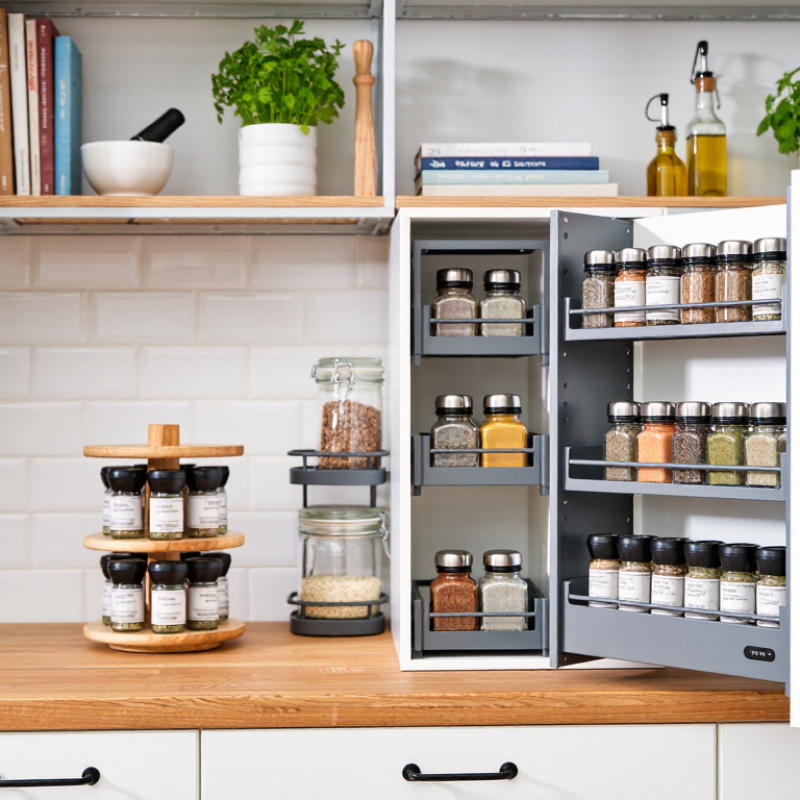
Measure the cabinet first. Check shelf depth, door clearance, jar height, and cleaning access. A tiered rack may suit a narrow cabinet, while a drawer insert may work better for frequent cooks. Magnetic systems can save shelf space, but they may fail on weak surfaces. Rotating trays improve visibility, although they can waste corners. Small mistakes matter here. An attractive Spice Rack Organizer can still frustrate you if it slides, tips, or holds only half your collection. This guide examines capacity, materials, accessibility, installation, and long-term value, helping you choose a system that supports real cooking rather than perfect-looking storage.
2026 How to Choose a Spice Rack Organizer for Your Kitchen

Define Cabinet Space Using 12–24-Inch Industry-Standard Depths

Choosing a spice rack starts with measuring cabinet depth, not browsing attractive layouts. Most kitchen cabinets provide usable depths near 12, 15, 18, or 24 inches. These industry-standard ranges help you match storage to real space. Measure from the back wall to the inner edge of the door. Leave clearance for hinges, shelf lips, and uneven walls. A rack that fits the cabinet box may still block the door.

For shallow 12-inch cabinets, use narrow tiers or a single-file pull-out design. Keep frequently used jars at eye level. A 15-inch depth offers more flexibility, but wasted rear space remains common. In an 18-inch cabinet, two rows may work if labels stay visible. Full 24-inch depth can hold larger containers, yet deep shelves often hide small spices. I have found that accessible capacity matters more than maximum capacity. Sometimes, fewer jars work better.

Check the organizer’s actual footprint, including handles and mounting hardware. Compare it with the cabinet’s narrowest point. Add about 1 inch of working clearance near moving doors or drawers. Adjustable shelves help, but they may wobble when overloaded. Secure heavy glass containers low and keep daily-use spices near the front. My measurements have been imperfect; a cardboard mockup would have prevented one poor purchase. Mark the depth on the shelf before installation. This simple test reveals blocked hinges and awkward reach early.

2026 How to Choose a Spice Rack Organizer for Your Kitchen - Define Cabinet Space Using 12–24-Inch Industry-Standard Depths

Nominal Cabinet Depth Typical Usable Interior Depth Best Spice Rack Organizer Style Recommended Organizer Depth Recommended Clearances Practical Width Planning Storage Capacity Guidance Key Measurement or Installation Check
12 inches 10.5–11.5 inches Shallow shelf rack, door-mounted rack, or compact tiered riser 8–10 inches Leave at least 0.5 inch behind the organizer and approximately 1 inch in front for door clearance. Use the cabinet's measured opening width; choose an organizer at least 0.5 inch narrower than the opening. Suitable for approximately 12–24 small spice jars, depending on jar diameter and shelf spacing. Check hinges, shelf pins, and the door's swing path before selecting a door-mounted model.
15 inches 13.5–14.5 inches Two- or three-tier shelf organizer or narrow pull-out rack 11–13 inches Allow 0.5–1 inch of rear clearance and confirm that the front edge does not interfere with the cabinet door. Measure the narrowest point between side walls, not only the cabinet opening at the front. Suitable for approximately 18–36 spice jars or a combination of jars and small seasoning packets. Use adjustable shelves when possible so taller containers can stand upright without blocking lower rows.
18 inches 16–17.5 inches Full-depth tiered rack, pull-out basket, or adjustable shelf insert 14–16 inches Keep approximately 1 inch behind the rack for wall irregularities, cables, or hardware. For pull-outs, allow side clearance required by the slide hardware; verify the manufacturer's installation specification. Suitable for approximately 24–48 spice jars, depending on the number of tiers and container size. Confirm the cabinet's internal depth after subtracting the door, hinges, back panel, and any plumbing or electrical obstructions.
21 inches 19–20 inches Deep tiered shelf, pull-out pantry insert, or modular drawer-style rack 16–18 inches Reserve 1–2 inches of total depth for the cabinet back, door hardware, and comfortable access. Choose the organizer by actual interior width; nominal cabinet width does not equal usable storage width. Suitable for approximately 30–60 spice jars, with room for measuring spoons or small seasoning tools. Use front-to-back rows only when the organizer has raised tiers or pull-out access to prevent hidden jars.
24 inches 22–23 inches Deep pantry pull-out, multi-tier shelf system, or adjustable cabinet organizer 18–21 inches Leave at least 1 inch behind the organizer and enough front clearance for the door and hand access. For wide cabinets, divide the space into smaller zones to reduce reaching and improve visibility. Suitable for approximately 36–72 spice jars, depending on organizer width, tier count, and jar diameter. Prefer pull-out or stepped designs; a flat deep shelf can create inaccessible rows and duplicate containers.

Measurement rule: Before purchasing, measure the narrowest interior width, the usable front-to-back depth with the door closed, and the clear vertical height between shelves. Nominal cabinet depth is a planning reference; actual usable space varies with construction, hinges, doors, shelves, and installation hardware.

Match Rack Capacity to 2–4-Inch Spice-Jar Diameters and Shelf Loads

A practical spice rack begins with measurement, not jar counting. The 2024 NKBA Kitchen and Bath Design Trends report identifies storage organization as a continuing kitchen-planning priority. Measure each jar at its widest point. Include the lid and label. A 2-inch jar needs less space than a 4-inch jar, but both need finger clearance. Leave at least half an inch between rows when jars sit behind one another.

Match rack capacity to real shelf conditions. A 24-inch shelf may hold twelve 2-inch jars, but only five or six 4-inch jars across its usable width. Depth matters too. A shallow rack can block taller containers or prevent doors from closing. The KCMA A161.1 cabinet performance standard evaluates shelves with distributed loads, including a 15-pound-per-square-foot test condition. Your rack should spread weight evenly, rather than concentrate it on two small supports.

I once planned by jar count. It looked efficient. It was not. After filling the rack, labels disappeared behind the front row, and the shelf began to sag slightly. Weigh the loaded rack before installation. Then compare that weight with the shelf’s stated limit. For mixed jars, choose adjustable dividers and reserve about 15 percent of capacity. That spare space feels wasteful, but it absorbs changes in jar diameter and prevents awkward overloading. Load tests are controlled; kitchens are not. Real use deserves caution.

Compare Pull-Out, Tiered, Magnetic, and Drawer Organizer Designs

Pull-out, tiered, magnetic, and drawer organizers solve different kitchen problems. A pull-out rack suits a narrow cabinet beside the stove. Its sliding shelves bring rear jars forward, but heavy bottles can make the mechanism stiff. Measure cabinet width, depth, and door clearance before buying. A 2-centimeter mistake can waste the whole compartment.

Tiered shelves keep labels visible and work well in open cabinets. They need enough vertical space for tall grinders. Magnetic racks free cabinet shelves and place frequently used spices near eye level. However, magnets may not hold large glass jars securely.

Drawer organizers create the cleanest view from above, especially for small containers. They require accurate drawer depth and careful grouping by cooking frequency.

The 2024 Houzz U.S. Kitchen Trends Study reports that 76% of renovating homeowners upgrade cabinet storage, showing strong demand for better organization. Storage quality matters more than appearance alone. USDA’s FoodKeeper guidance lists many ground spices for best quality within roughly two to three years. Choose a design that keeps lids readable and containers dry.

In my experience, drawers feel efficient, yet I often forget spices stored below the main work zone. That flaw deserves attention. A practical test helps: place your five most-used spices where one hand can reach them while stirring.

Check Materials Against Food-Safety, Corrosion, and Load-Rating Standards

2026 How to Choose a Spice Rack Organizer for Your Kitchen

A spice rack sits near heat, steam, oil, and frequent handling. Its material needs more than an attractive finish. Choose stainless steel, glass, or sealed, food-contact-safe plastic for areas touching containers. Ask for clear material information and care instructions. Vague claims such as “non-toxic” are not enough. Food-contact safety depends on the material, coating, and intended use.

Corrosion deserves close attention. Inspect welds, corners, screws, and joints, where moisture often remains after cleaning. A rust-resistant grade can perform well, but no metal is completely maintenance-free. Wipe spills quickly and avoid storing the rack beside a constantly steaming kettle. I once ignored a small chip in a painted rack. Rust spread underneath before I noticed it. That mistake changed how I inspect finishes.

Check the load rating before filling every shelf. Estimate the weight of glass jars, not just empty containers. A compact shelf holding twelve jars may carry more than expected. Look for a stated maximum load and confirm whether it applies to one shelf or the entire unit. Test stability by placing heavier jars low and pulling each drawer gently. It should not tilt, flex, or scrape. Still, published ratings may assume even weight distribution. Real kitchens are messier. Leave a safety margin, especially for wall-mounted organizers, and use suitable fixings for the wall material.

2026 How to Choose a Spice Rack Organizer for Your Kitchen

Compare common organizer materials using typical moisture absorption and relative corrosion resistance. Stainless steel and glass are non-porous, while bamboo requires more careful sealing and maintenance. Food-contact compliance must be confirmed from the finished product documentation, such as FDA 21 CFR or EU Framework Regulation (EC) No. 1935/2004. Load capacity is product-specific, so always check the manufacturer’s tested shelf rating.

Typical reference values: stainless steel and glass have approximately 0% water absorption; glazed ceramic is generally below 1%; bamboo varies by species and finish and commonly absorbs more moisture. Corrosion resistance is a comparative screening scale from 1 to 5, not a certification.

Evaluate Visibility, Cleaning, Installation, and Cost per Storage Slot

2026 How to Choose a Spice Rack Organizer for Your Kitchen

Visibility should guide your choice. A rack must show every label without forcing you to move jars. Tiered shelves work well in deep cabinets. Wall-mounted designs keep spices near eye level. I prefer adjustable slots for uneven containers. Clear labels help, but poor lighting still causes mistakes. Dark corners are a warning. During cooking, I should identify a spice within seconds. A slight forward tilt can improve access, although it may reduce stability.

Cleaning matters more than glossy pictures suggest. Choose smooth surfaces with few seams and removable trays. Fine powder often collects beneath frequently used jars. Wipe the rack weekly with a damp cloth, then dry it fully. Avoid materials that absorb oil or retain moisture. I once chose a tightly fitted organizer and regretted it. The narrow gaps were difficult to clean properly. That experience changed my preference toward open spacing.

Installation affects both safety and real value. Check cabinet depth, wall strength, door clearance, and available tools before buying. Adhesive mounting seems simple, but warm kitchens can weaken some adhesives. Screws usually provide stronger support when the surface allows them. Calculate cost per storage slot by dividing total cost by usable slots, not advertised capacity. Include mounting hardware and replacement parts. A cheap rack with eight awkward slots may cost more than a durable rack with twelve practical ones. My measurements are not always perfect, so I leave extra clearance for larger jars.

Go to Top