
7 Tips for Choosing Flexible Packaging Slitting Blades?

Choosing the right flexible packaging slitting blades can determine whether a production run stays profitable or becomes a costly rework exercise. Film thickness, laminate structure, coating, machine speed, and winding tension all affect cutting performance. A blade that performs beautifully on clear PET may struggle with adhesive-coated laminate. Small differences matter.

Dr. Thomas Scherrer, a veteran slitting and converting engineer, offers a practical reminder: “A blade is only as good as the web it leaves behind.” That principle deserves attention. Clean edges, stable webs, low dust, and consistent roll geometry reveal more than a blade’s price tag. They also expose poor assumptions. Sometimes, the chosen blade looks perfect on paper but fails beside the unwind stand.

This guide presents seven practical tips for selecting flexible packaging slitting blades with greater confidence. It considers blade material, edge geometry, hardness, coating, blade life, safety, and supplier support. It also connects each choice to real production details, such as curling film edges, uneven slit widths, adhesive buildup, and changing roll diameters. Measure the actual problem first. Guessing is expensive. A thoughtful trial run remains valuable, even when experience suggests the answer. Record the results carefully, question unexpected wear, and avoid treating one successful setup as a universal solution. The best blade is not simply sharp. It must match the material, machine, and production target.
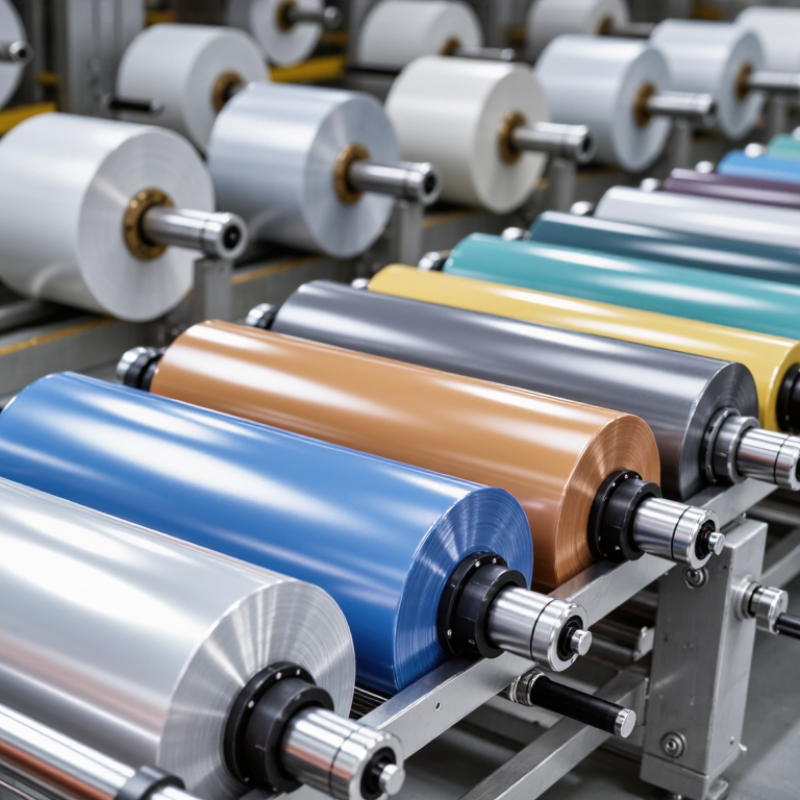
7 Tips for Choosing Flexible Packaging Slitting Blades?

Define the Material and Cutting Requirements

Choosing flexible packaging slitting blades starts with identifying the material, not the machine. Film, foil, paper, and laminated structures react differently under pressure. Record the substrate, thickness, layer order, coating, and adhesive properties. A thin polyethylene film may stretch, while aluminum foil can crease before it separates. Paper often creates dust. These details guide the blade material, edge angle, and cutting method.

Define the cutting requirements with equal care. Measure web speed, roll width, slit width, winding tension, and expected production volume. State the acceptable edge condition, including burr limits, fiber pullout, curl, and powder. A clean food-contact package may require tighter control than an industrial wrap. Sharpness alone is not enough. Blade stability matters too. In practice, a slightly thicker blade can improve support, but it may waste more material between lanes.

Test the blade on the actual production structure. Small samples can hide problems. Run a longer trial at normal speed and tension, then inspect both edges under magnification. Watch for melted film, adhesive buildup, uneven lanes, and rapid wear. I have seen a blade selected by thickness perform poorly because the laminate softened during cutting. That mistake is easy to repeat. Keep test records, including temperature and machine settings. Requirements sometimes change after production begins, so review the specification when the package structure or line speed changes.

7 Tips for Choosing Flexible Packaging Slitting Blades? — Define the Material and Cutting Requirements

Use the material structure, web thickness, machine configuration, and required edge quality to select a suitable flexible packaging slitting blade. The values below are general engineering guidelines and should be validated through a controlled production trial.

Tip Cutting Requirement Typical Materials Recommended Blade Considerations Practical Selection Guidance
1 Identify the material structure PE PP PET Paper Laminates Match the blade geometry and edge strength to the material’s toughness, stretch, abrasiveness, and layer structure. Soft films such as polyethylene can deform during cutting, while polyester, metallized films, paper, and multilayer laminates may require a sharper or more wear-resistant edge. Do not select a blade based only on the outermost film layer.
2 Measure total web thickness Monolayer films, coated films, foil laminates, paper-film laminates, and multilayer packaging webs Confirm the complete finished thickness, including coatings, adhesive layers, foil, paper, and sealant layers. Thin flexible films commonly range from approximately 10 to 150 micrometres, while laminated structures can be substantially thicker. A blade that is too fine for a thick or abrasive structure may chip or wear quickly; excessive blade penetration can increase dust, burrs, and deformation.
3 Choose the cutting method Crush-cut, razor, shear, and score-cut applications Select the blade profile according to whether the process uses a counterknife, anvil, grooved roll, or unsupported web. Razor cutting is often suitable for thin films and low-force applications. Shear cutting generally provides a cleaner edge on thicker, tougher, or laminated webs when the upper and lower knives are correctly overlapped and aligned. Crush cutting is commonly used where a robust, simpler setup is preferred.
4 Define the required edge quality Packaging film for form-fill-seal, pouch, label, medical, and high-appearance applications Specify acceptable levels of burrs, edge curl, fuzz, film stretching, delamination, dust, and intermittent tearing. A sharper edge and stable knife support can reduce tearing and deformation, but edge sharpness alone cannot correct poor tension control, runout, misalignment, or an unsuitable cutting angle. Inspect both slit edges at the actual production speed.
5 Consider wear and contamination Metallized films, foil laminates, paper-containing structures, mineral-filled films, and adhesive-coated webs Evaluate substrate hardness, edge retention, corrosion resistance, and resistance to adhesive buildup. Abrasive fillers, paper fibers, and aluminum foil can accelerate edge wear. Adhesive or sealant residues may build up on the blade and affect cut quality. Choose a suitable tool material or surface treatment only after confirming compatibility with the material and cleaning process.
6 Match the blade to machine conditions High-speed slitters, rewinders, duplex systems, and differential-shaft machines Check blade diameter, bore, thickness, mounting style, knife angle, operating speed, and available adjustment range. The blade must fit the holder and maintain stable contact throughout the web width. Excessive knife pressure can create heat, wrinkles, edge damage, and premature wear. Confirm the machine manufacturer’s dimensional requirements before ordering replacement blades.
7 Validate through a controlled trial New materials, new laminate constructions, recycled-content films, and changed production speeds Test blade geometry, edge angle, pressure, overlap, web tension, and speed as a complete cutting system. Record slit-edge appearance, roll telescoping, dust generation, noise, blade life, and downtime. Begin with conservative pressure and speed settings, then adjust one variable at a time. A trial on the exact production structure is more reliable than selecting a blade from material names alone.

Selection checklist: material structure, total thickness, cutting method, edge-quality target, abrasion and adhesive risk, machine dimensions, operating speed, web tension, and trial results.

Match Blade Geometry to the Packaging Film Structure

7 Tips for Choosing Flexible Packaging Slitting Blades?

Match Blade Geometry to the Packaging Film Structure

Tip 1: Identify the film stack before choosing a blade. A thin polyethylene film needs different cutting action from a coated laminate.

Tip 2: Use a sharper edge for soft, single-layer films. It can reduce drag and edge stretching.

Tip 3: Consider a controlled bevel for laminated structures. A moderate bevel often separates layers more cleanly. Very sharp is not always better.

Tip 4: Match the blade angle to film thickness and tension. Thin films may wrinkle under excessive cutting force.

Tip 5: Select a tougher edge for abrasive layers, such as metallized or mineral-filled films.

Tip 6: Check the edge radius carefully. A rounded edge may survive longer, but it can create fuzz, burrs, or uneven web edges. In my experience, small geometry changes become visible under strong inspection lighting.

Tip 7: Test the blade on the actual production structure. Compare edge quality, dust, heat, and roll telescoping after several rewinds. Keep tension, speed, and blade overlap consistent during trials.

A blade that performs well on a sample roll may disappoint on a full-width run. This is where judgment remains imperfect.

Operators should record wear patterns, not just the first-cut result. Examine the slit edge with a loupe, especially after changes in adhesive, coating, or film thickness. Geometry must follow the structure, not habit.

Select the Right Blade Material and Edge Finish

Flexible packaging slitting depends heavily on blade material and edge finish. The wrong combination can create dust, curled film, uneven widths, or adhesive buildup. In production trials, I compare the blade with the actual laminate, not with a sample film alone. Thickness, tensile strength, coating, and layer structure all affect cutting behavior.

Hardened tool steel suits many common films and offers a practical balance of sharpness, toughness, and cost. Carbide can hold an edge longer during abrasive applications, especially with mineral-filled films or heavy laminates. Ceramic materials may resist wear well, but they can chip if alignment or handling is poor. They are not automatically better. A polished edge usually reduces drag and heat on clean, smooth films. Adhesive-coated materials may need a slightly different finish to prevent residue from spreading across the edge.

Surface finish matters. A very fine edge can produce cleaner cuts, yet it may lose performance quickly when the setup vibrates. Micro-serrated edges sometimes improve grip on slippery structures, but they can leave a rougher cut. Test before scaling. Measure burrs, edge waviness, dust, and roll tension after several hours, not just after the first cut. I once approved a blade after a short trial and missed residue buildup near the core. That mistake changed our inspection routine. Keep the blade angle, pressure, and material lot consistent during testing. Small variables can hide a poor material choice.

7 Tips for Choosing Flexible Packaging Slitting Blades

Select the right blade material and edge finish for film, foil, laminate, and coated packaging applications.

The chart shows typical hardness ranges for commonly used steel blade materials. Actual values vary with heat treatment, composition, and manufacturer specifications.

1. Match the blade material
Use corrosion-resistant stainless steel for moisture-sensitive processes and tool steel for higher wear resistance.
2. Consider film construction
Thin films, aluminum foil, laminates, and coated webs can require different hardness and edge geometries.
3. Select the correct edge angle
Sharper edges reduce cutting force, while stronger edge angles can better resist chipping in abrasive materials.
4. Choose the edge finish
A polished edge supports clean cuts in delicate films; a fine-ground or lightly honed edge can improve durability.
5. Evaluate coating needs
Surface treatments may reduce friction and wear, especially during long production runs.
6. Check dimensional accuracy
Flatness, concentricity, thickness tolerance, and holder compatibility are essential for stable slit quality.
7. Validate under production conditions
Test blade life, dust generation, web tension, speed, and cut quality using the actual packaging structure.

Evaluate Slitting Precision, Speed, and Machine Compatibility

Choosing flexible packaging slitting blades requires more than comparing prices. The Flexible Packaging Association’s 2024 industry report places U.S. flexible packaging sales near $40 billion in 2023. That scale makes waste control important.

Check the web structure first. Film thickness, coating, adhesive, and laminate hardness affect edge stability. Match the blade profile to the slitting method, including razor, shear, or crush cutting. Confirm the blade diameter, bore, mounting style, and holder clearance. A perfect edge is useless if the machine cannot hold it securely.

Measure slitting precision at the actual production speed. Do not rely only on a supplier’s maximum rating. During trials, inspect a 10-metre sample for wandering cuts, burrs, dust, and edge curl. Use a microscope when defects appear too small to see. Smithers’ flexible packaging forecasts show continued market growth through 2028, increasing pressure for consistent, high-speed converting. Select blade material according to the substrate, not habit. Hardened steel may suit common films, while carbide can improve wear resistance on abrasive laminates. Record blade life, changeover time, and rejected metres. Small records reveal expensive patterns.

Machine tension matters. Excessive tension can disguise poor blade alignment. Run three speeds and compare cut quality, noise, and motor load. Keep spare blades protected from moisture and impact. This detail is often neglected. A controlled trial may still fail when operators use different setup pressures. That weakness deserves review.

Compare Blade Durability, Maintenance, and Total Cost

7 Tips for Choosing Flexible Packaging Slitting Blades

Durability should be judged against your actual film structure, not a catalog promise. Match blade material and edge geometry with film thickness, laminate layers, adhesive load, and cutting speed. Hardened steel can resist wear, while suitable coatings may reduce friction and residue buildup. Coatings are not magic. Inspect the edge for chipping after a controlled production run. A small mismatch can create rough edges, dust, and rejected rolls. Ask for documented test results, including meters cut and acceptable edge quality.

Maintenance affects performance more than many purchasing teams expect. Check blade edges under magnification during scheduled stoppages. Remove adhesive residue with approved cleaning methods, and keep holders free from film particles. Confirm alignment, pressure, and tension before blaming the blade. A damaged holder can imitate a dull edge. Replace blades when defects increase, not only when cutting stops completely. Delaying replacement may increase scrap and stress nearby equipment.

Total cost should include the blade, labor, downtime, waste, sharpening, and inventory. Calculate the cost per thousand meters for a fair comparison. A blade lasting twice as long may still lose if it requires slower speeds or frequent adjustments. Run a trial with your own film and record changeover minutes, roll quality, and discarded material. Keep the settings consistent. The spreadsheet may still miss operator judgment, so review the results with experienced production staff before making a final decision.

Go to Top