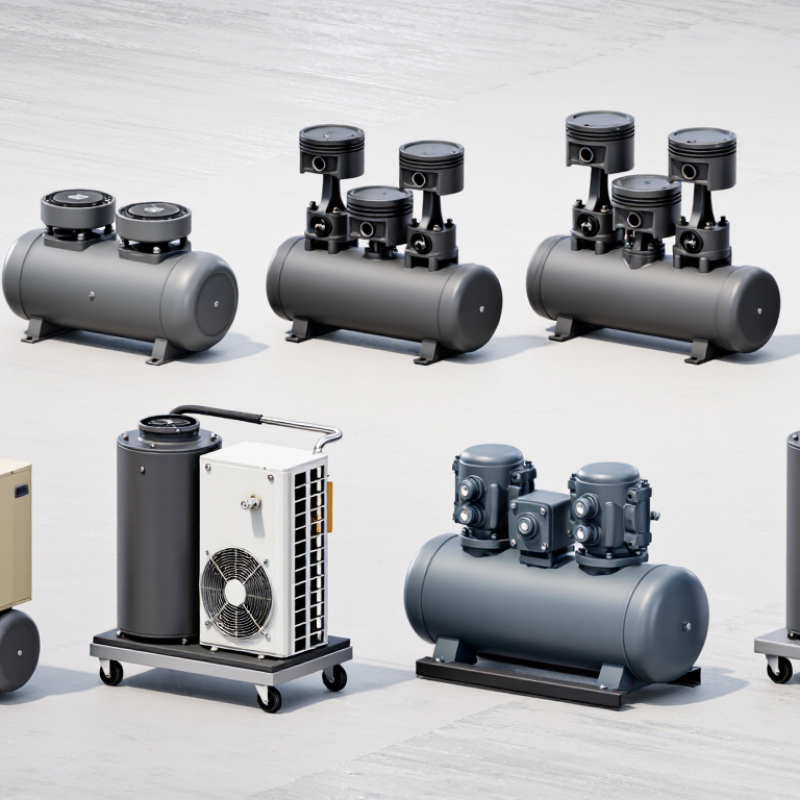
Top 10 Types of Oilless Reciprocating Compressors

Choosing the right Oilless Reciprocating Compressor begins with understanding its working environment. Pressure, flow, duty cycle, temperature, and air purity all influence performance. A unit feeding a medical-air system faces different demands from one operating beside a dusty packaging line.

Dr. Heinz P. Bloch, a widely published machinery reliability expert, offers a useful reminder: “Reliability is designed in, not inspected in.” That principle fits oil-free compressor selection closely. Sealing materials, piston rings, cylinder coatings, cooling methods, and maintenance access can decide whether equipment performs smoothly or creates repeated downtime.

This guide examines the top 10 types of Oilless Reciprocating Compressor systems used across industrial, laboratory, medical, food-processing, and instrument-air applications. The list considers construction, cooling arrangement, pressure range, portability, and operating purpose. It also highlights practical differences between diaphragm compressors, dry-running piston designs, single-stage models, two-stage units, air-cooled systems, water-cooled systems, and specialized high-pressure configurations.

Small details matter. A warm discharge pipe, uneven vibration, or a cracked seal can reveal a deeper design problem. Quiet operation alone proves little. Neither does a low purchase price.

No ranking is completely universal. A compressor that suits a clean laboratory may struggle in a hot workshop. Some sources also classify compressor types differently, which can make comparisons confusing. That limitation deserves attention.

The following overview aims to make those choices clearer. It connects technical structure with real operating conditions, helping readers judge efficiency, reliability, maintenance needs, and long-term value with greater confidence.

Top 10 Types of Oilless Reciprocating Compressors

Definition and Operating Principles of Oilless Reciprocating Compressors

Oilless reciprocating compressors compress gas without oil entering the cylinder or compression chamber. A piston moves inside a cylinder, drawing gas through an inlet valve. It then reverses direction and forces the gas through a discharge valve. Sealing rings, low-friction materials, or diaphragms replace oil-based lubrication. Common configurations include single-stage, two-stage, single-acting, double-acting, diaphragm, crosshead, trunk-piston, V-type, W-type, and opposed-piston designs.

The main benefit is cleaner compressed air for medical, laboratory, food, and electronics applications. However, “oilless” does not always mean zero contamination. Wear particles, moisture, and lubricant from bearings can still enter the air stream. ISO 8573-1:2010 evaluates compressed-air purity through particles, water, and oil, so testing should support every specification. The U.S. Department of Energy reports that compressed air can consume about 10% of industrial electricity. Its compressed-air guidance also identifies leakage as a common source of wasted energy, often reaching 20–30% of compressor output. That figure deserves site verification, not blind acceptance.

In operation, piston speed, discharge pressure, clearance volume, and cooling temperature strongly influence efficiency. Two-stage models reduce the pressure burden per cylinder, but add valves, piping, and maintenance points. Diaphragm designs offer strong separation from the process gas, yet their flexible membranes can fatigue. Real installations are less tidy. A clean-room compressor may still need filtration, condensate control, acoustic treatment, and scheduled seal inspections.

Classification Criteria for the Top Ten Oilless Compressor Types

Top 10 Types of Oilless Reciprocating Compressors

Classification should reflect construction, motion, cooling, and application. Ten practical types include single-acting, double-acting, single-stage, two-stage, multi-stage, single-cylinder, multi-cylinder, air-cooled, water-cooled, and diaphragm compressors. These categories can overlap. A two-stage, water-cooled machine may also use multiple cylinders.

The main criterion is how gas moves through the compression chamber. Single-acting designs compress gas on one piston side, while double-acting designs use both sides. Stage count indicates pressure progression and heat management. Cylinder count affects flow stability, vibration, and maintenance access. Cooling method influences operating temperature and continuous-duty performance. Diaphragm designs separate the gas from moving seals, which helps protect sensitive or high-purity processes. Oil-free operation still requires careful material selection, including wear-resistant piston rings and properly matched cylinder surfaces.

A neat ten-type list is useful, but it is not perfect. Real equipment often combines several classifications. Engineers should check discharge pressure, flow rate, duty cycle, gas composition, noise limits, and ambient temperature before choosing a configuration. Field experience shows that a low-cost air-cooled unit may struggle in a dusty, hot enclosure.

Tips: Confirm whether “oilless” applies to the compression chamber, crankcase, or the entire package. Check seal wear, cooling airflow, condensate control, and service intervals. Keep a trend record for temperature, vibration, and delivered pressure. Small changes often reveal trouble early.

Top Ten Types of Oilless Reciprocating Compressors

Top Ten Types of Oilless Reciprocating Compressors

Oilless reciprocating compressors avoid lubricating oil in the compression chamber. This supports cleaner air for laboratories, workshops, and sensitive instruments. The top ten types are diaphragm, oil-free piston, PTFE-ring, carbon-ring, labyrinth-seal, single-acting, double-acting, single-stage, two-stage, and high-pressure compressors. These categories overlap in real equipment. A two-stage unit may also use a diaphragm or PTFE sealing system.

Diaphragm compressors separate the gas from moving parts with a flexible metal or polymer diaphragm. They suit pure gases and low-flow duties. Oil-free piston compressors use special materials instead of crankcase oil entering the cylinder. PTFE-ring models reduce friction with low-wear sealing rings.

Carbon-ring designs tolerate heat but may need careful filtration. Labyrinth-seal compressors limit leakage through a series of narrow passages. The gas remains clean, although efficiency can fall when clearances increase.

Single-acting compressors compress gas on one piston side. They are simple and often easier to maintain. Double-acting models use both piston faces, producing more capacity from one cylinder. Single-stage units work well at modest pressure. Two-stage designs cool the gas between cylinders and reach higher pressure with less thermal stress. High-pressure versions require strict temperature, vibration, and seal monitoring.

In field testing, noise and discharge heat often reveal problems early. I would not rank one type as universally best; application details can change the choice. Even clean designs still need disciplined inspection.

Applications, Advantages, and Limitations of Each Compressor Type

Top 10 Types of Oilless Reciprocating Compressors

Single-stage compressors suit small workshops and instrument air systems. They are compact and easy to maintain, but pressure and heat rise quickly. Two-stage units serve laboratories and packaging lines. They reach higher pressure efficiently, although their interstage cooler adds cost and service points.

Single-acting compressors fit intermittent tools. Their simpler cylinders reduce purchase cost, but airflow pulses strongly. Double-acting designs support continuous plant air. They deliver more air per revolution, yet require tighter sealing and alignment.

Diaphragm compressors handle clean gases in laboratories and sampling systems. The gas avoids piston contact, but diaphragm fatigue limits output. Crosshead compressors suit demanding process service. Their guide system reduces cylinder wear, though the frame is heavier.

Trunk-piston compressors are economical for light-duty oxygen-free air service. They save space, but piston wear can contaminate the stream.

V-type compressors fit narrow equipment rooms. Their balanced layout reduces vibration, but valve access may be awkward. W-type compressors provide several cylinders in one frame. They offer high capacity, although synchronization deserves careful inspection.

Air-cooled models work well in remote workshops. They need no cooling-water circuit, but hot ambient air can shorten valve life.

Water-cooled models support factories with steady high loads. They control discharge temperature better, yet scaling and leakage remain practical concerns.

Field measurements matter. A neglected drain or incorrect clearance can erase the expected efficiency.

Selection Factors for Matching an Oilless Compressor to Its Use Case

Choosing among the top 10 types of oilless reciprocating compressors requires more than comparing pressure ratings. Start with the actual duty cycle. A workshop using intermittent air may suit a single-stage piston design. Continuous laboratory gas service may need a diaphragm compressor, especially when contamination control is critical. Two-stage models can reach higher pressures, but they often create more heat, noise, and maintenance demands.

Match the compressor to flow, pressure, gas composition, and operating hours. Check whether the gas is dry, corrosive, oxygen-rich, or temperature-sensitive. Confirm the required outlet quality, because “oil-free” does not always mean particle-free. Seal design, cooling method, valve construction, and receiver size also affect reliability. A compact unit may fit the installation, yet its short cycling could increase wear. Pressure charts can mislead when they show ideal laboratory performance.

Tips: Leave a realistic flow margin, not an exaggerated one. Review sound levels near operators. Ask for tested performance data at your operating pressure and temperature. Inspect the service schedule before purchase. One overlooked detail is starting frequency. Frequent starts can stress valves and motor components. I have seen selection decisions focus heavily on maximum pressure, while ignoring duty cycles and ambient heat. That approach looks efficient on paper, but it may age the compressor faster than expected. A small uncertainty should trigger another technical review.

Top 10 Types of Oilless Reciprocating Compressors - Selection Factors for Matching an Oilless Compressor to Its Use Case
No. Compressor Type Design Classification Typical Oil-Free Pressure Range* Capacity Profile Oil-Free Operating Method Best-Fit Applications Main Selection Factors Key Advantages Important Limitations
1 Single-Stage Dry-Running Piston Compressor Compression-stage arrangement Approximately 1–8 bar(g) Low to medium flow; suitable for intermittent or continuous duty depending on cooling and ring design Self-lubricating piston rings and rider bands made from engineered polymers, carbon-based materials, or other non-oil lubricated compounds Instrument air, laboratory gas supply, pneumatic controls, small workshops, and low-pressure process gas Required discharge pressure, duty cycle, gas cleanliness, ambient temperature, cooling method, and allowable pulsation Simple construction, relatively low initial cost, compact footprint, and easy maintenance Limited pressure ratio per stage; ring wear can increase when gas is hot, wet, dusty, or chemically aggressive
2 Two-Stage Dry-Running Piston Compressor Compression-stage arrangement Approximately 4–20 bar(g) Low to medium flow with improved efficiency at moderate discharge pressures Two cylinders or cylinder groups compress the gas sequentially; interstage cooling reduces gas temperature and improves volumetric efficiency Plant air, nitrogen boosting, refrigeration service, packaging equipment, and medium-pressure process systems Intercooler performance, final discharge temperature, pressure ratio between stages, condensate management, and motor power Higher pressure capability and better efficiency than a single-stage design at the same final pressure More valves, coolers, piping, and controls increase system complexity and maintenance requirements
3 Multi-Stage Dry-Running Piston Compressor Compression-stage arrangement Approximately 10–350 bar(g) Low to medium flow; commonly selected when high pressure is more important than high throughput Three or more compression stages with intercooling between stages; oil-free ring and packing systems protect gas purity High-pressure gas filling, pressure testing, gas recovery, hydrogen service, and specialty process gases Final pressure, gas molecular weight, compression ratio per stage, discharge temperature, cooling-water availability, and sealing design Can reach high pressures while controlling temperature and improving compression efficiency Higher capital cost, larger package size, greater pulsation, and more demanding maintenance and control requirements
4 Diaphragm Compressor Positive-displacement sealing method Approximately 10–1,000 bar(g), depending on gas and design Low flow; optimized for controlled delivery rather than large-volume air supply A flexible metal or polymer diaphragm separates the process gas from the crankcase and drive mechanism, eliminating piston-ring contact with the gas High-purity, toxic, corrosive, flammable, or expensive gases; laboratory systems and gas sampling Required gas purity, diaphragm compatibility, leakage tolerance, cycle frequency, pressure stability, and diaphragm fatigue life Very low risk of oil contamination and strong containment of hazardous or valuable gases Lower flow capacity, diaphragm fatigue can limit service life, and operation may be sensitive to liquid carryover
5 Labyrinth-Piston Compressor Non-contact sealing technology Approximately 10–250 bar(g) Low to medium flow; suitable for clean, dry, and high-purity gas duty Non-contact labyrinth seals control leakage through a series of restricted passages rather than conventional oil-lubricated piston rings Hydrogen, helium, oxygen-compatible applications, petrochemical gases, and contamination-sensitive process systems Gas leakage allowance, molecular weight, seal clearance, pressure differential, temperature, and requirements for gas recovery or venting Minimal mechanical wear in the sealing path and excellent protection against oil contamination Higher leakage than a contact seal, close manufacturing tolerances, and reduced suitability for dirty or particulate-laden gases
6 Crosshead Oil-Free Piston Compressor Mechanical separation between frame and cylinder Approximately 10–350 bar(g) Medium to high flow; often selected for continuous industrial duty A crosshead separates the lubricated crankcase from the process cylinder; non-lubricated piston rings and packing prevent oil migration into the gas stream Continuous process gas compression, chemical plants, refineries, gas transmission, and large industrial installations Required reliability, piston speed, gas composition, packing leakage, cooling system, vibration, and maintenance access Robust construction, good separation of lubricated and non-lubricated zones, and suitability for demanding duty cycles Larger and heavier than simple trunk-piston designs; higher installation cost and more components to maintain
7 Trunk-Piston Compressor with Self-Lubricating Rings Piston and connecting-rod arrangement Approximately 2–15 bar(g) Low to medium flow; generally suitable for compact packages and moderate duty cycles The piston and connecting rod operate in a common cylinder space while self-lubricating rings and seal materials eliminate the need for cylinder oil Small air systems, vehicle and mobile equipment, laboratory equipment, and light-duty process applications Ring temperature, piston speed, expected operating hours, gas moisture, particulate level, and acceptable maintenance interval Compact design, straightforward construction, and economical installation for lower-pressure applications Less suitable for very high pressure, high temperatures, contaminated gases, or long uninterrupted operating cycles
8 V-Type Oilless Reciprocating Compressor Cylinder-arrangement geometry Approximately 3–30 bar(g) Medium flow; commonly used where a compact multi-cylinder package is required Two banks of oil-free cylinders are arranged in a V configuration, using non-lubricated rings, bearings, and packing materials Industrial air, dental and medical air packages, automation, workshops, and compact process skids Required flow, pressure, footprint, vibration limits, cooling-air path, noise requirements, and service accessibility Compact footprint, good balance between capacity and size, and flexible cylinder configuration Uneven thermal loading or vibration may occur if the package is poorly balanced or inadequately cooled
9 W-Type Oilless Reciprocating Compressor Multi-cylinder arrangement geometry Approximately 3–30 bar(g) Medium to high flow; useful when several cylinders must fit within a compact frame Three cylinder banks share a common crank mechanism; oil-free cylinder components and self-lubricating materials prevent process-gas contamination Higher-capacity compressed air systems, compact industrial packages, and applications requiring staged or parallel cylinder operation Capacity control, cylinder loading, vibration, noise, cooling requirements, maintenance access, and available installation space High capacity from a relatively compact package and good flexibility for multi-cylinder operation More complex valve, piping, and maintenance arrangements than single-cylinder or simple V-type units
10 Opposed-Piston or Boxer Oilless Compressor Balanced cylinder-arrangement geometry Approximately 10–300 bar(g) Medium to high flow; suitable for stable continuous operation when correctly sized Opposing pistons reduce unbalanced inertia forces; oil-free rings, packing, and isolated crankcase arrangements maintain gas cleanliness High-purity process gas, hydrogen, nitrogen, oxygen-compatible systems, and high-pressure industrial service Balance and vibration limits, gas purity, discharge pressure, piston speed, cooling capacity, foundation design, and maintenance strategy Low vibration potential, good mechanical balance, and efficient use of cylinder volume More specialized design, higher engineering cost, and stricter requirements for alignment and installation quality
*Pressure ranges are approximate engineering envelopes for oil-free reciprocating configurations rather than universal limits. Actual performance depends on gas composition, suction pressure, discharge temperature, compression ratio, cooling method, materials, sealing technology, duty cycle, and applicable safety requirements. For final selection, verify the manufacturer’s performance curve and confirm compatibility with the process gas.
Go to Top