Top 10 Types of ASA Sheets for Global Buyers
Choosing the right material for an exterior project takes more than comparing color charts. Buyers need to consider weather exposure, surface finish, forming method, and the support behind a supplier’s performance claims. Asa Sheets are commonly selected for applications where appearance and outdoor durability both matter, but products can differ in composition, construction, and intended use. Details matter.
This guide introduces ten types, from solid-color and high-gloss sheets to matte, embossed, and woodgrain finishes. It also considers options designed for roofing, cladding, signage, and other exterior uses. These categories can overlap. A textured sheet, for example, may also have a co-extruded weatherable surface, depending on the manufacturer. Not always obvious.
For a sound comparison, review technical data for color stability, impact performance, thickness tolerance, and processing limits. Ask whether published values come from standardized testing, and request current product documentation. A sample can reveal surface feel and color, but it cannot confirm long-term outdoor performance by itself. That needs evidence.
The best choice depends on the project, local climate, fabrication equipment, and expected service conditions. Even experienced buyers may find that a low-cost option performs well in one setting and poorly in another. This overview offers a practical starting point, not a substitute for supplier verification or project-specific testing. The trade-offs deserve a closer look.
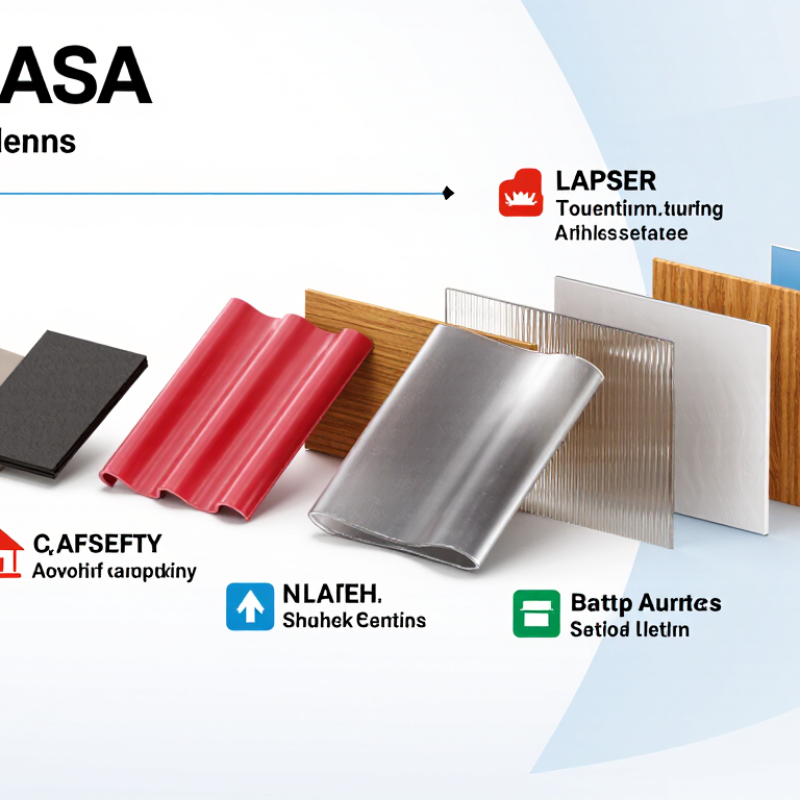
Classify 10 ASA Sheet Types by Finish, Color, Thickness, and Layer Design
ASA sheets can be grouped by surface, color, thickness, and layer construction. High-gloss sheets reflect light clearly, while matte sheets soften glare on broad exterior panels. Embossed sheets add a tactile grain that can disguise minor surface marks. Small details matter. These three finishes may look different under showroom lights than outdoors, so compare samples in natural daylight.
Color creates three more useful types: white or light-toned sheets, dark-colored sheets, and wood-grain designs. Light colors can make trim look brighter; dark tones often show dust more readily. Wood-grain patterns bring visual warmth, though printed texture may not match real timber closely. Thickness adds thin-gauge, standard-gauge, and heavy-gauge options. Thin sheets can suit lighter applications, while thicker stock may feel more rigid, depending on its support and installation. The tenth type is a co-extruded cap-and-core sheet, with a weather-resistant ASA surface joined to a backing layer. This grouping is practical, but not perfectly tidy: one sheet can be glossy, dark, and co-extruded at once. Buyers should confirm actual thickness, layer structure, and sample appearance with the supplier before specifying a project.
Top 10 Types of ASA Sheets for Global Buyers
Representative ASA sheet configurations classified by finish, color, thickness, and layer design.
Thickness values are representative nominal sizes, not a universal product standard. Actual thickness availability, surface finishes, colors, and layer structures vary by application and supplier. ASA/ABS sheets commonly use a weather-resistant ASA surface layer co-extruded with an ABS base.
Compare ASA Sheet Density Using ASTM D792 Test Data
For buyers comparing ten ASA sheet types, density is useful, but it is not a quality score. ASTM D792 measures density by weighing a specimen in air and while immersed in liquid. Solid, unfilled ASA may read near 1.07 g/cm³, but treat this as a reference, not a guaranteed grade value. Pigments, mineral fillers, recycled content, and layered construction can shift the result. Foam-core sheets may be lighter, while a thin ASA cap over another polymer may barely affect whole-sheet density. Real constructions are not always tidy.
Ask for tests on production samples, not only a brochure coupon. Keep conditioning, specimen thickness, liquid temperature, and calculation method consistent. Record the sheet type, production lot, and replicate readings. A difference of 0.01 g/cm³ can affect weight estimates, but it does not prove better weathering or impact strength. Not a pass mark. Check reports and repeat unusual readings. Trapped air can distort immersion measurements, and porous sheet edges may complicate testing. For those products, confirm that the specimen preparation suits the material. A small bubble can matter.
Top 10 Types of ASA Sheets for Global Buyers — Compare ASA Sheet Density Using ASTM D792 Test Data Density values below are indicative screening ranges in g/cm³, not certified test results for specific products. | # | ASA Sheet Type | Typical Construction | Indicative Density Range (g/cm³) | Density Considerations | Buyer Check |
| 1 | General-purpose solid ASA | Unfilled, solid ASA resin sheet | 1.05–1.10 | Useful baseline range for unfilled ASA; formulation and test conditions can shift the result. | Request the grade-specific density and test report. |
| 2 | UV-stabilized ASA | Solid ASA with UV-stabilizing additives | 1.05–1.10 | Stabilizers usually have a smaller effect on density than substantial filler or reinforcement additions. | Confirm weathering performance separately from density. |
| 3 | High-gloss ASA sheet | Solid ASA with a smooth, glossy surface finish | 1.05–1.10 | Surface gloss alone does not establish a different bulk density. | Compare surface finish, thickness tolerance, and measured density. |
| 4 | Matte or embossed ASA sheet | Solid ASA with a textured or embossed surface | 1.05–1.10 | Texture changes surface appearance; the underlying formulation is the main density driver. | Ask whether reported dimensions account for the textured profile. |
| 5 | Impact-modified ASA | ASA formulation adjusted for increased impact performance | 1.03–1.10 | Impact-modifier content and the base formulation can move density within or beyond this indicative range. | Review impact-test data alongside density. |
| 6 | ASA capstock on ABS core | Coextruded ASA surface layer over an ABS sheet core | 1.03–1.10 | Overall density depends on the densities and thickness proportions of both layers. | Request the layer construction and whole-sheet test result. |
| 7 | ASA/ABS blend sheet | Blended ASA and ABS polymer formulation | 1.03–1.10 | The blend ratio and additives influence the measured value; the name alone does not define density. | Confirm blend composition and the reported test method. |
| 8 | Mineral-filled ASA | ASA compounded with mineral filler, such as calcium carbonate or talc | 1.15–1.50 | Density generally rises with mineral loading; the filler type and percentage are decisive. | Request filler identity, loading, and grade-specific results. |
| 9 | Glass-fiber-reinforced ASA | ASA compound containing chopped glass fiber | 1.10–1.35 | Glass content and formulation affect density; reinforcement also changes stiffness and surface quality. | Check fiber content and whether the sheet is suitable for the intended finish. |
| 10 | Flame-retardant ASA | ASA compound containing a flame-retardant package | 1.10–1.45 | Density varies substantially with the flame-retardant chemistry and loading. | Verify the required fire classification and obtain a formulation-specific report. |
| Method note: ASTM D792 determines the density and specific gravity of plastics by displacement. The ranges in this table are broad, indicative material-level references—not actual ASTM D792 measurements or guaranteed specifications. For purchasing comparisons, request a current report for the exact sheet grade and formulation, including specimen conditioning, test temperature, and reported units. |
Assess UV-Resistant ASA Sheets with ISO 4892-2 Xenon-Arc Exposure
ASA sheets can vary in color, surface finish, thickness, and weathering formulation. For global buyers comparing these types, appearance alone is a weak guide. ISO 4892-2 xenon-arc exposure offers a controlled way to assess resistance to simulated sunlight. The arc reproduces parts of the solar spectrum, while selected test cycles may add heat, moisture, or water spray. Conditions matter. Ask for the exposure duration, filter type, irradiance, and temperature, not just a passing result.
After exposure, compare the tested sheet with an unexposed control. Check color change, gloss loss, chalking, cracking, and whether edges or surfaces become brittle. Use measurements where possible, such as color difference and gloss readings; visual inspection still helps reveal uneven fading.
Keep sample thickness and conditioning consistent. Small details count. ISO 4892-2 results help compare materials under stated laboratory conditions, but they do not predict an exact outdoor service life. Real installations face changing climates, dirt, and maintenance habits.
That limitation is easy to overlook. For a sound purchasing decision, pair test data with application details and request results for the specific ASA sheet grade under consideration.
Match ASA Sheet Grades to Forming Methods and End-Use Requirements
Choosing an ASA sheet grade starts with the forming process, not just the color or surface finish. For vacuum-formed covers, a consistent sheet gauge helps the material heat and draw more evenly around corners. Deep-draw parts may need a grade with suitable melt strength and a carefully controlled heating cycle. Too much heat can thin edges or soften surface detail. Small trials matter.
Co-extruded ASA/ABS sheets are often considered when a part needs an ASA weatherable surface and an ABS core. The ASA cap thickness should suit the expected exposure and forming depth; a deep draw can stretch the surface layer. For outdoor panels, inspect UV-resistance data and test a formed sample, not only a flat coupon.
For interior trim or appliance housings, impact strength, color consistency, and surface texture may matter more than maximum weathering performance. Different priorities.
Match sheet thickness and grade to the tool, draw ratio, and finished-part tolerances. A grade that works well for a shallow sign face may not perform the same in a sharply contoured enclosure. Check the supplier’s processing range, then record actual sheet temperature, cycle time, and wall thickness at critical points.
One detail is easy to miss: the best-looking sheet may not be the easiest to form. Test before specifying at scale.