
Top Warning Light Manufacturers for Global Buyers?

Choosing a Warning Light Manufacturer is a safety decision, not merely a purchasing decision. Buyers compare brightness, flash patterns, ingress protection, vibration resistance, service life, and certification evidence. A bright lamp can still fail when glare, dust, rain, or poor mounting hides its signal.

The World Health Organization’s Global Status Report on Road Safety 2023 estimates 1.19 million annual road deaths worldwide. NHTSA recorded an estimated 40,901 traffic fatalities in the United States during 2023. These figures do not prove that warning lights prevent every incident. They do show why visible, recognizable signals deserve careful evaluation. ISO 3864-1 and related safety-sign standards also remind manufacturers to consider color, contrast, and human recognition.

Don Norman, a leading human-centered design authority, wrote, “Design is really an act of communication.” That principle applies directly to industrial beacons, vehicle light bars, aviation obstruction lights, and emergency signaling equipment. The best signal is not always the brightest. It must be understood quickly.

A global buyer also needs traceable test data, stable supply, responsive technical support, and realistic warranty terms. Market reports often present strong growth forecasts, yet product quality can vary sharply between suppliers. That part is easy to overlook. This guide compares leading Warning Light Manufacturer candidates through engineering capability, application fit, compliance documentation, manufacturing experience, and after-sales reliability. No ranking is perfect. Conditions differ across mines, factories, roads, ports, and construction sites. Use this overview as a starting point, then verify every specification before placing an order.
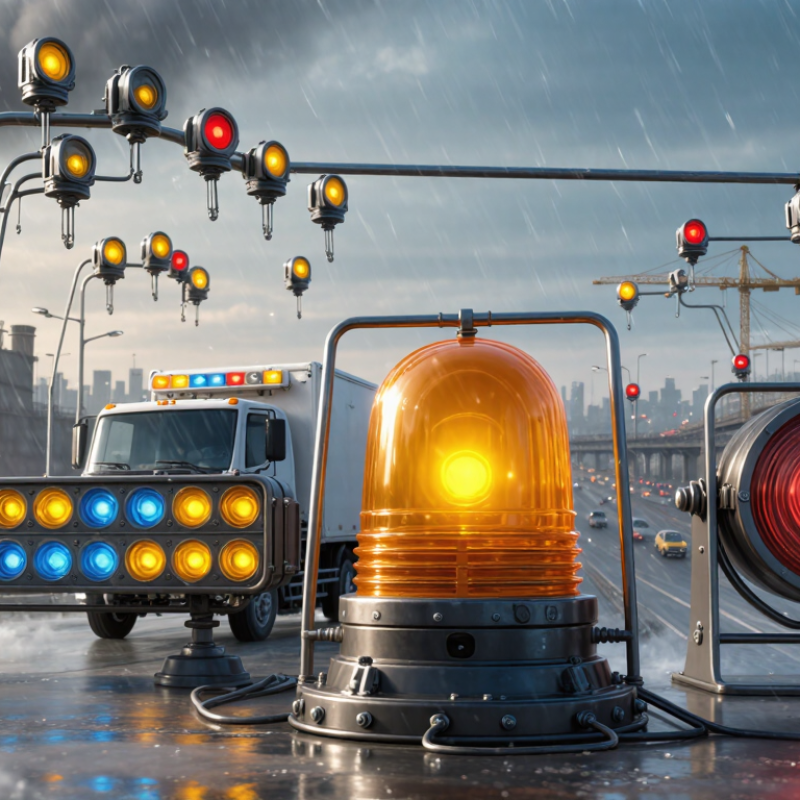
Top Warning Light Manufacturers for Global Buyers?

Types of Warning Lights and Their Common Industrial Applications

Top Warning Light Manufacturers for Global Buyers?

Warning lights communicate risk, movement, and machine status when workers cannot rely on sound alone. In plant inspections, I have seen small differences in color, lens shape, and mounting position affect response time. That distinction matters. Red lights commonly indicate danger, emergency stops, or critical faults. Amber signals caution, restricted movement, or a process requiring attention. Green often shows normal operation, while blue may identify maintenance or service activity. Color meanings can vary by site, so buyers should confirm the facility’s visual coding system.

Stack lights suit automated equipment, packaging lines, and production cells. Their layered segments display changing conditions clearly from a distance. Beacon lights provide rotating or flashing signals for cranes, loading areas, vehicles, and access gates. Sound-and-light combination units help in noisy workshops, although excessive volume can create fatigue. Panel indicators fit control cabinets and operator stations, where compact status feedback is essential. Weather-resistant warning lights are better suited to outdoor conveyors, construction machinery, and wastewater facilities.

Light patterns also influence interpretation. A steady glow usually suggests status, while flashing or rotating signals demand faster attention. Brightness must match the environment, because glare can hide important details. Buyers should examine viewing angles, ingress protection, voltage compatibility, mounting strength, and service access. Independent test records and clear technical documents build confidence. Yet specifications alone are not enough. I once underestimated sunlight reflection near a loading bay; the selected lens looked visible indoors but weak outdoors. Field trials remain valuable, especially before large-scale purchasing.

Key Criteria for Evaluating Global Warning Light Manufacturers

Top Warning Light Manufacturers for Global Buyers?

Choosing a warning light manufacturer requires more than comparing catalog prices. Global buyers should examine optical performance, electrical stability, and production consistency. Ask for measured brightness, flash frequency, beam angle, and power consumption. Request test reports, not only attractive specifications.

A dependable supplier explains its quality process clearly. Check incoming material inspections, assembly controls, aging tests, and final sampling records. IP ratings matter in dusty yards and rain-soaked roads. Temperature testing also matters when lights operate beside hot machinery or freezing storage areas. Confirm voltage tolerance before approving a sample. Small mismatches can create large field problems.

I usually request several samples from different production batches. One perfect sample proves very little. The supplier should provide traceable documents, clear warranty terms, and practical technical support. Certifications from recognized testing bodies can strengthen credibility, but buyers should verify their scope and validity. Factory audits may reveal weak cable seals, uneven lens color, or rushed labeling. These details are easy to miss.

Price still matters, especially for large fleets. Yet a cheaper lamp can cost more through early failures, replacement labor, and downtime. I have sometimes trusted polished presentations too quickly. That remains a useful warning. Evaluate communication speed, engineering responses, and willingness to discuss defects. Reliable manufacturers do not hide every imperfection. They explain corrective actions and show how future batches will improve.

Top Warning Light Manufacturers for Global Buyers? – Key Criteria for Evaluating Global Warning Light Manufacturers

Evaluation Criterion Suggested Weight Recommended Benchmark for Global Procurement What Buyers Should Verify Why It Matters Suggested Rating
Product Safety and Compliance 20% Applicable conformity documentation for the destination market, supported by test reports and a traceable technical file. Check declarations of conformity, applicable IEC or regional requirements, electrical ratings, safety instructions, and product-label information. Reduces customs, installation, liability, and market-access risks. 1–5 points
Ingress Protection 10% Select the required IP rating according to the installation environment; IP65 provides dust-tight protection and protection against water jets when properly tested. Confirm the exact IP rating in the test report and verify whether it applies to the complete assembled light, connectors, and mounting configuration. Helps prevent dust or water ingress in outdoor, industrial, and washdown applications. 1–5 points
Impact Resistance 6% Use an IK rating where the product may be exposed to mechanical impact; IK08 withstands 5 joules and IK10 withstands 20 joules under IEC 62262 test conditions. Request the applicable IEC 62262 test evidence and confirm which enclosure components were tested. Improves protection in factories, warehouses, transport facilities, and public infrastructure. 1–5 points
Visibility and Optical Performance 12% Document viewing distance, luminous intensity or illuminance, light distribution, flash pattern, and color options for the intended environment. Review photometric data, optical test conditions, lens material, viewing-angle information, and night/day visibility performance. A warning signal is only effective when operators can recognize it quickly and accurately. 1–5 points
Acoustic Alert Performance 8% For audible models, compare sound-pressure level in dB(A), tone selection, frequency range, and stated measurement distance under defined conditions. Ask for sound-level test data and confirm whether the rating is measured at 1 metre, in a free field, or under another stated condition. Supports reliable alerts in noisy environments while helping manage excessive workplace noise. 1–5 points
Electrical Compatibility 10% Voltage, frequency, current draw, polarity, wiring method, connector type, and control interface must match the target system. Check datasheets for operating-voltage tolerance, inrush current, terminal assignments, relay or PLC compatibility, and overvoltage protection. Prevents premature failure, incorrect signaling, installation delays, and control-system faults. 1–5 points
Environmental Durability 9% The design should specify operating-temperature limits, humidity conditions, UV resistance where relevant, corrosion protection, and suitable enclosure materials. Review environmental test records, material specifications, salt-spray evidence where applicable, and stated storage and operating ranges. Indicates whether performance can remain stable throughout the expected service environment. 1–5 points
Reliability and Service Life 9% Prefer documented LED operating life, switching-cycle capability, failure-rate information, and a clearly defined warranty period. Separate LED lifetime claims from complete-product lifetime claims and request reliability-test methods and warranty terms. Reduces maintenance costs, unplanned downtime, and replacement frequency. 1–5 points
Quality Management and Traceability 7% A documented quality-management system, controlled production records, incoming-material inspection, and serial or batch traceability. Request current certification where claimed, inspection plans, sample test records, corrective-action procedures, and batch-identification examples. Improves consistency across repeat orders and simplifies investigation of quality issues. 1–5 points
Customization and System Integration 5% Ability to support required colors, flash patterns, mounting options, connectors, communication interfaces, labels, and packaging specifications. Confirm engineering-change procedures, sample approval, interface documentation, minimum order quantities, and customization lead times. Determines how easily the warning light can be integrated into existing equipment and procedures. 1–5 points
Supply Capacity and Lead Time 4% A documented production capacity, realistic standard lead time, contingency planning, and clear allocation policy for repeat orders. Compare quoted lead times with historical delivery records, capacity information, production locations, and escalation procedures. Supports project schedules and reduces supply interruptions for global buyers. 1–5 points

Leading Warning Light Manufacturers by Product Strengths and Markets

Global warning light manufacturers increasingly compete through specialization, not identical product catalogs. MarketsandMarkets estimates the industrial automation market could reach USD 265.8 billion by 2029, supporting steady demand for visible machine-status signals. Manufacturers serving factories usually focus on modular stack lights, high-cycle LEDs, audible alarms, and programmable controllers. Their strongest advantage is fast integration with PLC systems and automated production lines.

For outdoor infrastructure, ruggedness matters more than decorative design. Manufacturers targeting transport, ports, and construction sites commonly offer IP66 or IP67 housings, wide-voltage inputs, and sunlight-resistant lenses. The Grand View Research industrial automation report identifies transportation and logistics as important automation users, where signals must remain visible through rain, dust, and background glare. Some suppliers also provide amber, red, and blue configurations for different operational warnings. Color alone can mislead.

Process industries often require explosion-resistant or corrosion-resistant designs, depending on the installation environment. Their manufacturers emphasize temperature tolerance, stainless-steel construction, and long service life. The International Energy Agency reported that global electricity demand is expected to grow strongly through 2026, encouraging further investment in power and industrial infrastructure. That trend may expand demand for robust signaling equipment, although market forecasts vary widely by report and region. Buyers should verify photometric data, test certificates, warranty terms, and local installation requirements rather than trusting headline brightness. Real-world testing still exposes weaknesses.

International Standards, Certifications, and Compliance Requirements

Selecting top warning light manufacturers for global buyers requires more than comparing brightness, colors, or price. Compliance evidence matters. Experienced suppliers should identify the product’s application, installation environment, and destination market before recommending a model.

For industrial equipment, buyers should review IEC 60529 IP ratings, EMC test results, and environmental testing under relevant IEC 60068 methods. A stated IP65 rating is useful only when supported by controlled testing and clear installation conditions. For machinery, documentation may need to support applicable safety and EMC requirements. In Europe, CE marking is backed by a Declaration of Conformity, technical files, and risk assessment. It is not simply a quality badge. For the United Kingdom, buyers may also need UKCA-related documentation, depending on the product and market route.

Automotive warning lights can involve E-mark requirements, regional vehicle regulations, and specific photometric performance rules. North American projects may request UL or CSA recognition, but acceptance depends on the exact product category and installation. RoHS and REACH declarations are also commonly requested for supply-chain review. ISO 9001 can indicate a controlled quality system, yet it does not prove that every warning light is compliant.

Ask manufacturers for current certificates, test reports, wiring diagrams, photometric data, and batch traceability. Check whether documents match the exact model, voltage, lens color, and production site. Small details matter. I have seen buyers accept a certificate covering a different version. That shortcut creates avoidable risk. Requirements also change, so older files deserve a second look.

How Global Buyers Can Compare Suppliers and Select the Right Partner

Top Warning Light Manufacturers for Global Buyers

Global buyers should compare warning light manufacturers through evidence, not polished brochures. Review beam visibility, flash patterns, operating voltage, noise levels, and service life. A sample may look impressive on a clean office table, yet fail during vibration, dust, or extreme temperatures. Request test reports, production photos, quality records, and destination-market compliance documents. Check whether the supplier can trace components by batch. That detail matters when a shipment contains inconsistent brightness.

Tips: Create a comparison sheet. Record response time, minimum order quantity, tooling charges, warranty terms, and delivery history. Ask for two samples from different production batches. Test them beside real equipment, outdoors and at night. Small differences become obvious.

A reliable partner should explain technical limits clearly. They should identify lens materials, sealing methods, wiring options, and mounting tolerances. Confirm how engineering changes are approved and documented. Also assess communication after the sale. Do they provide replacement parts, troubleshooting guides, and practical installation advice? Price deserves attention, but it should not dominate the decision. The cheapest unit can create higher costs through failures, returns, and downtime. Some supplier evaluations remain imperfect because factory visits are not always possible. Video audits help, but they cannot replace independent testing. Leave room for doubt, and verify critical claims before signing a purchase agreement.

Top Warning Light Manufacturers for Global Buyers

How global buyers can compare suppliers and select the right partner

This illustrative procurement scorecard assigns a 100% evaluation weight across measurable supplier-selection factors. Buyers can adjust the weighting according to application risk, regulatory requirements, delivery urgency, and total cost objectives.

Go to Top