
What Are Stainless Steel Manufacturers?
Stainless steel manufacturers turn carefully specified alloys into products used in kitchens, hospitals, construction, transport, and energy systems. Their work involves more than melting metal. It includes selecting grades, controlling chemistry, shaping and heat-treating material, finishing surfaces, and checking each batch against customer requirements. Details matter.
A useful paraphrase of the principle reflected in welding researcher John C. Lippold’s work is: “Choose the alloy and fabrication method together.” This is a paraphrase, not a verified verbatim quotation. It captures why grade selection cannot be separated from how a product will be cut, formed, welded, or exposed to corrosive conditions. A bright sheet may look dependable, yet its performance depends on its composition, finish, and intended environment.
In this guide, we explain what stainless steel manufacturers do, how production typically works, and what distinguishes mills from service centers and fabricators. We also explore quality checks, certifications, and practical questions buyers can ask. A factory inspection might reveal coil labels, surface samples, test records, and technicians measuring thickness with handheld gauges. Those details help connect a supplier’s claims to actual production practices. Still, no overview can replace checking the exact grade and application. That part is easy to overlook.
Definition and Role of Stainless Steel Manufacturers
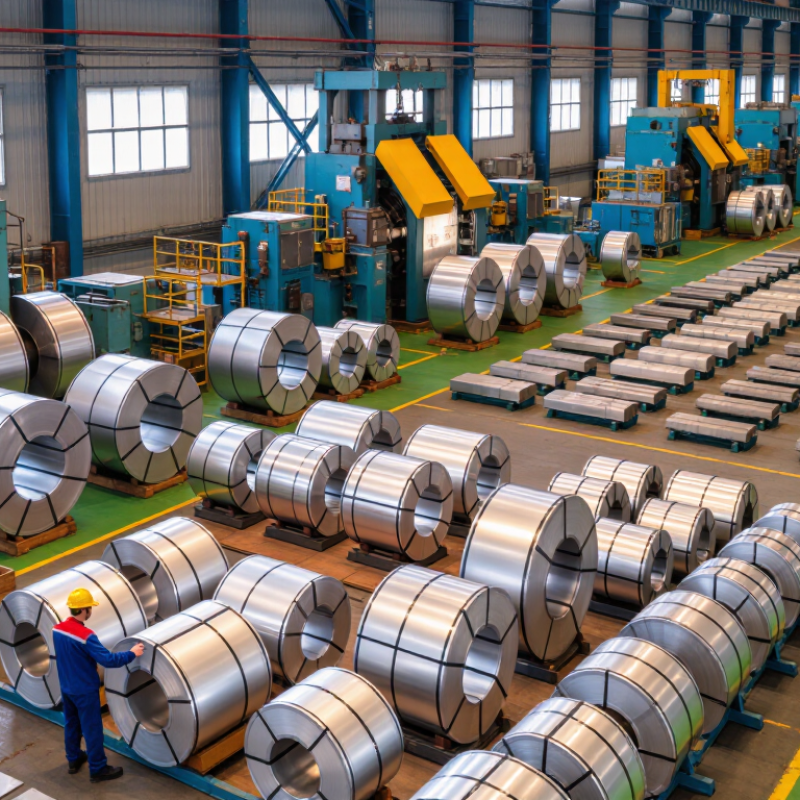
Stainless steel manufacturers turn metal inputs into usable materials and products. Depending on their facilities, they may melt and cast steel, roll it into sheet or coil, or form items such as tubes and fittings. Their role is not just shaping metal. They select grades, control composition and processing, and check that products meet agreed specifications. The term can sound simpler than it is: one manufacturer may make raw stock, while another fabricates finished parts.
Quality depends on details at each stage. For example, a sheet’s thickness, surface finish, and resistance to corrosion can affect how it performs in a food-processing room or a coastal structure. Manufacturers may use chemical analysis, dimensional checks, and mechanical tests to verify key properties. Reliable records also help buyers trace a batch and confirm its grade. Still, no test covers every service condition; choosing a suitable material requires clear information about its intended use.
Tips: Ask for the grade, dimensions, finish, and inspection records before ordering. Check that the paperwork matches the delivered batch. Small inconsistencies matter. A polished surface alone does not prove that a product suits a particular environment.
What Are Stainless Steel Manufacturers? - Definition and Role of Stainless Steel Manufacturers
| Dimension | What It Means | Typical Activities or Outputs | Why It Matters |
|---|---|---|---|
| Definition | A stainless steel manufacturer transforms raw materials or semi-finished stainless steel into usable metal products. Some manufacturers manage several stages of production, while others specialize in particular processes or product forms. | Production may include melting, casting, rolling, heat treatment, surface finishing, cutting, and inspection. | The term covers a range of operations; not every manufacturer performs every stage. |
| Material production | Integrated producers make stainless steel from metallic inputs and alloying elements, controlling composition to meet a specified grade. | Melting and refining, followed by casting into forms such as slabs, blooms, or billets. | Chemical composition influences properties such as corrosion resistance, strength, and formability. |
| Shaping and sizing | Manufacturers reduce or shape the steel to produce forms and dimensions suited to customer requirements. | Hot or cold rolling and, where required, cutting or forming into sheet, plate, strip, bar, rod, or other product forms. | Controlled dimensions and tolerances help products fit their intended fabrication or end use. |
| Heat treatment and surface finishing | Thermal and surface-processing steps help achieve required material condition and surface characteristics. | Depending on the product, processes can include annealing, pickling, descaling, polishing, or other specified finishing operations. | Processing affects properties and appearance; the appropriate finish depends on the grade, product, and application. |
| Quality assurance | Manufacturers check that material and finished products meet agreed specifications and applicable requirements. | Checks may cover chemical composition, dimensions, mechanical properties, surface condition, and traceability documentation. | Testing and records help buyers verify that supplied material matches the purchase specification. |
| Supply to end users | Manufacturers supply finished or semi-finished products to fabricators, processors, distributors, and industrial customers. | Orders may specify grade, product form, dimensions, finish, quantity, and inspection documentation. | Clear specifications help align the material supplied with the customer’s manufacturing process and service conditions. |
Note: Manufacturing routes and product availability vary by producer, grade, and product type.
Related Posts
-
Top 10 Stainless Steel Supplier Factors Influencing Market Growth and Demand in 2023
-
How to Choose the Right Stainless Steel Supplier for Your Needs?
-

2026 Top Stainless Steel Supplier Trends and Insights?
-
The Ultimate Guide to Choosing the Right Stainless Steel Supplier for Your Projects
-

Why is Welded Wire Mesh Essential for Construction and Agriculture?
-

2025 Top 5 Stainless Steel Wire Rope Trends You Need to Know