
7 Best Safety Wire Types for Global Buyers
Choosing safety wire is not just a matter of picking a spool from a catalog. Material, diameter, finish, and work environment all affect how easily wire can be installed and how reliably it holds. A wire that performs well on a dry indoor assembly may be a poor fit near moisture, heat, or corrosive chemicals. Small details matter.
This guide compares seven safety wire types commonly considered by global buyers, including stainless steel, galvanized steel, and specialty alloys. Each option brings trade-offs in corrosion resistance, strength, flexibility, availability, and cost. For example, a stiff wire may resist handling damage but take more effort to twist neatly around closely spaced fasteners. A softer option may be easier to form, yet may not suit every demanding application. Check the product specification and the equipment maker’s instructions before choosing a type or diameter.
Price alone rarely tells the full story. Buyers should also review supplier documentation, lot consistency, packaging, and the conditions in which the wire will be stored and used. A sample spool can reveal practical issues that a data sheet may not, such as fraying ends or awkward handling. No type wins everywhere. Even a careful comparison has limits, because installation technique and hardware geometry matter too. The recommendations ahead are intended as a practical starting point, not a substitute for application-specific engineering review. With those factors in mind, global purchasing teams can compare options more clearly and ask suppliers better questions.
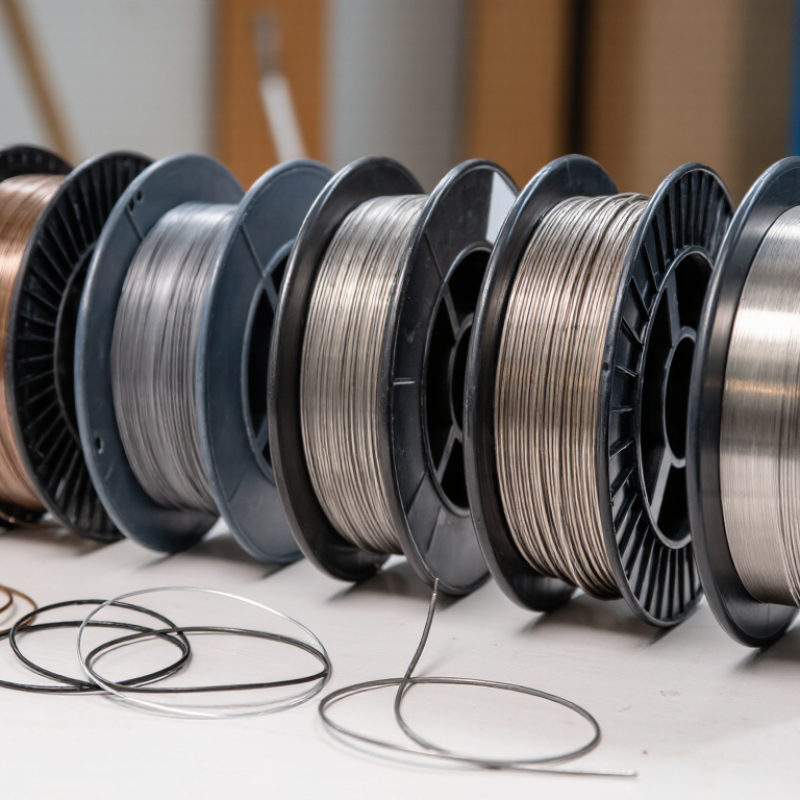
What Safety Wire Is and How It Prevents Fastener Loosening
Safety wire is a thin metal wire threaded through drilled fastener heads or nearby tabs, then twisted and anchored. Its job is not to tighten a bolt. It helps resist rotation if vibration or movement begins to loosen the fastener. When installed in the correct direction, the wire pulls against the loosening motion. Small detail, important outcome.
A tidy twist alone does not prove a sound installation. The anchor point, wire tension, twist spacing, and cut end all matter. Too much slack may let a fastener turn before the wire engages; excessive tension can stress the wire or fastener. The cut tail should be bent inward to reduce snag and injury risks. Always follow the equipment maker’s specified torque and wiring method. Safety wire is a secondary restraint, not a substitute for correct assembly.
Wire choice depends on temperature, corrosion exposure, fastener size, and the application. Stainless steel is commonly selected for general corrosion resistance, while other alloys may suit harsher service conditions. Different diameters and spool forms also affect handling and installation. A practical inspection checks the wire’s direction, secure anchors, and signs of fatigue or corrosion. Appearance can be misleading, so inspect the load path—not just the twist.
7 Best Safety Wire Types for Global Buyers – What Safety Wire Is and How It Prevents Fastener Loosening
Safety wire is a small-gauge wire installed through drilled fastener heads or designated locking points. When routed and twisted correctly, it applies tension that resists the fastener’s loosening direction. The best choice depends on the application, environment, required specification, and installation method.
| Safety Wire Type | Typical Material | Common Advantages | Typical Applications | Buyer Considerations |
|---|---|---|---|---|
| 1. Stainless Steel 302/304 | Austenitic stainless steel wire; supplied in application-specific tempers. | Widely used, readily available, and offers useful general corrosion resistance and strength. | General industrial equipment, maintenance work, and many aerospace or transport applications when specified. | Confirm the required material specification, temper, diameter, and corrosion conditions. Do not assume every 302/304 wire meets an aerospace drawing requirement. |
| 2. Stainless Steel 316 | Molybdenum-bearing austenitic stainless steel. | Often selected for improved resistance to pitting and crevice corrosion compared with standard 304 stainless in chloride-bearing environments. | Marine, coastal, chemical-processing, and other corrosive industrial environments where the design permits it. | Assess the actual chemical and temperature exposure. Material choice alone does not eliminate corrosion or galvanic-compatibility concerns. |
| 3. Stainless Steel 321 | Titanium-stabilized austenitic stainless steel. | Designed to improve resistance to sensitization during certain elevated-temperature exposures. | Selected high-temperature equipment and assemblies when called for by the engineering specification. | Use only where the design or governing specification identifies this alloy; it is not a universal upgrade for every safety-wire application. |
| 4. Nickel Alloy 600 | Nickel-chromium-iron alloy wire. | Offers oxidation and corrosion resistance in a range of demanding environments, including some elevated-temperature service. | Specialized high-temperature, chemical-processing, and industrial applications when approved by the design authority. | Check the required alloy specification, service temperature, wire temper, and compatibility with the fastener assembly. |
| 5. Nickel Alloy X-750 | Precipitation-hardening nickel-chromium alloy. | Can provide high strength and elevated-temperature capability in specified forms and conditions. | Specialized aerospace, power-generation, or other high-performance assemblies where the specification requires it. | Properties vary with heat treatment and wire condition. Verify the exact material condition and approved application rather than selecting by alloy name alone. |
| 6. Monel 400 | Nickel-copper alloy wire. | Known for useful resistance to seawater and certain corrosive environments. | Selected marine and chemical-service applications when permitted by the assembly specification. | Confirm suitability for the specific medium, temperature, and adjoining metals. It is not a drop-in substitute for stainless or nickel-alloy wire. |
| 7. Zinc-Coated Carbon Steel | Carbon steel wire with a zinc coating. | Can be a practical, economical option for suitable general-purpose environments. | Some non-critical industrial or maintenance applications where the governing requirements allow coated carbon steel. | Not suitable where a stainless or nickel alloy is required. Check coating condition, corrosion exposure, and the applicable equipment or industry specification. |
Selection and installation note: Safety-wire diameter, material, temper, routing, twist pattern, and permitted use must follow the equipment manufacturer’s instructions and applicable engineering specification. Common wire diameters vary by application; never substitute a different size or alloy without approval. Correct routing is essential: the wire must oppose loosening, remain taut without over-twisting, and avoid interference with moving parts.
Related Posts
-
How to Choose Safety Wire for Your Business in 2026
-
Tips for Effective Stainless Steel Welding Techniques?
-

Revitalize Your Cleaning Routine: Discover the Power of Steel Brushes for Every Task
-
10 Essential Tips for Using a Wire Brush Effectively in Your Projects
-
Top Wire Brush Types to Choose for Effective Cleaning in 2025
-

China Top 10 Tube Brush Manufacturers for Global Buyers