China Top 10 Tube Brush Manufacturers for Global Buyers

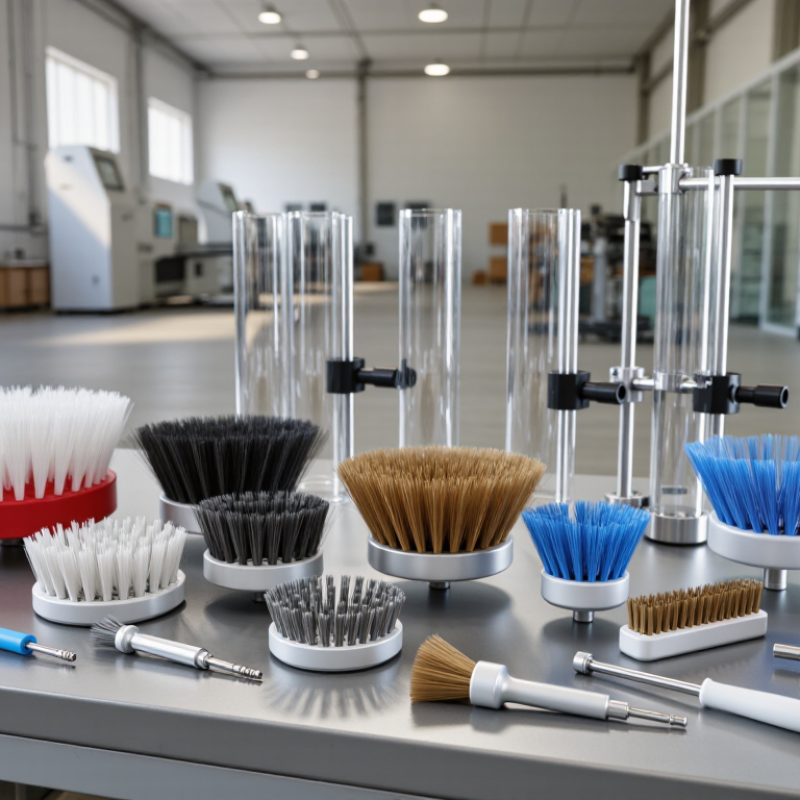
Choosing among China’s top 10 tube brush manufacturers requires more than comparing prices or factory photos. Global buyers need dependable quality, clear communication, and evidence of production capability. A suitable tube brush should clean narrow passages without shedding bristles or damaging internal surfaces. Its wire core, handle, trim length, and bristle material must match the application.

This guide examines manufacturers serving industrial, laboratory, automotive, medical, and household markets. It considers product range, customization, material control, sampling procedures, packaging, and export experience. Factory scale matters, but it does not tell the whole story. Small details matter.

A credible supplier should explain its inspection process, tolerances, and material sources. Buyers should request samples before approving large orders. They should also confirm lead times, private-label options, carton protection, and documentation. These steps reduce avoidable problems during international delivery.

No ranking is perfect. Supplier capabilities can change, and online information may become outdated. Therefore, this overview should support further verification, not replace it. Direct factory communication, sample testing, and reference checks remain essential. An experienced purchasing team will compare performance in real conditions, such as repeated cleaning cycles, moisture exposure, and tight tube interiors.

The selected manufacturers represent different strengths, from flexible custom production to high-volume export support. Their suitability depends on your required diameter, bristle type, order quantity, and target market. Careful evaluation creates a more reliable path from sourcing to long-term cooperation.
China Top 10 Tube Brush Manufacturers for Global Buyers

Tube Brush Market Scope: Applications Across 3–50 mm Internal Diameters

China Top 10 Tube Brush Manufacturers for Global Buyers

Tube Brush Market Scope: Applications Across 3–50 mm Internal Diameters

For global buyers, a tube brush supplier should be assessed by diameter control, bristle selection, and production traceability. The 3–50 mm range covers narrow instrument channels, laboratory tubing, valve bores, hydraulic passages, and heat-exchanger tubes. Brushes from 3–8 mm often require flexible wire cores and fine nylon filaments. Small errors become obvious inside narrow passages.

Brushes from 8–20 mm support cleaning tasks in pneumatic fittings, fluid connectors, pumps, and food-processing equipment. The 20–50 mm range usually needs stronger shafts, higher bristle density, or abrasive filaments. Nylon suits general residue removal, while stainless steel or abrasive nylon may handle harder deposits. The correct choice still depends on surface hardness and cleaning force.

Grand View Research places the broader industrial cleaning equipment market on a growth path of roughly 6% annually through 2030. This trend supports wider demand for compact, replaceable cleaning tools, although tube brushes are not always reported as a separate category. MarketsandMarkets also identifies automated and maintenance-focused cleaning as important industrial directions. Diameter alone is not enough. That shortcut can fail. Buyers should request samples, brush drawings, pull-out tests, and material declarations before comparing the top ten manufacturers. In practice, a brush that cleans quickly may also scratch soft tubing. This trade-off deserves a real test, not a catalogue assumption.

Evaluation Criteria: ISO 9001, 21 CFR, MOQ, Lead Time, and Export Capacity

China’s top tube brush manufacturers should be compared through evidence, not catalog claims.

ISO’s 2023 Survey records more than 1.2 million ISO 9001 certificates worldwide, making certification common but not decisive. Buyers should verify the certificate scope, issuing body, and audit date. A factory producing medical or food-contact brushes must also explain material controls, traceability, and cleaning validation.

21 CFR is not a universal factory certificate. It refers to applicable U.S. FDA regulations, including requirements for materials that contact food or drugs. Ask for resin declarations, migration data, and lot-level records.

Small details matter. Can the supplier provide a signed specification within 48 hours? Can it retain samples for each production batch?

MOQ and lead time reveal operational maturity. Request separate figures for samples, trial orders, and repeat production. A stated 5,000-piece MOQ may hide setup charges or mixed-size restrictions.

Lead times should include tooling, inspection, packing, and port handover. In practice, 15–30 working days may be realistic for standard designs, but custom wire lengths can extend schedules. That estimate can fail.

Export capacity needs documentary proof. The World Bank’s Logistics Performance Index 2023 compares logistics systems across 139 economies, highlighting customs, tracking, and delivery reliability. Ask for recent shipping records, export documents, and contingency plans for delayed sailings.

Sea freight carries most global merchandise by volume, according to UNCTAD’s Review of Maritime Transport, so port access and packaging protection deserve equal attention.

China’s Top 10 Tube Brush Manufacturers: Products, Materials, and Capabilities

China’s top ten tube brush manufacturers serve laboratories, food plants, medical equipment makers, and industrial maintenance teams. Their product ranges include nylon tube brushes, stainless steel twisted brushes, flexible bottle brushes, and custom cleaning tools. Common sizes run from narrow sampling tubes to large process pipes. Buyers should check bristle diameter, handle length, and cleaning reach before comparing prices.

Material selection shapes brush performance. Nylon bristles resist moisture and suit repeated general cleaning. Abrasive nylon can remove residue from harder surfaces. Stainless steel bristles provide stronger scraping action, but they require careful surface compatibility checks. Brass offers a softer option for delicate metal components. Handles may use stainless steel, galvanized wire, polypropylene, or flexible coated wire. Each material changes stiffness, durability, and chemical resistance.

Leading manufacturers usually support custom drawings, sample approval, private packaging, and mixed-size production. Better factories provide bristle pull tests, dimensional checks, and batch records. Some operate semi-automatic twisting lines, while others rely more heavily on skilled assembly. That difference can affect consistency. Factory audits often reveal details that catalogs miss, such as uneven trimming or weak wire loops. A sample may look excellent. The full batch still needs inspection. Ask about minimum order quantities, replacement policies, packaging protection, and production lead times. Clear answers are useful evidence of reliability.

China Top 10 Tube Brush Manufacturers for Global Buyers - China’s Top 10 Tube Brush Manufacturers: Products, Materials, and Capabilities

Profile Main Product Focus Common Bristle Materials Core and Wire Options Typical Size Range Construction and Finishing Common Applications Typical Export and Customization Capabilities
Profile 01 Standard twisted-in-wire tube brushes Nylon, polypropylene, polyester, brass-coated wire, and stainless steel wire Galvanized steel, stainless steel, brass, or high-carbon steel twisted wire; looped or straight handles Brush diameters commonly available from approximately 5 to 100 mm Single- or double-stem construction; cut, crimped, or end-trimmed bristles Cleaning small tubes, fittings, valves, laboratory glassware, and machinery ports OEM dimensions, private packaging, sample approval, and mixed-size export orders
Profile 02 Industrial pipe and heat-exchanger brushes Abrasive nylon, stainless steel, carbon steel, brass, and silicon-carbide nylon Heavy-gauge steel or stainless steel stems with reinforced loop ends Common working diameters from approximately 10 to 150 mm; extended lengths available Rigid stems, flexible extensions, threaded connectors, and replaceable handles Pipe maintenance, heat exchangers, condensers, boilers, and fabrication equipment Long-length production, abrasive grades, connector matching, and industrial carton packing
Profile 03 Medical and laboratory tube brushes Soft nylon, polyester, polypropylene, and non-shedding synthetic filaments Stainless steel or plastic-coated wire; smooth loop handles for controlled cleaning Small diameters typically from approximately 3 to 30 mm Rounded tips, controlled trim length, smooth edges, and color-coded handles Syringes, pipettes, catheters, bottles, medical tubing, and laboratory instruments Small-batch sampling, dimensional inspection, clean packing, and customized handle colors
Profile 04 Food and beverage processing brushes Food-contact nylon, polyester, polypropylene, and stainless steel filament Stainless steel stems or non-metallic core options where required by the process Typical diameters from approximately 8 to 100 mm Dense fills, rounded working ends, hygienic handle designs, and detectable-color options Filling lines, beverage valves, dairy equipment, food-processing tubes, and nozzles Material documentation, traceable batches, custom density, and export-ready hygienic packaging
Profile 05 Abrasive deburring and surface-finishing brushes Nylon impregnated with silicon carbide or aluminum oxide; ceramic and steel options High-tensile steel, stainless steel, or brass wire suitable for abrasive applications Common diameters from approximately 6 to 80 mm Variable abrasive grit, high-density fill, controlled bristle exposure, and balanced stems Cross-hole deburring, hydraulic components, machining centers, and precision finishing Grit selection, density adjustment, performance samples, and application-specific testing
Profile 06 Automotive and engine-component brushes Nylon, brass, stainless steel, carbon steel, and abrasive synthetic filament Oil-resistant steel or stainless steel stems with angled, looped, or threaded ends Usually supplied in approximately 5 to 75 mm diameters Flexible stems, high-temperature filament options, and application-specific trim patterns Fuel passages, injector components, brake parts, engine bores, and transmission components Drawing-based production, repeat orders, inspection reports, and protective export packaging
Profile 07 Hand-held and flexible extension tube brushes Nylon, polypropylene, horsehair, tampico, brass, and stainless steel Flexible galvanized or stainless steel shafts with plastic handles, loops, or threaded ends Working lengths commonly range from approximately 100 to 1,000 mm Flexible shafts, ergonomic handles, protective tips, and detachable extensions Deep vessels, narrow tubes, drains, laboratory containers, and maintenance equipment Handle customization, retail-ready sets, multilingual labels, and assorted kit assembly
Profile 08 Large-diameter duct and pipeline brushes Polypropylene, nylon, polyester, steel, stainless steel, and abrasive filament Reinforced steel stems, stainless steel cores, threaded rods, and detachable couplings Approximate diameters from 50 to 300 mm, depending on construction High-density fill, reinforced connections, modular sections, and long-reach assemblies Ducts, large pipes, tanks, industrial vessels, and municipal maintenance systems Large-format tooling, sectional designs, custom connection systems, and palletized shipping
Profile 09 Precision miniature tube and channel brushes Fine nylon, polyester, stainless steel, brass, and micro-abrasive filament Fine stainless steel or brass wire with compact loop and stem configurations Micro-brush diameters commonly range from approximately 1 to 10 mm Fine filament control, low-profile tips, uniform trim, and miniature handle options Electronics, precision instruments, dental tools, small nozzles, and micro-channels Tight dimensional tolerances, prototype quantities, magnified inspection, and small-part packaging
Profile 10 Private-label and multi-material brush programs Nylon, polypropylene, polyester, natural fiber, brass, stainless steel, and abrasive blends Steel, stainless steel, brass, plastic-coated wire, and custom connector assemblies Custom diameters, lengths, bristle densities, and working profiles Twisted-wire, strip, modular, flexible, and specialized end configurations Industrial distribution, hardware, cleaning tools, OEM equipment, and maintenance kits Full OEM/ODM development, artwork support, barcode labels, custom cartons, and consolidated shipments

Note: Dimensions, materials, and capabilities shown are common specifications available in China’s tube-brush manufacturing sector. Final suitability, tolerances, material certificates, and compliance requirements should be confirmed with the selected supplier before purchase.

Global Buyer Comparison: Brush Diameter, Wire Gauge, Pricing, and Customization

China Top 10 Tube Brush Manufacturers for Global Buyers

Global buyers should compare tube brushes by working diameter, wire gauge, fill density, and price. Grand View Research estimates the global industrial brushes market reached about USD 1.7 billion in 2023, with steady growth through 2030. This expansion increases supplier choice, but specifications still differ widely.

A 10 mm brush may clean a narrow channel, while a 25 mm model reaches larger pipes but needs more insertion force.

Gauge matters too. Fine 0.10–0.15 mm wire suits delicate surfaces. Thicker 0.20–0.30 mm wire handles scale and heavier deposits.

Pricing usually depends on wire material, handle type, order volume, and customization. Standard carbon-steel brushes often cost less than stainless-steel or brass versions. World Steel Association data recorded 1.89 billion tonnes of crude steel production in 2023, showing the scale behind metal-cost movements.

Yet raw material prices do not explain every quotation. Tooling, inspection, packaging, and export preparation can change the final unit cost.

Cheap quotes deserve careful checking.

Customization should cover brush length, core diameter, trim length, thread type, and packing labels. Request drawings, sample approval, and pull-out testing before mass production.

ISO 9001 certification supports process control, but it does not guarantee perfect brush performance. I have seen “identical” samples clean differently. That is easy to overlook.

Buyers should compare measurable test results, not attractive catalogs, and allow a small tolerance for real production variation.

Supplier Verification: Certifications, Sampling, Quality Control, and Logistics

China Top 10 Tube Brush Manufacturers for Global Buyers

Supplier Verification: Certifications, Sampling, Quality Control, and Logistics

Choosing among China’s leading tube brush manufacturers requires more than comparing catalog photos. Experienced buyers should request current certifications, audit reports, and traceable production records. ISO 9001 can indicate a controlled management system, but it does not guarantee perfect brushes. Verify certificate numbers, issuing bodies, and validity dates independently.

Sampling should match the intended application. Ask for several pieces with the required brush diameter, trim length, handle material, and filament type. Test them inside actual tubes. Check cleaning coverage, flexibility, filament shedding, and handle strength. A sample may receive extra attention. That is worth remembering. Approve a signed reference sample before mass production.

Quality control should include incoming material checks, in-process inspections, and final carton sampling. Useful records include filament thickness, brush length, pull-out resistance, and visual defect rates. Request photos or short inspection videos from production, not only finished-product images. Some suppliers report excellent averages while missing small but costly variations.

Logistics also affects supplier reliability. Confirm packaging dimensions, carton moisture protection, labeling, loading photographs, and shipment terms. Ask whether the manufacturer can provide batch numbers and export documents. Build extra time into the first order for inspection and customs procedures. My own review standard would be stricter than a brochure suggests, yet even that can miss hidden variation. Independent pre-shipment inspection remains sensible for larger orders.

Go to Top