
What Is the Best Type of Brass Brush from China?
Choosing the best brass brush from China requires more than comparing prices or counting bristles. The right option depends on the surface, cleaning pressure, and working environment. A brush for delicate brass fittings differs from one used on workshop tools, electrical contacts, or textured metal parts. Wire softness matters. So does the brush shape.
In practical use, crimped brass wire often offers controlled cleaning without aggressive scratching. A twisted brass brush can provide stronger abrasion, but it may feel too harsh on thin coatings. Handheld models suit small repairs, while cup or wheel brushes fit compatible power tools. However, tool speed must match the manufacturer’s guidance. Poor matching can damage both the brush and the workpiece.
Reliable Chinese suppliers should provide clear details about wire diameter, bristle density, handle material, dimensions, and packaging. Product samples are valuable. They reveal loose wires, uneven trimming, and uncomfortable grips that photographs may hide. Ask for inspection records or material information when consistency matters. Independent testing can add confidence, especially for industrial orders.
There is no universal winner.
A good buying decision also considers communication, replacement support, and production consistency. Certifications may help, but they should be verified rather than assumed. My own preference would change with the application, and that is worth admitting. A soft brass brush may protect a delicate surface but clean slowly. A stronger design saves time yet increases the risk of marks. This guide examines those trade-offs, helping buyers select a suitable brass brush from China with practical evidence, careful questions, and realistic expectations.
Types of Brass Brushes Made in China
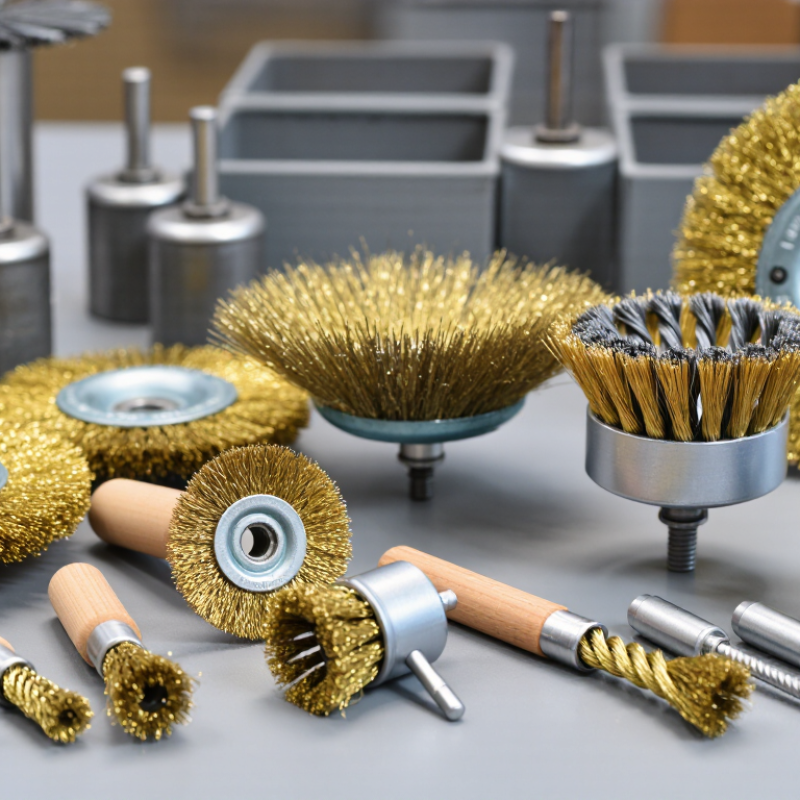
China produces several practical types of brass brushes, each suited to a different cleaning task. Straight-wire brass brushes offer firm contact for removing light rust, scale, and surface dirt. Crimped-wire designs flex more easily and leave a smoother finish on irregular parts. Twisted-knot brushes are more aggressive, but they can mark soft metals. Small scratch brushes work well around threads, narrow grooves, and electrical contacts.
Brush performance depends on wire diameter, brass alloy, trim length, and handle design. Thinner wire reaches fine grooves, while thicker wire lasts longer under repeated pressure. The Freedonia Group’s industrial brush market research identifies durability, application control, and material compatibility as major purchasing factors. That matches workshop experience. A brush that feels strong may still be unsuitable for delicate brass surfaces.
The U.S. Geological Survey reported global refined copper production above 25 million metric tons in 2023, supporting broad availability of copper-based alloys. However, copper content alone does not prove brush quality. Buyers should request wire composition, tensile data, dimensional tolerances, and batch inspection records. ISO 9001-based quality systems can improve traceability, though certification does not replace product testing. I have found this distinction easy to overlook. For general maintenance, a medium-density crimped brass brush is often the balanced choice. For narrow channels, choose a short-trim scratch brush. Twisted designs need careful handling.
What Is the Best Type of Brass Brush from China? - Types of Brass Brushes Made in China
| Brush Type | Typical Construction | Common Wire Diameter | Typical Shape or Size | Best Applications | Advantages | Limitations | Relative Cleaning Aggressiveness |
|---|---|---|---|---|---|---|---|
| Brass Wire Hand Brush | Brass wire tufts stapled or twisted into a wood, plastic, or metal block | Approximately 0.10–0.30 mm | Usually 2–4 rows; handle length commonly 250–300 mm | Cleaning fittings, light rust removal, surface preparation, and household maintenance | Easy to control, reusable, affordable, and suitable for detailed manual work | Slower than power brushes for large surfaces; limited cutting action | Low to medium |
| Brass Scratch Brush | Compact brass wire brush with a molded or contoured handle | Approximately 0.10–0.25 mm | Typically 180–250 mm overall length | Cleaning tools, small metal components, laboratory equipment, and delicate surfaces | Offers precise handling and reduces the risk of scratching softer metals | Small brushing area; not intended for heavy scale or thick corrosion | Low |
| Brass Tube Brush | Brass wire wound around a twisted metal stem, often with a loop or threaded end | Approximately 0.08–0.20 mm | Diameter commonly 5–50 mm; lengths commonly 100–300 mm | Cleaning pipes, holes, valves, fittings, cylinders, and internal passages | Reaches narrow cylindrical spaces and conforms to interior surfaces | Requires the correct diameter; excessive force can deform the brush | Low to medium |
| Brass Cup Brush | Brass wire strands secured in a circular cup with a threaded or shank-mounted hub | Approximately 0.15–0.30 mm | Common diameters include 50, 65, 75, and 100 mm | Power-tool cleaning of flat or large metal surfaces, weld areas, and machinery parts | Covers wider areas efficiently and is available for angle grinders or drills | Requires compatible tool speed and eye protection; may be too aggressive for thin material | Medium to high |
| Brass Wheel Brush | Brass wire filaments arranged around a rotating circular core | Approximately 0.10–0.30 mm | Typical diameters range from 50–150 mm; face widths vary by design | Deburring, edge cleaning, rust removal, and continuous surface brushing | Effective for long edges, grooves, and production-line applications | Needs stable mounting and controlled pressure; rotating wires can create hazards | Medium to high |
| Brass End Brush | Brass wire filaments fixed to the end of a shank for use in a drill or rotary tool | Approximately 0.10–0.25 mm | Common brush diameters include 10–30 mm; shank often 3 or 6 mm | Cleaning grooves, corners, dies, molds, small castings, and recessed areas | Good access to confined areas and convenient for portable rotary tools | Small contact area; high speed or excessive pressure can shorten service life | Medium |
| Brass Abrasive Filament Brush | Brass-coated or brass-containing abrasive filaments, depending on the specified design | Commonly approximately 0.20–0.50 mm | Available as wheels, discs, cups, and hand-brush formats | More demanding cleaning, light deburring, and controlled surface texturing | Provides a more consistent abrasive action than very fine plain wire | Can alter the surface finish; material composition should be confirmed before use | Medium to high |
| Brass-Bristle Detail Brush | Fine brass bristles mounted in a narrow handle, often with a pointed or angled head | Approximately 0.05–0.15 mm | Usually 150–220 mm long with a narrow brushing head | Jewelry work, electronics housings, intricate parts, and precision cleaning | Excellent access and gentle brushing for sensitive components | Low durability under heavy pressure; unsuitable for thick rust or hard scale | Very low to low |
Selection note: The best brass brush depends on the surface material, cleaning intensity, access area, tool compatibility, and required finish. The dimensions shown are typical market ranges and may vary according to the product design and application.
Related Posts
-
China Top Brass Wire Brush Types and Their Uses in Various Industries?
-

How to Choose the Right Stainless Steel Supplier for Your Needs?
-

2025 How to Choose the Best MIG Wire for Optimal Welding Performance
-
10 Best Stainless Mesh Suppliers for Global Buyers
-
7 Best Practices for Choosing the Right Steel Wire for Your Projects
-
What Are Stainless Steel Manufacturers?