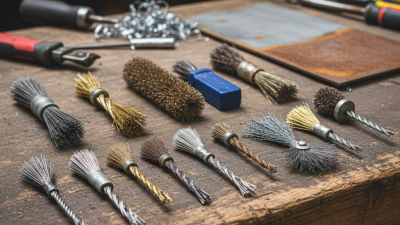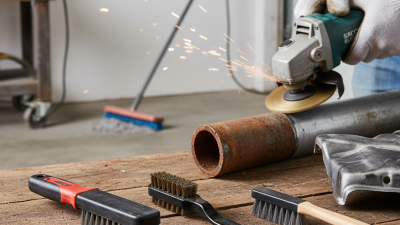
Choosing the right wire brush drill attachment can make surface preparation faster, but the wrong shape or bristle type may leave scratches or miss tight corners. These attachments suit tasks such as removing light rust, cleaning welds, and stripping loose paint from sturdy metal. They are not interchangeable, though. A cup brush covers broad, flat areas, while a narrow end brush reaches seams and recessed spots.
This guide compares seven options buyers may encounter, with attention to brush shape, wire material, size, and practical use. Check that the attachment fits your drill’s chuck and stays within the tool’s rated speed. A brush that looks small can still feel aggressive once it spins. Use eye protection, secure the workpiece, and test on a hidden area before treating a visible surface. That small test is easy to skip.
The best pick depends on the job, not just the price. Carbon-steel wire often suits ordinary steel, while stainless wire helps reduce contamination when working with stainless surfaces. Even then, results vary with pressure, drill speed, and the condition of the material. No attachment removes every coating cleanly, and worn bristles can shed or perform unevenly. The recommendations ahead help buyers compare common designs and choose with realistic expectations. A little caution pays off.
ANSI B165.1 is the key safety reference for power brushes, including wire brush attachments used with drills. It addresses brush design, marking, and safe operation. The standard does not make every brush suitable for every drill. Check the attachment’s marked maximum speed against the drill’s operating speed before fitting it. A mismatch can cause wire breakage, flying fragments, or loss of control.
Keep the workpiece secured, hold the drill firmly, and use the guard when the tool provides one. Wear safety glasses with side protection; a face shield adds another layer, but does not replace them. OSHA’s 2023 workplace injury and illness report recorded 2.6 million nonfatal cases among private-industry workers. That broad figure is not specific to wire brushing, but it shows why routine controls matter. Keep bystanders clear. Inspect the brush for loose or bent wires, and stop if vibration changes. One detail is easy to overlook: a worn brush may still look usable. Follow the brush and drill manufacturers’ instructions, and consult the applicable ANSI B165.1 edition for complete requirements.
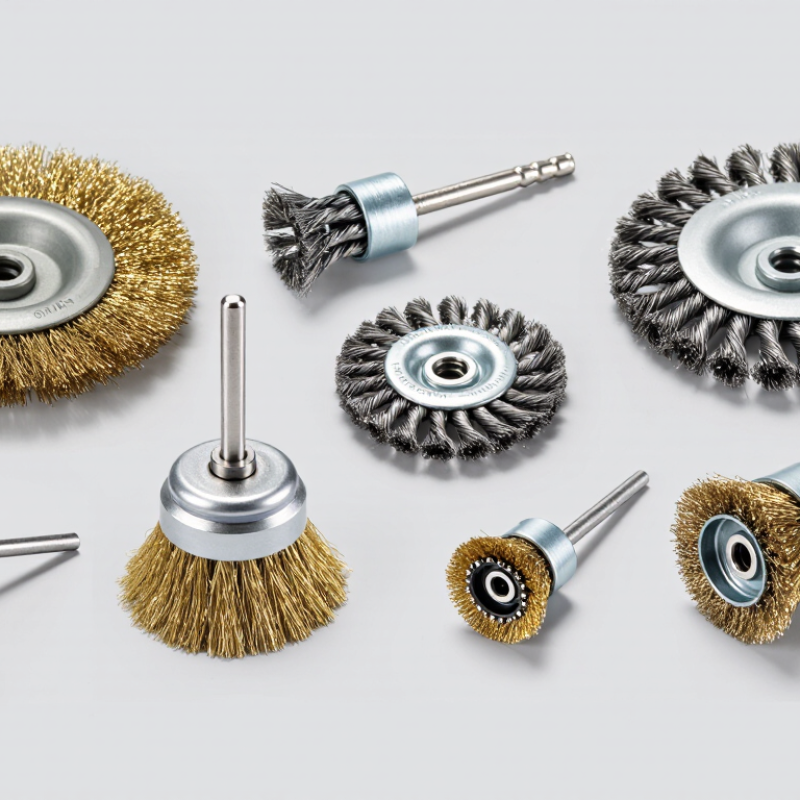
A wire brush drill attachment can clear rust, paint flakes, and scale, but its shape matters as much as its wire. Cup brushes cover broad, open areas, such as a steel plate or garden gate. Their flat face spreads contact across the surface. They can feel aggressive on thin sheet metal, so use light pressure and keep the drill moving.
Wheel brushes reach into seams, corners, and narrow channels. Their edge works along welds or metal rails where a cup brush cannot sit squarely. End brushes fit small recesses and bolt heads, though they remove material from a limited spot. Crimped wire is generally more flexible; knotted wire is stiffer and cuts more firmly. Neither is automatically better. The workpiece sets the limit.
Tips: Match brush diameter to the space, not just the drill. Wear eye protection, secure the work, and test on a hidden area first. Start at low speed. A small patch of coating may lift unevenly, even with gentle pressure. Check the brush for loose or damaged wires before use, and let the tool do the work.
Wire gauge and bristle shape determine how a drill-mounted wire brush behaves on metal. Thicker wire usually feels stiffer and removes rust or scale more aggressively, but it can leave deeper marks. Finer wire is gentler and better suited to light oxidation or narrow details. On a test piece, a few short passes reveal more than guessing from appearance alone.
Crimped wire has wavy bristles that flex and make broad contact with uneven surfaces. It tends to offer controlled cleaning, with less bite than a comparable knotted brush. Knotted wire is twisted into tighter bundles, giving it a firmer feel and a more forceful cut. Use light pressure. Let the brush do the work, and avoid holding it in one spot; heat and surface damage can build quickly.
A small cup brush may clean around a bolt head, while a narrow end brush can reach into a seam. Still, brush size and wire construction vary, so labels are only a starting point. Wear eye protection, secure the workpiece, and check that the attachment’s rated speed matches the drill. I’ve found that the most aggressive brush is not always the fastest choice; it can create extra finishing work. Use a gentle touch.
| Attachment type | Typical wire and construction | Cleaning aggressiveness | Best suited for | Buyer considerations |
|---|---|---|---|---|
| Crimped wire cup brush | Corrugated wires held individually around a cup; commonly available in fine to coarse wire diameters, often about 0.2–0.5 mm. | Medium. Flexible crimped wires provide a more forgiving contact than tightly twisted knots. | Removing light rust, paint flakes, and surface scale from broad, relatively flat areas. | Choose a cup diameter that fits the work area and tool rating. Fine wire is generally less aggressive; coarse wire removes material faster but can mark softer surfaces. |
| Knotted wire cup brush | Wire strands twisted into compact knots; commonly made with medium or coarse wire, often about 0.35–0.8 mm. | High. Knotted bundles are stiffer and concentrate impact at the wire tips. | Heavy rust, weld scale, and stubborn coatings on durable steel. | Use only where the surface can tolerate a more forceful brush. Knots can leave a rougher finish and may remove base material if held in one spot. |
| Crimped wire wheel brush | Flat wheel of wavy, unknotted wire; wire diameter commonly ranges from fine to coarse, roughly 0.2–0.5 mm. | Low to medium, depending on wire diameter, wheel width, speed, and applied pressure. | Cleaning edges, narrow faces, and welds where a compact profile is useful. | Keep the wheel aligned with the surface and avoid side loading. A narrower wheel reaches tighter spaces but covers less area per pass. |
| Knotted wire wheel brush | Flat wheel with twisted wire bundles; typically stiffer than a crimped wheel and often made with medium or coarse wire. | High. The tied bundles resist flexing and suit more demanding cleaning. | Removing tenacious scale or corrosion from robust metal surfaces and weld areas. | Check the brush's rated maximum speed against the drill's speed. The stiff bundles can scratch or gouge thin sheet and softer metals. |
| End brush | Radial wire filaments mounted at the end of a shank; offered in crimped or knotted styles and a range of wire diameters. | Low to high, depending on whether the wires are crimped or knotted and how coarse they are. | Small recesses, corners, holes, and localized surface preparation. | Use a light touch and keep the brush moving. Its small contact area can concentrate force, particularly with coarse or knotted wire. |
| Nylon abrasive brush | Abrasive grit embedded in nylon filaments; not metal wire, with stiffness depending on filament size and grit. | Low to medium. Typically less likely than steel wire to leave metallic scratches or contaminate stainless steel. | Light cleaning, deburring, and surface preparation on materials that could be damaged by steel wire. | Grit and filament stiffness affect cutting action. Confirm material compatibility and speed rating; nylon can wear or soften with excessive heat. |
| Brass wire brush | Brass-alloy wire filaments, commonly crimped; generally softer than steel wire. | Low to medium. Less aggressive than comparable steel wire in many applications, though it can still scratch delicate finishes. | Light corrosion or residue removal on nonferrous metals and other surfaces where steel-wire transfer is undesirable. | Brass is not suitable for every finish or material. Test in an inconspicuous area and verify the brush's rated speed and shank compatibility. |
Wire diameter ranges are approximate examples; actual sizes and ratings vary by brush design. Follow the attachment and drill manufacturers' speed limits, wear eye protection, and secure the workpiece. Brush aggressiveness also depends on rotational speed, pressure, contact angle, and surface material.
A brush’s diameter affects its edge speed, so matching the drill’s no-load RPM matters. A 3-inch brush at 2,000 RPM has an approximate edge speed of 1,571 feet per minute; a 4-inch brush at the same RPM reaches about 2,094 feet per minute. The calculation is diameter in inches × RPM × 0.262. Check the brush’s marked maximum RPM before fitting it. ANSI B165.1, the safety standard for power-driven brushing tools, provides an industry reference for brush design and use; the manufacturer’s rating remains the practical limit for each attachment. Small details matter.
Compare that limit with the drill’s no-load speed, listed in its manual or on its specification label. Use a lower-speed setting when the drill can exceed the brush rating, and avoid relying on trigger control alone. A larger brush can exceed its safe speed sooner than a smaller one. For example, a 4-inch attachment rated for 2,500 RPM should not be paired with a drill capable of 3,000 RPM unless that drill can be reliably limited below the rating. Actual speed may drop under load, but that is not a safety margin. I would check the markings twice; they can be easy to miss under dust or paint.
Brush diameter changes peripheral speed even when drill RPM stays the same. This chart compares calculated rim speeds for seven brush diameters at an illustrative drill no-load speed of 3,000 RPM.
Match the RPM rating first: For operation at a drill no-load speed of 3,000 RPM, the brush must have a manufacturer-rated maximum speed of at least 3,000 RPM. A larger diameter does not establish a brush’s RPM rating. Check the marked rating and both manufacturers’ instructions for diameter, shank, and tool compatibility.
At the same RPM, a 100 mm brush has twice the rim speed of a 50 mm brush. Diameter therefore affects contact speed, but it does not by itself predict cleaning performance or safe operating speed. Use the brush’s specified operating guidance, and do not rely on the drill slowing down under load to stay within the brush’s maximum RPM.
Data basis: calculated physical values, not product test results or manufacturer ratings. Rim speed (m/s) = π × diameter (mm) × RPM ÷ 60,000. Values are rounded to two decimal places and use nominal outside diameter; actual speed varies with rotational speed and effective brush diameter. The seven diameters are comparison examples, not a ranking of products.
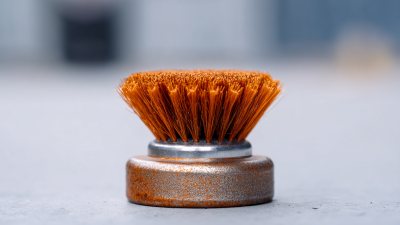
Choosing among seven brush attachments starts with the surface and the space around it. A crimped cup brush covers broad, flat areas; a knotted cup brush tackles tougher scale but can be more aggressive. Wheel brushes reach along edges and narrow channels. End brushes work inside corners, while small pencil brushes target tight spots. Nylon abrasive brushes are gentler on finishes and resist rust. A flat face brush suits open surfaces, though it may be awkward near edges. These differences matter more than appearance.
Compatibility is easy to overlook. Check the attachment’s shank size against your drill’s chuck, and follow the brush maker’s stated speed limit. A cordless drill may slow under pressure, but that does not make every brush suitable for every drill. Match brush material to the workpiece: steel wire can scratch softer metals or coatings. Test an inconspicuous patch first. I learned that “just a quick pass” can leave visible marks.
Tips: Wear eye protection, secure the workpiece, and keep loose clothing away from the rotating brush. Start at a low speed and use light pressure. Let the bristles do the work. Stop if the brush wobbles, sheds wires, or overheats. Wire ends can fly off. Inspect the attachment before each use, and replace it if its wires look bent or damaged.