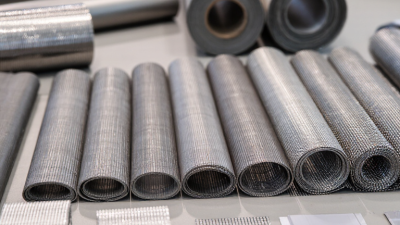
China Top 10 Wire Mesh Manufacturers for Global Buyers introduces suppliers serving construction, agriculture, filtration, mining, and industrial equipment markets. Demand is supported by urban development, infrastructure renewal, and stricter requirements for protective barriers. Wire mesh may look simple, yet its performance depends on material grade, wire diameter, opening size, welding quality, and surface treatment.
Recent market assessments from Grand View Research indicate that the global wire mesh market is worth several billion US dollars and should maintain steady growth through 2030. Forecasts vary because some reports include welded mesh, woven mesh, screens, fencing, and specialty products. That difference matters. Buyers should compare definitions before accepting impressive market figures. The World Steel Association reported global crude steel production of approximately 1.89 billion tonnes in 2023, showing the scale of the raw-material ecosystem behind steel mesh manufacturing.
China remains a major sourcing base because it combines broad steel capacity, specialized production clusters, and export experience. However, low pricing alone is not reliable evidence of quality. The manufacturers in this guide are considered through practical criteria, including product consistency, inspection systems, customization capability, certifications, export documentation, and response speed. Standards such as ASTM A1064, EN 10223, and ISO 9001 can support a more disciplined evaluation, although certification scope must be checked carefully.
A ranking is never perfect. Factory audits, sample testing, and clear technical drawings still matter. The strongest supplier is not always the largest one. It is the partner that delivers the specified mesh, in the required quantity, with traceable quality and realistic lead times.
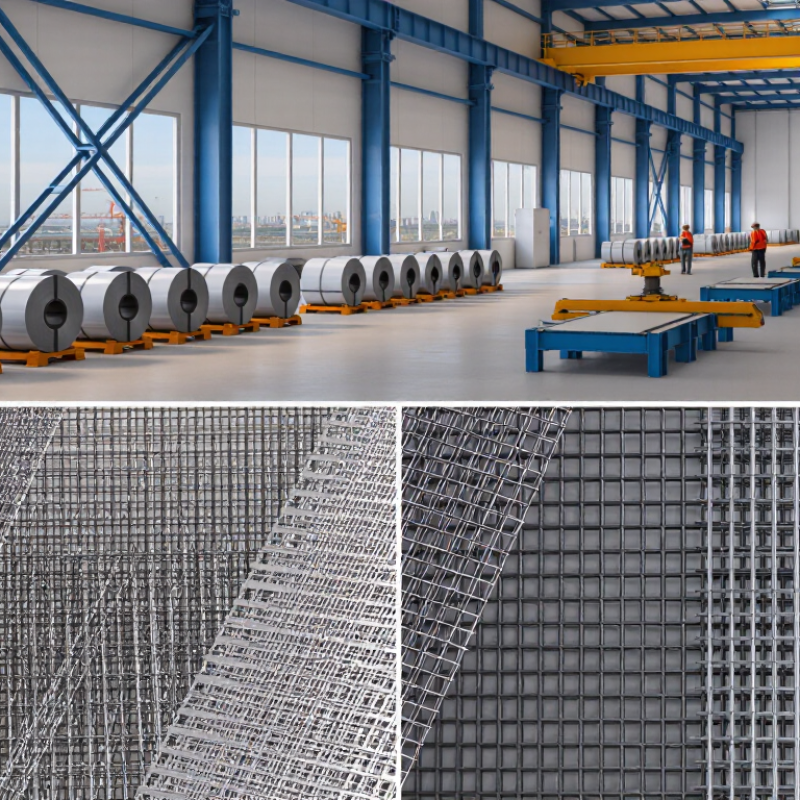
China’s wire mesh manufacturing industry benefits from a deep steel supply chain. The World Steel Association reported 1,019.1 million tonnes of Chinese crude steel production in 2023. That represented nearly 54% of global output. This scale supports steady access to galvanized wire, stainless steel, carbon steel, and aluminum materials. It also helps factories produce welded mesh, woven mesh, perforated sheets, and mining screens in large volumes.
UN Comtrade records under HS 7314 place China among the world’s leading wire mesh exporters. However, export volume does not guarantee uniform quality. Buyers should examine wire diameter, aperture tolerance, coating weight, tensile strength, and weld integrity. ISO, ASTM, and EN requirements may differ significantly. Experienced manufacturers usually provide mill certificates, inspection records, and production samples. Some suppliers still rely on unclear “standard” descriptions. That deserves careful questioning.
Tips: Request a pre-production sample and measure it independently. Confirm whether dimensions refer to wire centerlines or clear openings. Check zinc coating through a recognized test method. Ask for photographs of welding, packing, and loading conditions. A factory audit can reveal practical issues, including poor storage and mixed batches. Do not judge capability only from a polished catalog. Statistical quality control is useful, but occasional defects remain possible, even in mature production lines.
China Top 10 Wire Mesh Manufacturers for Global Buyers
Ranking China’s leading wire mesh manufacturers requires more than comparing prices. The process should examine production experience, technical capability, quality control, and export reliability. A manufacturer with years of operation should provide traceable project records, not vague claims. Factory audits can confirm weaving equipment, welding lines, laboratory tools, and material storage conditions.
Product quality deserves the strongest weighting. Reviewers should compare wire diameter, aperture accuracy, tensile strength, coating thickness, and weld consistency. Sample testing can reveal uneven openings or weak joints that photographs hide. Reliable suppliers provide mill certificates, inspection reports, and clear batch numbers. They should also explain how they handle galvanized, stainless steel, and PVC-coated products. Details matter here.
Delivery performance should influence the ranking as well. Check realistic lead times, packaging methods, loading photos, and export documentation. Customer references from similar industries add useful evidence, especially when orders involve custom sizes. However, no scorecard is perfect. A factory may pass an audit yet miss a shipment deadline. Another may offer excellent quality but communicate poorly. The final ranking should combine verified records, independent testing, responsive service, and transparent pricing. A small trial order is often wiser than trusting a presentation. Experience teaches caution.
| No. | Ranking Criterion | Weight | Measurable Indicators | Recommended Evidence | Scoring Method |
|---|---|---|---|---|---|
| 1 | Product Range and Technical Capability | 15% | Availability of welded mesh, woven mesh, expanded metal, perforated metal, chain-link mesh, gabions, and customized panels; support for different opening sizes and wire diameters. | Product catalogue, technical drawings, sample records, and documented production specifications. | 0–10 points |
| 2 | Material Quality and Traceability | 15% | Use of carbon steel, galvanized steel, stainless steel, aluminum, or other specified alloys; material certificates and batch traceability. | Mill test certificates, material identification records, coating certificates, and incoming inspection reports. | 0–10 points |
| 3 | Dimensional Accuracy and Tolerance Control | 12% | Control of wire diameter, mesh opening, panel length, panel width, flatness, cut size, and welding alignment according to the buyer’s specification. | Inspection plans, calibrated measuring tools, dimensional inspection reports, and approved samples. | 0–10 points |
| 4 | Corrosion Protection and Surface Finish | 12% | Galvanizing, PVC or PE coating, powder coating, passivation, polishing, and other surface treatments; coating thickness and adhesion control. | Coating-thickness reports, salt-spray or corrosion-test results where applicable, and surface-finish specifications. | 0–10 points |
| 5 | Quality Management System | 10% | Documented procedures for purchasing, production, inspection, nonconformance handling, corrective action, and final release. | Valid quality-management certificates, internal audit records, inspection procedures, and corrective-action reports. | 0–10 points |
| 6 | Production Capacity and Delivery Reliability | 10% | Monthly output capability, equipment availability, production scheduling, standard lead-time control, and on-time delivery performance. | Capacity statement, production schedule, equipment list, order history, and shipment-performance records. | 0–10 points |
| 7 | Compliance with International Specifications | 8% | Ability to manufacture according to applicable ASTM, EN, ISO, DIN, BS, JIS, or project-specific requirements. | Compliance declarations, test reports, inspection plans, and clause-by-clause specification reviews. | 0–10 points |
| 8 | Export Packaging and Logistics Support | 6% | Protection against deformation, moisture, abrasion, and contamination; suitability of pallets, bundles, crates, rolls, and container loading. | Packaging specifications, loading photographs, packing lists, shipping documents, and damage-claim records. | 0–10 points |
| 9 | Customization and Engineering Support | 6% | Support for non-standard mesh openings, bends, hooks, frames, welded assemblies, cut-to-size panels, and project-based drawings. | Approved drawings, prototype samples, revision records, technical correspondence, and engineering response times. | 0–10 points |
| 10 | Commercial Transparency and After-Sales Service | 6% | Clear quotations, transparent specifications, stable communication, warranty terms, complaint handling, and documented resolution procedures. | Quotation templates, contract terms, warranty policy, customer-service records, and corrective-action response times. | 0–10 points |
| Total Ranking Framework | 100% | Final ranking score = Σ (criterion score ÷ 10 × criterion weight). Higher scores indicate stronger overall suitability for international wire mesh procurement. | |||
Profiles of China’s Top 10 Wire Mesh Manufacturers show a broad industrial base, not one uniform supply chain. Some specialize in welded mesh, while others focus on woven, expanded, or stainless steel products. Experienced buyers should examine factory equipment, production records, and export experience before comparing prices. A reliable manufacturer can explain wire diameter, aperture tolerance, welding strength, and surface treatment clearly.
The strongest profiles usually include measurable details. Look for galvanizing weight, tensile strength, roll dimensions, and coating thickness. Factory photographs help, but inspection reports offer stronger evidence. Samples should arrive with labels, test data, and packing information. For construction orders, consistent panel flatness and accurate openings matter during installation. For filtration or agricultural use, corrosion resistance may deserve greater attention. However, a perfect ranking is difficult because applications and buyer standards differ. Some suppliers present impressive catalogs but provide limited technical feedback. That gap deserves honest consideration.
Tips: Request a small sample before placing a large order. Confirm material grade, tolerances, packaging, lead time, and replacement procedures in writing. Ask whether quality checks occur during production, not only before shipment. Consider an independent inspection when the project carries significant cost.
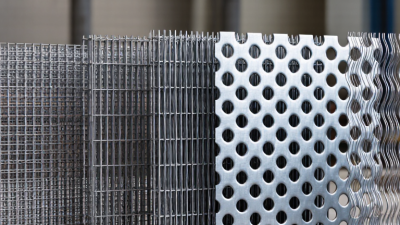
China’s top ten wire mesh manufacturers should be judged by product range, quality control, and production capacity. Leading factories typically supply welded mesh, woven mesh, perforated sheets, expanded metal, gabions, and stainless steel filter cloth. World Steel Association data reports that China produced about 1.005 billion tonnes of crude steel in 2024. This large industrial base supports stable raw-material sourcing, but steel volume alone does not prove mesh quality.
Serious suppliers usually operate under ISO 9001 quality systems and follow specifications such as ASTM A1064, ASTM A740, EN 10244, or GB/T standards. Buyers should request mill certificates, wire-diameter records, tensile-test results, coating-weight data, and batch photographs. Production capability matters too. Automated welding lines can maintain consistent spacing across large panels, while CNC cutting improves repeatability for customized shapes. Galvanizing, PVC coating, annealing, and precision weaving add practical value. The ISO Survey 2022 recorded more than 1.2 million ISO 9001 certificates worldwide, so certification is common, not exceptional. Factory audits still matter. Small deviations can affect installation.
Many manufacturers offer panels from 1 to 6 metres long and wires from fine filtration grades to heavy construction gauges. Capacity figures deserve careful checking. Some factories quote theoretical output, not inspected output. That difference is easy to miss. A stronger evaluation compares monthly production, rejection rates, testing equipment, export experience, and traceability from coil to shipment. No factory is perfect; transparent limitations often indicate better reliability.
This chart summarizes commonly specified material thickness or wire-diameter ranges across major wire-mesh product forms. Actual capabilities vary by manufacturing process, material grade, mesh opening, width, and applicable standards such as ASTM, ISO, EN, and DIN.
Choosing among China’s top 10 wire mesh manufacturers requires more than comparing prices. Global buyers should match the factory’s capabilities with the project’s actual demands. Check wire diameter, aperture size, mesh type, edge treatment, and material grade. A supplier experienced with stainless steel may not excel in galvanized or welded mesh. Ask for recent test reports, inspection records, and product samples. Measure the sample yourself when possible. Small differences can affect installation, filtration, and service life.
Tips: Request a clear quotation with tolerances, packaging details, production time, and shipping terms. Confirm whether quality checks occur during production, not only before dispatch. Review the manufacturer’s export experience and communication habits. Fast replies are useful, but precise replies matter more. Ask how rejected rolls are handled. This question often reveals the real quality system.
A reliable manufacturer should provide traceable batch numbers, consistent labeling, and practical technical support. Factory photos help, but an independent inspection offers stronger evidence. Certifications should match the destination market and product application. Do not accept copied documents without verification. Price remains important, yet an unusually low offer may reflect thinner wire, weaker coating, or unstable tolerances. No checklist is perfect. Even careful buyers can overlook packaging damage or changing raw-material quality. Leave room for a trial order before committing to large volumes.