| Mild and Low-Carbon Steel |
General fabrication, structural parts, brackets, frames, and repair work where balanced strength and productivity are required. |
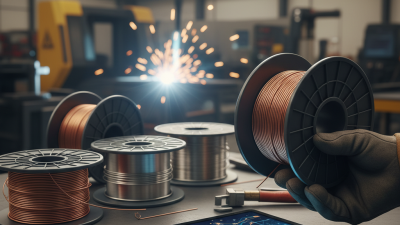
Solid carbon-steel MIG wire |
AWS A5.18 ER70S-6
ISO 14341-A G 42 4 M21 3Si1 |
Short-circuit, globular, spray, or pulsed spray transfer, depending on thickness and equipment. |
75% argon / 25% carbon dioxide is widely used for controlled arc and lower spatter. Higher carbon-dioxide mixtures provide deeper penetration but generally increase spatter. |
0.8 mm, 0.9 mm, 1.0 mm, 1.2 mm, and 1.6 mm |
The deoxidizers in ER70S-6 help tolerate moderate mill scale and surface contamination better than lower-deoxidizer wires. |
Confirm minimum yield and tensile strength requirements, wire surface quality, spool dimensions, polarity, and whether the base metal must be cleaned before welding. |
| High-Strength Low-Alloy Steel |
Load-bearing components, transport equipment, pressure-related fabrication, and joints requiring higher strength or controlled toughness. |
Matching or slightly overmatching low-alloy solid wire selected for the qualified welding procedure |
AWS A5.28 ER80S-D2, ER90S-G, or another specified low-alloy classification |
Spray or pulsed spray for controlled heat input; short-circuit transfer may be used for thinner sections when approved by the procedure. |
Argon-rich mixtures such as 80% argon / 20% carbon dioxide or similar qualified mixtures. |
0.9 mm, 1.0 mm, 1.2 mm, and 1.6 mm |
Low-alloy chemistry can provide increased strength and may improve resistance to service-related degradation compared with standard mild-steel wire. |
Do not select wire by tensile strength alone. Verify preheat, interpass temperature, hydrogen control, heat input, impact requirements, and post-weld treatment. |
| Stainless Steel 304 or 304L |
Corrosion-resistant fabrications, food-processing equipment, architectural parts, and general stainless assemblies. |
Stainless solid wire with chemistry matched to the parent metal and service environment |
AWS A5.9 ER308LSi
ISO 14343-A G 19 9 L Si |
Short-circuit for thin sheet; spray or pulsed spray for thicker material and improved bead control. |
Argon-rich stainless-steel mixtures, often with a small addition of carbon dioxide or oxygen where permitted by the welding procedure. |
0.8 mm, 0.9 mm, 1.0 mm, and 1.2 mm |
The low-carbon version helps reduce the risk of chromium-carbide precipitation during welding, while silicon can improve wetting and bead appearance. |
Use dedicated liners and contact tips where possible, prevent carbon-steel contamination, control heat input, and remove heat tint when corrosion performance requires it. |
| Stainless Steel 316 or 316L |
Marine, chemical-processing, pharmaceutical, and other applications exposed to chlorides or more aggressive corrosion conditions. |
Molybdenum-bearing stainless solid wire |
AWS A5.9 ER316LSi
ISO 14343-A G 19 12 3 L Si |
Short-circuit, spray, or pulsed spray transfer according to section thickness and heat-input limits. |
Argon-rich stainless-steel shielding gas qualified for the procedure. |
0.8 mm, 0.9 mm, 1.0 mm, and 1.2 mm |
The molybdenum content improves resistance to localized corrosion compared with 308-type stainless wire in suitable service environments. |
Check the actual base-metal grade, ferrite balance, corrosion requirements, interpass temperature, and cleaning procedure. Do not substitute 308-type wire when molybdenum-bearing weld metal is required. |
| Aluminum 5xxx Series |
Marine structures, transport components, tanks, and fabricated parts where magnesium-containing aluminum is used. |
Aluminum-magnesium solid wire |
AWS A5.10 ER5356
ISO 18273 S Al 5356 |
Spray or pulsed spray transfer; short-circuit transfer is generally less stable and more prone to lack of fusion on thicker material. |
100% argon for most applications; helium-argon blends can increase heat input for thicker sections. |
0.8 mm, 0.9 mm, 1.0 mm, 1.2 mm, and 1.6 mm |
ER5356 offers higher tensile strength than ER4043 in many matching applications and is commonly selected for 5xxx-series aluminum. |
Confirm service temperature and design requirements. Magnesium-containing weld metal is generally not selected for sustained service above approximately 65°C because of stress-corrosion considerations. |
| Aluminum 6xxx Series |
General aluminum fabrication, frames, vehicle components, and joints where good fluidity and reduced cracking sensitivity are important. |
Aluminum-silicon solid wire |
AWS A5.10 ER4043
ISO 18273 S Al 4043A |
Pulsed spray is commonly preferred for controllable transfer and reduced distortion; spray transfer may be used with suitable thickness and equipment. |
100% argon; argon-helium mixtures may be considered for thicker material. |
0.8 mm, 0.9 mm, 1.0 mm, and 1.2 mm |
Silicon improves fluidity and can reduce weld-metal cracking in many 6xxx-series joints, although final selection depends on design and service conditions. |
Clean oxide and oil thoroughly, use a U-groove liner and aluminum-rated drive rolls, maintain a short wire stick-out, and verify final weld color and mechanical requirements. |
| Galvanized or Zinc-Coated Steel |
Automotive parts, fencing, ductwork, and light fabrication where zinc coating must be considered. |
Solid mild-steel wire, typically a deoxidized classification |
AWS A5.18 ER70S-6
ISO 14341-A G 42 4 M21 3Si1 |
Short-circuit or controlled pulsed transfer for thin sheet and reduced burn-through. |
Argon-rich gas with carbon dioxide, commonly 75% argon / 25% carbon dioxide, or another qualified mixture. |
0.8 mm and 0.9 mm for thin sheet; 1.0 mm and 1.2 mm for heavier sections. |
A deoxidized solid wire can provide stable welding on properly prepared coated steel, while controlled transfer helps limit heat input. |
Remove coating from the weld area as required, provide effective ventilation, and follow occupational exposure controls because zinc fumes can be hazardous. Restore corrosion protection after welding. |
| Weathering or Corrosion-Resistant Structural Steel |
Bridges, outdoor structures, rail components, and joints requiring compatible atmospheric-corrosion performance. |
Low-alloy wire with chemistry selected to match the base metal and exposure conditions |
AWS A5.28 classification specified by the welding procedure; examples may include ER80S-Ni1 or other qualified low-alloy grades. |
Spray or pulsed spray for productivity and controlled penetration; short-circuit transfer for thin sections where qualified. |
Argon-rich mixtures with controlled carbon-dioxide content. |
0.9 mm, 1.0 mm, 1.2 mm, and 1.6 mm |
The correct alloying elements can help produce weld metal compatible with the strength, toughness, and environmental requirements of the structure. |
The wire must be selected from the project specification or qualified WPS. Atmospheric weathering performance is not guaranteed by simply using a generic low-alloy wire. |
| Dissimilar Steel Joints |
Joining different steel grades where cracking resistance, ductility, and tolerance to dilution are more important than exact chemistry matching. |
Qualified austenitic stainless or nickel-alloy wire chosen for the specific combination of metals and service conditions |
Common options may include AWS A5.9 ER309LSi or a higher-alloy classification specified by the WPS. |
Short-circuit, spray, or pulsed spray depending on thickness, dilution control, and access. |
Argon-rich gas selected to control oxidation, spatter, and weld-metal properties. |
0.8 mm, 0.9 mm, 1.0 mm, and 1.2 mm |
A suitably alloyed weld metal can accommodate dilution and reduce the risk of brittle or crack-sensitive weld structures. |
There is no universal dissimilar-metal wire. Check dilution, thermal expansion, corrosion environment, ferrite, preheat, interpass temperature, and required qualification standard. |
| Thin Sheet Steel |
Automotive panels, cabinets, appliance parts, and light-gauge fabrication where burn-through and distortion must be minimized. |
Small-diameter solid carbon-steel wire |
AWS A5.18 ER70S-6 |
Short-circuit transfer, stitch welding, or controlled pulse where supported by the power source. |
75% argon / 25% carbon dioxide or another low-spatter argon-rich mixture. |
0.6 mm, 0.8 mm, or 0.9 mm |
A smaller diameter lowers the current required for a given wire feed speed range and supports more precise heat control. |
Match wire diameter to the machine's feed system, use proper inductance or arc-control settings, maintain fit-up, and avoid excessive travel delay. |
| Thick Carbon-Steel Plate |
Heavy machinery, structural assemblies, pressure-related fabrication, and joints requiring high deposition rates. |
Larger-diameter solid wire or metal-cored wire when permitted by the specification |
Solid wire: AWS A5.18 ER70S-6
Metal-cored alternatives: AWS A5.18 classifications such as E70C-6M |
Spray, pulsed spray, or controlled short-circuit; metal-cored wire can provide high deposition and good sidewall fusion. |
Argon-rich gas for spray and pulse; gas selection must be compatible with the wire classification and WPS. |
1.0 mm, 1.2 mm, 1.6 mm, and 2.0 mm |
Larger wires and higher-energy transfer modes increase deposition efficiency for thicker joints and longer welds. |
Verify power-source duty cycle, gun liner capacity, contact-tip size, deposition rate, hydrogen control, preheat, interpass limits, and required impact toughness. |
| Outdoor or Wind-Exposed Welding |
Field erection, repair, construction, and maintenance where shielding-gas disruption is possible. |
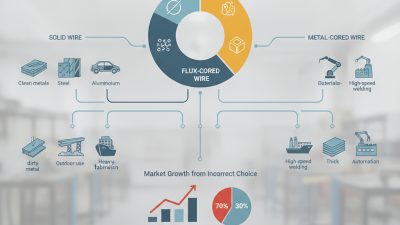
Flux-cored wire may be more suitable than conventional solid MIG wire when the applicable procedure allows it. |
Examples include AWS A5.20 E71T-1C/M for carbon-steel flux-cored wire; exact classification depends on application and gas. |
Flux-cored arc welding using self-shielded or gas-shielded wire, rather than conventional solid-wire GMAW. |
Self-shielded wire uses no external gas; gas-shielded flux-cored wire commonly uses carbon-dioxide or an argon-rich mixture specified by the classification. |
1.0 mm, 1.2 mm, 1.4 mm, and 1.6 mm |
The flux system can provide shielding that is less vulnerable to moderate air movement than an exposed gas shield. |
Control wind whenever possible, remove slag between passes, confirm polarity, and do not treat flux-cored wire as interchangeable with solid MIG wire. |