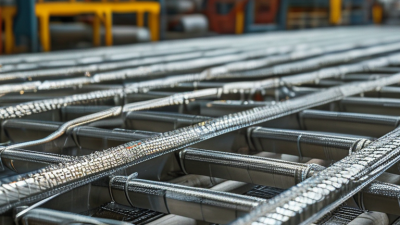
Choosing the right wire mesh manufacturer affects product strength, delivery reliability, and long-term operating costs. A dependable supplier should provide more than attractive prices. It should demonstrate consistent wire diameter, accurate apertures, stable welding, and dependable surface protection.
This guide introduces ten leading wire mesh manufacturers worldwide. The selection considers manufacturing experience, product range, quality systems, production capacity, and international service. It also reviews practical details, such as galvanized rolls, stainless steel panels, welded mesh, woven mesh, and custom dimensions. These factors matter in construction, filtration, agriculture, mining, security, and industrial processing.
Quality evidence matters.
Reliable manufacturers usually publish technical specifications and maintain recognized quality certifications. They may also provide test reports, traceability records, and samples for inspection. However, company rankings are rarely permanent. Market position can change with ownership, technology investment, regional demand, and delivery performance.
No list is perfect. Some manufacturers disclose limited production data, making direct comparisons difficult. For that reason, this overview avoids treating size as the only measure of authority. A smaller specialist may offer better tolerances or faster customization than a larger producer. Buyers should still verify current certifications, factory capabilities, minimum order quantities, and shipping terms before choosing a supplier.
The following overview offers a balanced starting point. It connects global reputation with measurable manufacturing details, helping readers compare manufacturers more carefully and select a partner suited to their project requirements.
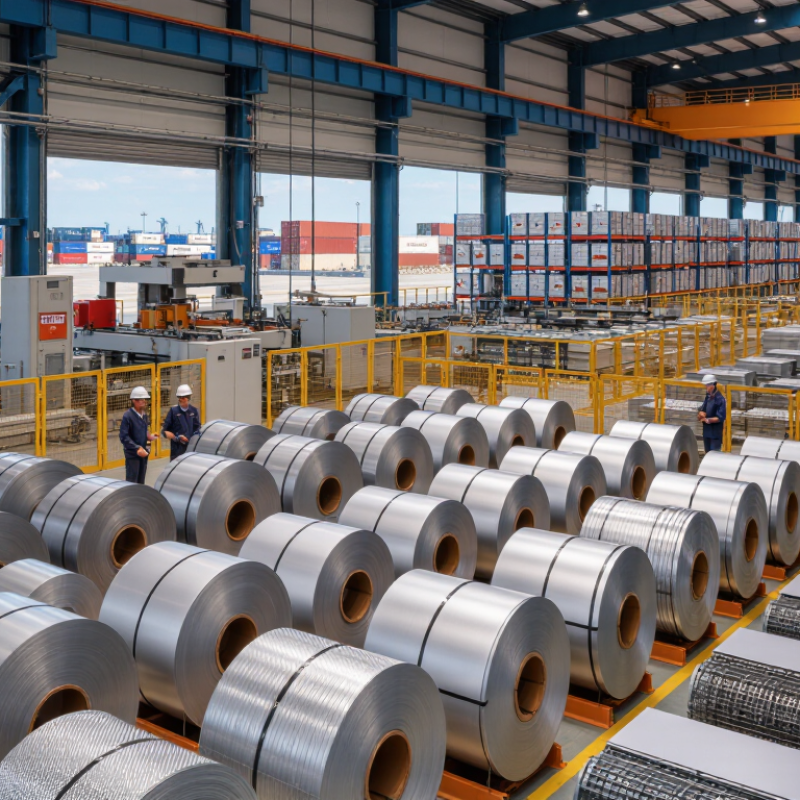
Selecting the top 10 wire mesh manufacturers worldwide requires more than counting factory size or export volume. A credible ranking should examine verified production capacity, material traceability, product consistency, and delivery performance. Technical teams can review mesh opening accuracy, wire diameter tolerance, weld strength, coating adhesion, and corrosion resistance. These details matter when mesh is installed outdoors, inside machinery, or across large industrial sites.
Independent certifications and laboratory reports provide stronger evidence than promotional claims. The selection should also consider manufacturing experience, engineering support, quality control systems, and documented customer feedback. Reliable manufacturers usually explain their testing methods and provide clear specifications. Transparent communication matters, especially when projects involve custom dimensions or demanding environments. However, no ranking is perfect. Public information may be incomplete, and regional delivery performance can change over time. The scoring method should be reviewed regularly.
Tips: Compare test reports, not only catalog images. Request samples and measure the openings yourself. Check whether the quoted material grade matches the mill certificate. Ask about production lead times, packaging, and replacement procedures. A low price may hide inconsistent wire thickness or weak weld points. Site conditions matter, too. Salt air, chemical exposure, vibration, and repeated loading can affect the best-looking mesh. Use several evidence sources before making a final judgment.
A global profile of the top ten wire mesh manufacturers should examine capability, not publicity. These producers operate across Asia, Europe, North America, and other industrial regions. Their facilities commonly serve construction, mining, agriculture, filtration, and protective infrastructure. Some focus on stainless steel mesh, while others specialize in galvanized panels, welded grids, or high-strength woven products.
Experienced manufacturers control wire diameter, aperture size, welding pressure, and surface treatment closely. Their production lines often include automatic weaving machines, resistance welders, cutting systems, and coating equipment. Reliable suppliers provide material certificates, dimensional inspection reports, and batch traceability. Factory audits can reveal more than polished product pages. Quality varies.
The strongest profiles also show practical engineering support. Technical teams should recommend mesh openings according to load, corrosion exposure, and installation conditions. Export experience matters because packaging must protect edges during long ocean transport. Some manufacturers maintain regional warehouses, reducing replacement delays. Others offer custom rolls, panels, bends, and tolerance adjustments for demanding projects. Details matter. However, no producer is perfect. A supplier may have excellent machinery but inconsistent communication. Another may offer attractive pricing but limited testing capacity. Buyers should compare recent samples, production records, independent certificates, and response times before approving a large order.
| Rank | Anonymous Manufacturer Profile | Primary Operating Region | Core Wire Mesh Products | Common Materials | Typical Industries Served | Production Strengths | International Market Coverage |
|---|---|---|---|---|---|---|---|
| 1 | Manufacturer Profile A | Western Europe | Welded mesh Woven mesh Architectural mesh | Carbon steel, stainless steel, galvanized steel, aluminum | Construction, mining, automotive, infrastructure, industrial filtration | Large-scale steel wire processing, coating, welding, and international engineering support | Europe, North America, Asia-Pacific, Middle East, and Latin America |
| 2 | Manufacturer Profile B | North America | Woven wire cloth Perforated products Security mesh | Stainless steel, nickel alloys, copper, brass, bronze | Filtration, aerospace, chemical processing, food processing, pharmaceuticals | Fine-mesh production, custom openings, technical filtration media, and made-to-order fabrication | United States, Canada, Europe, and selected Asian markets |
| 3 | Manufacturer Profile C | Central Europe | Welded panels Fencing mesh Gabion mesh | Low-carbon steel, hot-dip galvanized steel, polymer-coated steel | Residential construction, commercial property, agriculture, transport, public works | Automated panel welding, corrosion-resistant finishes, fencing systems, and project supply | European Union, United Kingdom, North Africa, and the Middle East |
| 4 | Manufacturer Profile D | East Asia | Mining screens Quarry screens Heavy-duty woven mesh | High-carbon steel, spring steel, stainless steel, abrasion-resistant wire | Mining, aggregate processing, recycling, cement, bulk-material handling | Heavy-duty crimping, large screen panels, abrasion resistance, and replacement-screen manufacturing | Asia-Pacific, Africa, South America, Australia, and North America |
| 5 | Manufacturer Profile E | South Asia | Industrial woven mesh Filter cloth Conveyor mesh | Stainless steel, galvanized iron, nickel, polyester-coated wire | Oil and gas, chemical processing, food equipment, filtration, heat treatment | Broad mesh range, custom rolls and sheets, export packaging, and flexible order quantities | Europe, North America, Gulf countries, Southeast Asia, and Africa |
| 6 | Manufacturer Profile F | North America | Bar grating Safety barriers Expanded metal | Carbon steel, galvanized steel, aluminum, stainless steel | Factories, warehouses, platforms, stairs, machine guarding, commercial buildings | Engineered access systems, safety-focused fabrication, standard stock, and rapid distribution | United States, Canada, Mexico, and international project markets |
| 7 | Manufacturer Profile G | Western Europe | Architectural mesh Cable mesh Decorative screens | Stainless steel, bronze, brass, aluminum, coated steel | Architecture, interior design, transport facilities, public buildings, retail | Custom design development, architectural finishes, project engineering, and made-to-measure panels | Europe, North America, the Middle East, and Asia-Pacific |
| 8 | Manufacturer Profile H | East Asia | Welded wire mesh Reinforcing mesh Livestock fencing | Low-carbon steel, galvanized steel, PVC-coated steel | Concrete reinforcement, agriculture, animal enclosures, road construction, landscaping | High-volume welding, dimensional consistency, galvanized finishes, and container-scale shipments | Asia, Europe, Africa, North America, and Oceania |
| 9 | Manufacturer Profile I | Oceania | Welded fencing Rural mesh Security panels | Galvanized steel, aluminum, polymer-coated steel | Agriculture, civil construction, mining sites, utilities, residential security | Outdoor durability, corrosion protection, high-security fencing, and regional logistics | Australia, New Zealand, Southeast Asia, and Pacific markets |
| 10 | Manufacturer Profile J | Eastern Europe | Industrial screens Woven mesh Specialty filters | Stainless steel, high-carbon steel, galvanized steel, nickel alloys | Mining, metallurgy, energy, chemical processing, and industrial separation | Custom weaving, technical aperture control, high-temperature applications, and industrial replacement parts | Europe, Central Asia, North Africa, and the Middle East |
Comparison criteria include product breadth, material capability, manufacturing specialization, application coverage, and international distribution reach. Manufacturer profiles are presented without company or brand names.
The top ten wire mesh manufacturers worldwide typically serve construction, mining, filtration, agriculture, energy, and industrial safety markets. Their product ranges include welded mesh, woven mesh, expanded metal, perforated sheets, conveyor mesh, and reinforcing fabric. Many produce stainless steel, galvanized steel, aluminum, nickel alloys, and high-carbon wire grades. Material choice depends on corrosion exposure, load, temperature, and opening accuracy.
One major producer focuses on large welded panels for concrete reinforcement and security fencing. Another operates high-speed looms for fine filtration mesh, with openings measured in microns. A third specializes in heavy-duty screens for quarrying, using abrasion-resistant wire and reinforced edges. Other leading manufacturers supply poultry mesh, gabions, architectural facades, demister pads, and heat-resistant conveyor belts. Some factories combine wire drawing, weaving, welding, cutting, bending, and surface treatment under one roof. That integration can reduce delays.
Quality evidence matters. Reliable plants publish tensile strength, aperture tolerance, coating thickness, and weld-shear results. They also use calibrated gauges and traceable batch records. In my experience, samples can look identical but perform differently after bending or salt exposure. This is often overlooked. Manufacturing capability is not only about machine count. It includes process control, tooling flexibility, inspection discipline, and practical support for custom dimensions. Regional delivery capacity also affects the real value of a supplier. Rankings may change as energy costs, equipment investment, and export conditions shift.
The top ten wire mesh manufacturers serve industries that demand strength, airflow, filtration, and controlled separation. Their products support construction, mining, agriculture, transport, energy, and public infrastructure. Each application requires a different balance of wire diameter, opening size, coating, and load capacity.
In construction, welded mesh reinforces concrete slabs, walls, and prefabricated panels. Galvanized fencing protects warehouses, schools, farms, and transportation sites. Mining operations use heavy-duty screens to classify stone and separate valuable materials.
In food processing, stainless steel mesh supports drying, baking, washing, and conveyor systems. Small openings matter here. They help control product movement and reduce contamination risks.
Manufacturers also supply mesh for air filtration, chemical processing, and water treatment. Perforated or woven structures can manage pressure, heat, and particle flow. Engineers usually check tensile strength, corrosion resistance, temperature limits, and cleaning requirements before approval. A mesh that performs well outdoors may fail near saltwater or harsh chemicals. That detail is easy to miss.
Real projects often expose imperfect specifications. A drawing may state opening size but omit wire tolerance or edge protection. Site teams should test samples under actual conditions, not rely only on catalog data. Independent inspection, traceable material certificates, and consistent quality checks improve reliability. The best supplier is not always the largest. It is the one that understands the operating environment and documents its performance clearly.
When comparing the top ten wire mesh manufacturers worldwide, avoid ranking them by price alone.
Grand View Research estimates the global wire mesh market will expand at about 4.6% annually through 2030. That growth increases supplier choices, but not necessarily quality. Build a comparison sheet covering wire grade, opening tolerance, tensile strength, coating thickness, and production capacity. Request current test reports, material certificates, and traceability records for every batch.
Ask whether the manufacturer follows relevant ASTM or ISO requirements. Stainless steel mesh should match the specified alloy and documented test method. Galvanized mesh requires verified coating weight, not a vague “heavy-duty” description. ISO 9001 certification can indicate controlled processes, but it does not prove perfect product quality.
Inspect sample rolls. Measure aperture size with calipers. Check edge straightness under normal lighting. Small details matter.
Production experience also affects project risk. Confirm tooling capability, minimum order quantities, packaging methods, and realistic lead times. The 2024 World Steel Association data shows global crude steel production exceeded 1.8 billion tonnes, yet raw material scale does not guarantee consistent mesh weaving. A supplier may offer an attractive quotation and still miss delivery windows. That happens.
Compare at least three physical samples and one independent inspection plan. Consider corrosion testing for outdoor applications, especially where salt exposure is expected. The cheapest manufacturer may still be suitable, but only when the evidence supports the choice.