Top Stainless Steel Wire Types for Global Buyers?

Choosing the right stainless steel wire is rarely as simple as selecting a familiar grade. Global buyers must compare chemistry, tensile strength, surface finish, diameter tolerance, and forming performance. A wire that performs well in a coastal railing may fail in a high-temperature spring. Application matters.

This guide introduces widely purchased wire types, including 304, 316, 316L, 302, and 430 grades. It also explains common forms, such as annealed, hard-drawn, spring, welding, and bright wire. Each type offers a different balance of corrosion resistance, flexibility, strength, and cost. For example, 316 wire usually provides stronger resistance to chloride exposure, while 304 remains a practical choice for general fabrication.

Details matter. A polished 1.2-millimeter wire should show an even surface, clean edges, and consistent winding. Buyers should review mill certificates, chemical analysis, mechanical test results, and dimensional inspection reports. Relevant ASTM, EN, JIS, or customer specifications should be confirmed before production. Supplier experience also matters, especially when packaging, export documentation, and batch traceability affect delivery reliability.

No single grade fits every market. Even experienced purchasers can overlook work-hardening behavior or actual service conditions. A neat specification sheet is not enough. The best decision combines laboratory data, supplier verification, and real application feedback. This overview offers a practical starting point, but final selection should remain open to testing, comparison, and careful reassessment.

Top Stainless Steel Wire Types for Global Buyers?

Stainless Steel Wire: Definition, Properties, and Global Applications

Stainless Steel Wire: Definition, Properties, and Global Applications

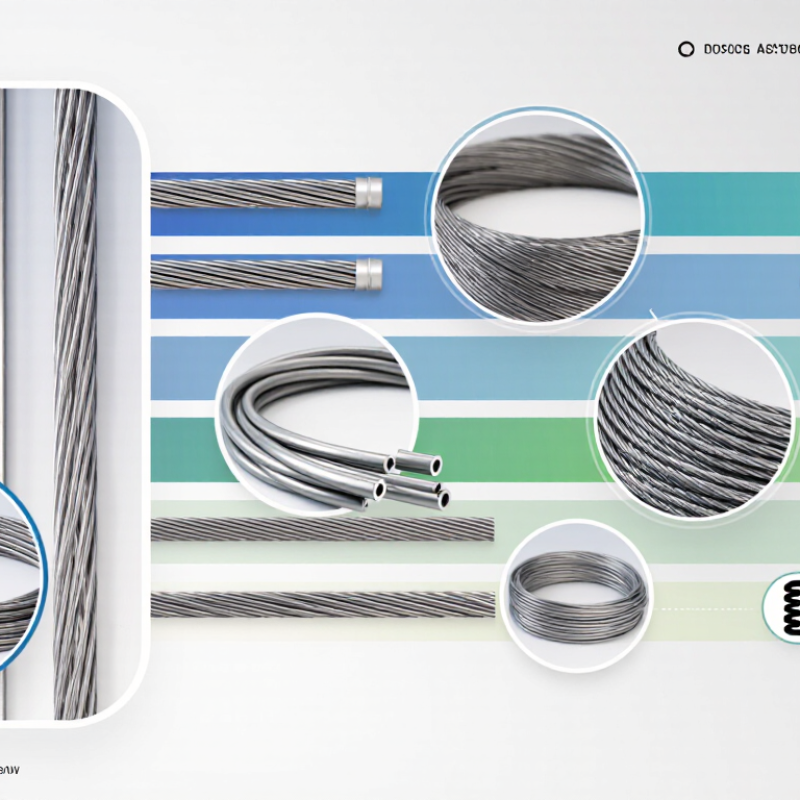
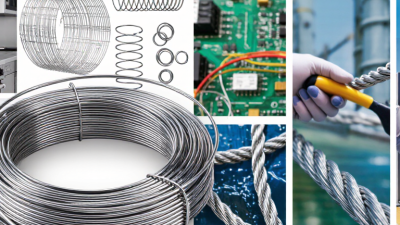
Stainless steel wire is a cold-drawn metal product made from corrosion-resistant steel alloys. Under EN 10088, stainless steel contains at least 10.5% chromium. Nickel, molybdenum, and nitrogen can improve strength and corrosion resistance. Wire may be round, flat, spring-shaped, or customized for forming. Common families include austenitic, ferritic, martensitic, and duplex grades.

Each family suits different working conditions. Austenitic wire offers strong corrosion resistance and easy forming. Ferritic wire provides magnetic performance and lower nickel dependence. Martensitic grades support high hardness. Duplex wire combines strength with resistance to chloride environments. The International Stainless Steel Forum reported about 59.1 million tonnes of global stainless crude steel production in 2023. That scale reflects demand from construction, medical equipment, food processing, energy, and transportation.

Small details matter. Surface finish affects cleaning and appearance. Tensile strength affects spring recovery and load safety. Diameter tolerance influences automated assembly. A wire that looks bright may still fail in salt, heat, or acidic service. Corrosion resistance is not permanent. Poor storage can create contamination, especially near carbon steel dust. Global buyers should review grade chemistry, mechanical certificates, heat treatment, and test standards before ordering. The choice is rarely perfect. Cost, availability, fabrication, and service life often pull in different directions.

Main Stainless Steel Wire Types by Grade and Manufacturing Method

Top Stainless Steel Wire Types for Global Buyers

Main Stainless Steel Wire Types by Grade and Manufacturing Method

Stainless steel wire selection starts with the grade. Grade 304 suits general fabrication, food equipment, and indoor architectural parts. It offers balanced corrosion resistance and forming performance. Grade 316 contains molybdenum, making it more suitable for salt spray, coastal air, and chemical exposure. Grade 201 costs less, but its corrosion resistance may decline in humid environments. Grade 430 provides magnetic performance and moderate oxidation resistance. It is often used for dry indoor applications.

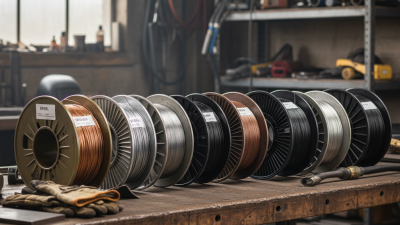
Manufacturing method changes the wire’s behavior. Cold-drawn wire passes through dies to reduce diameter and improve dimensional accuracy. It may feel firm and show a bright surface. Annealed wire receives heat treatment, making it softer and easier to bend. Spring wire is cold worked for higher resilience, but excessive forming can reduce service life. Welded wire usually uses accurately positioned strands, while woven wire mesh offers flexible openings and easier cutting.

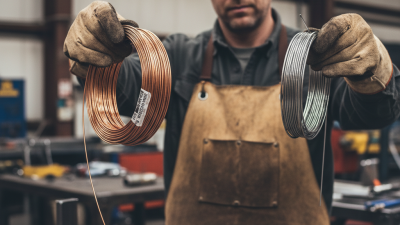
Check more than the grade label. Confirm diameter tolerance, tensile strength, surface condition, coil weight, and test documentation. A polished appearance can mislead buyers. It does not prove strong corrosion resistance. In practical sourcing, I would also test a sample after bending and cleaning. Specifications sometimes look complete, yet omit the actual heat-treatment condition. That gap matters. The best choice depends on exposure, forming needs, magnetic requirements, and maintenance conditions.

How Wire Diameter, Finish, and Strength Affect Product Selection

Top Stainless Steel Wire Types for Global Buyers?

Global buyers should match wire diameter with the actual load, bend radius, and forming method. A 0.20 mm wire offers flexibility, but it tolerates far less tension than a 2.00 mm wire. Cross-sectional area matters. Small changes matter. Austenitic wire, such as 304 or 316, usually supports corrosion-resistant applications. Cold-drawn or spring-tempered wire provides higher tensile strength, but reduced elongation can cause cracking during sharp forming. ASTM A580/A580M and EN 10270-3 provide useful purchasing references. However, standards do not replace lot-specific test certificates.

Finish changes performance beyond appearance. Bright wire can support clean, consistent forming. Matte finishes may hide minor handling marks. Electropolished surfaces can improve cleanability and reduce contamination points, but they cannot repair an unsuitable alloy or poor storage practice. The International Stainless Steel Forum reported approximately 58.4 million tonnes of global stainless steel production in 2023, according to Stainless Steel in Figures 2024. This scale increases supply options, yet specifications still vary between mills. Request diameter tolerance, tensile range, elongation, surface condition, and corrosion-test results. A polished surface is not automatically a stronger surface. That assumption deserves review. Trial samples under real bending and cleaning conditions often reveal weaknesses that a catalogue misses.

Top Stainless Steel Wire Types for Global Buyers: How Wire Diameter, Finish, and Strength Affect Product Selection
Stainless Steel Wire Type Typical Wire Diameter Range Common Surface Finishes Typical Tensile Strength Corrosion Resistance Formability and Spring Performance Typical Product Applications Best Selection Considerations
304 Austenitic Wire 0.05–12.00 mm Bright, matte, polished, electro-polished 515–1,900 MPa, depending on cold working Good resistance to atmospheric corrosion, moisture, and many food-processing environments Excellent ductility and forming capability; moderate spring performance after cold drawing General-purpose mesh, woven wire cloth, fasteners, medical components, food equipment, and formed parts Choose for balanced corrosion resistance, availability, weldability, and cost efficiency
316 / 316L Austenitic Wire 0.05–10.00 mm Bright, matte, polished, electro-polished 515–1,900 MPa, depending on cold working Very good resistance to chlorides, marine exposure, and chemical-processing environments Good formability and weldability; 316L is preferred where reduced carbon content is beneficial Marine hardware, chemical equipment, pharmaceutical parts, surgical components, and filtration systems Choose when chloride exposure or higher corrosion resistance is more important than minimum material cost
302 / 304 Spring Wire 0.10–8.00 mm Bright drawn, polished, oil-free clean finish 1,000–2,200 MPa, depending on temper and diameter Good general corrosion resistance; performance decreases in aggressive chloride conditions Excellent cold-work hardening and spring-back characteristics Compression springs, extension springs, torsion springs, clips, retaining rings, and precision formed parts Choose when fatigue resistance, elastic recovery, and high cold-drawn strength are required
17-7 PH Precipitation-Hardening Wire 0.10–6.00 mm Bright drawn, precision polished, clean bright finish 1,200–1,900 MPa, depending on heat treatment Good to very good corrosion resistance in many industrial and aerospace environments High strength with useful spring properties; heat treatment is required to reach target performance High-load springs, aerospace components, precision instruments, valves, and high-temperature assemblies Choose when high strength and spring performance are needed in a relatively compact wire diameter
430 Ferritic Wire 0.10–8.00 mm Bright, matte, polished 450–750 MPa, depending on processing Moderate resistance to atmospheric corrosion; lower resistance than 304 and 316 in chloride environments Fair formability; limited work hardening and generally lower spring capability than austenitic grades Decorative components, appliance parts, automotive trim, general-purpose clips, and low-cost mesh Choose for magnetic properties, moderate corrosion resistance, and cost control in less aggressive environments
410 Martensitic Wire 0.20–8.00 mm Bright, polished, black oxide, passivated 700–1,600 MPa, depending on heat treatment Moderate corrosion resistance; requires suitable treatment and service conditions Heat-treatable for high hardness and strength; lower ductility than austenitic wire Cutting components, wear-resistant parts, mechanical pins, clips, and high-strength industrial components Choose when hardness, wear resistance, and mechanical strength are prioritized over maximum corrosion resistance
309 / 310 Heat-Resistant Wire 0.20–10.00 mm Bright, annealed, matte, oxidized heat-resistant finish 515–1,200 MPa, depending on grade and condition Good high-temperature oxidation resistance; 310 generally provides stronger heat resistance than 309 Good elevated-temperature stability; not normally selected for maximum spring performance Furnace components, heat-treatment baskets, burner parts, kiln hardware, and high-temperature mesh Choose when continuous or intermittent high-temperature exposure is the primary design factor
Technical note: Diameter ranges, tensile-strength values, and finish availability are typical commercial guidance values rather than universal limits. Actual results depend on the applicable material standard, wire condition, cold-reduction level, heat treatment, dimensional tolerance, and inspection requirements. For purchasing, buyers should confirm the required grade, nominal diameter, tensile range, surface condition, tolerance, coil or straight-length format, and applicable standard before ordering.

Global Standards, Certifications, and Quality Requirements

Global buyers need more than a bright coil and a familiar grade number. The right stainless steel wire depends on corrosion exposure, forming method, tensile strength, and final application. Common choices include 304, 316, spring wire, welding wire, and rope wire. Marine environments usually require stronger molybdenum-bearing grades, such as 316. Grade names alone are insufficient.

The International Stainless Steel Forum reported approximately 58.4 million tonnes of stainless crude steel production in 2023. That scale increases sourcing options, but also creates uneven quality between mills. ASTM A580/A580M commonly supports stainless wire requirements in North American projects. European contracts often cite EN 10088 for chemical composition and product conditions. Mechanical testing should follow ISO 6892-1, covering tensile strength and elongation. A mill test certificate should show heat number, chemistry, dimensions, test results, and delivery condition. For critical orders, request EN 10204 type 3.1 documentation or independent inspection.

The ISO Survey 2022 recorded more than 1.26 million ISO 9001 certificates worldwide. Yet certification does not prove every coil meets the purchase specification. Ask for traceability records. Request surface photographs and dimensional reports. Verify random samples before shipment. In practical sourcing, I have found that packaging details matter: sealed coils, dry separators, and clear labels reduce handling damage. A certificate can still hide inconsistencies. That is the uncomfortable part. Specifications must define tolerances, testing frequency, and acceptance rules before production begins.

A Practical Framework for Comparing Suppliers and Buying Options

Top Stainless Steel Wire Types for Global Buyers?

A Practical Framework for Comparing Suppliers and Buying Options

Choosing stainless steel wire starts with the application, not the lowest quotation. Grade 304 suits general fabrication, springs, mesh, and food-contact equipment. Grade 316 offers stronger resistance to salt and chemical exposure. Grades 410 and 430 can fit projects needing hardness or lower material cost. Confirm the environment before comparing prices.

A reliable supplier should provide a mill test certificate, chemical composition, tensile strength, and diameter tolerance. Check whether the certificate matches the actual production batch. Ask for surface details, such as bright, matte, or polished finish. A sample coil can reveal scratches, uneven winding, or inconsistent wire diameter. Small defects become costly during automated processing.

Compare buying options by total landed cost. Direct mill orders may reduce unit prices but often require higher minimum quantities. Distributors can offer faster delivery and mixed sizes, although their margins may increase the final cost. Review lead time, coil weight, packaging, export documents, payment terms, and delivery conditions together. A low price can still be expensive. Very small orders may need local stock.

Communication is another practical test. Send the same technical sheet to each supplier and compare the replies. Precise answers usually indicate stronger process control. Vague promises deserve caution. I have seen buyers focus on grade alone and overlook tolerance requirements. That mistake delayed production. A second review often catches it. The best option is not always the cheapest or fastest; it is the one that consistently matches the specification.

Go to Top