Who Are the Best Stainless Steel Manufacturers in China?
Who are the best stainless steel manufacturers in China? The answer depends on what you need—not just a company’s name or production scale. A buyer sourcing 304 coils for kitchen equipment may value consistent thickness and a clean 2B finish. A project requiring 316 plate may need different documentation, processing capacity, and delivery planning. The right supplier fits the job.
China’s stainless steel manufacturers range from large producers to specialized processors and exporters. Comparing them means looking beyond polished product photos. Check available grades, dimensional tolerances, surface finishes, minimum order quantities, and experience with your product type. Ask for recent test reports and traceability documents, then confirm that the details match the material being offered. Small details matter.
This guide explores manufacturers through practical criteria: product range, quality controls, production capability, service, and evidence buyers can verify. A factory visit or independent audit may reveal more than a brochure can. So can a clear answer about lead times, packaging, or how defects are handled. No ranking is perfect; supplier performance can vary by product and order. Treat any shortlist as a starting point, not a guarantee. The best choice is the one that can consistently meet your specifications and support your checks before shipment.
Criteria for Identifying Leading Stainless Steel Manufacturers in China
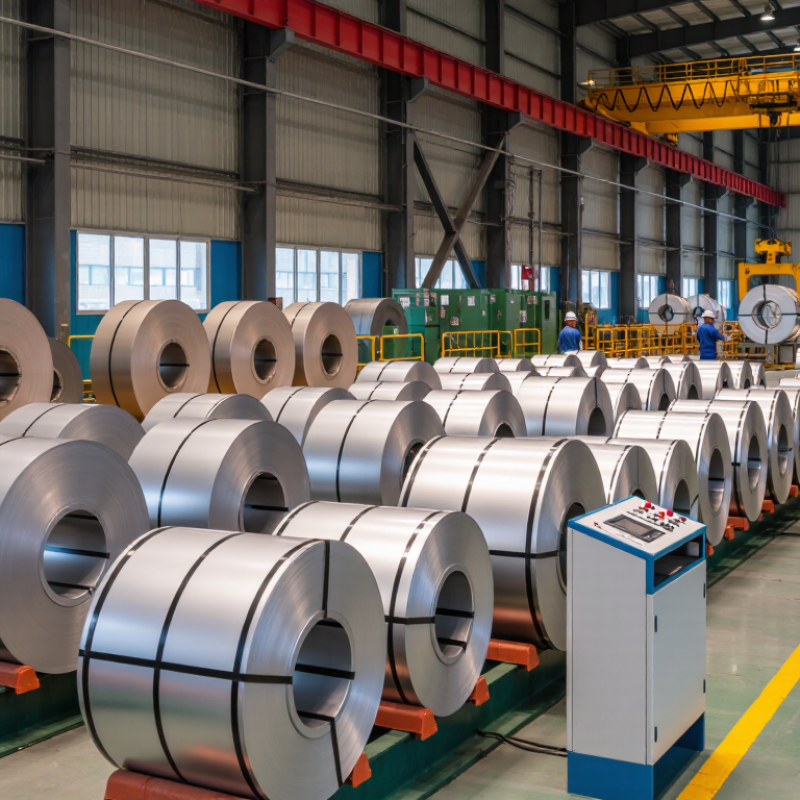
A reliable assessment of leading stainless steel manufacturers starts with verifiable production controls, not impressive factory photos. The World Stainless Association reported 58.4 million tonnes of global stainless steel production in 2023, with China contributing about 36.7 million tonnes. This scale offers buyers many options, but volume alone does not prove consistent quality. Ask for mill test certificates that match the quoted grade, heat number, and finished coil or sheet. Check whether the manufacturer can explain its testing methods and provide recent inspection records.
Look closely at process capability: grade range, thickness tolerance, surface finish, and batch traceability. Request samples with clear labels, then compare measured dimensions and surface condition against the specification. ISO 9001 certification can indicate a formal quality-management system, but it is not a substitute for checking actual products or audit scope. Review delivery performance and complaint handling, too. A polished brochure may not reveal a slow response when a batch has defects. No checklist is perfect; an independent inspection can reduce uncertainty.
Tips: Ask for a recent production record and a sample test report from the same product grade. Confirm that the heat number remains traceable through packing and shipment. If details are vague, pause and investigate.
Who Are the Best Stainless Steel Manufacturers in China? — Criteria for Identifying Leading Stainless Steel Manufacturers in China
| Evaluation Criterion | Suggested Weight | What to Check | Verifiable Evidence |
|---|---|---|---|
| Product range and standards compliance | 20% | Confirm that the supplier makes the required product forms, grades, dimensions, and finishes, and can meet the standards specified for the order. | Product specifications and order documents referencing applicable standards, such as GB/T 3280 for cold-rolled stainless steel sheet and strip, GB/T 4237 for hot-rolled stainless steel plate and strip, ASTM A240/A240M, or the relevant parts of EN 10088. Confirm that the cited standard and grade match the specific product. |
| Quality management | 15% | Assess whether documented procedures control production, inspection, nonconforming products, corrective actions, and changes to processes. | A current ISO 9001 certificate whose scope and issuing body can be checked, together with audit records or documented quality procedures. A certificate should be verified for validity and scope; it is not, by itself, proof that every shipment meets its specification. |
| Material traceability | 15% | Check whether material can be tracked from the delivered item back to its production batch and associated inspection records. | Consistent heat or batch numbers on product markings, packing lists, and mill test certificates. Where contractually required, review inspection documents such as EN 10204 type 3.1 certificates and confirm that they correspond to the supplied material. |
| Testing and inspection capability | 15% | Review how the manufacturer verifies chemical composition, mechanical properties, dimensions, surface condition, and any application-specific requirements. | Sample inspection and test reports showing the tested material, applicable methods or specifications, results, and acceptance criteria. For critical orders, agree in advance on inspection frequency, witness or third-party inspection, and acceptance requirements. |
| Production capacity and delivery control | 12% | Evaluate whether available production routes, equipment, scheduling, and packing arrangements suit the order’s product form, quantity, and delivery date. | Order-specific production plans, confirmed lead times, capacity statements tied to the requested specifications, and shipment records. Compare promised and actual delivery performance using the buyer’s own order history rather than unsupported general claims. |
| Export and order documentation | 10% | Check whether the supplier can prepare accurate commercial, transport, and product documents for the destination market and agreed delivery terms. | Review sample invoices, packing lists, certificates of origin where applicable, inspection certificates, and shipping documents. Confirm that product descriptions, quantities, grade, and traceability details are consistent across documents. |
| Environmental and sector-specific requirements | 8% | Assess relevant environmental controls and any additional requirements for the intended industry, customer, or market. | Where relevant, verify an in-scope ISO 14001 certificate and review applicable permits or customer audit records. For automotive supply, check whether IATF 16949 certification is required by the customer and whether the certificate scope covers the supplied activity. |
| Technical support and responsiveness | 5% | Evaluate the supplier’s ability to clarify specifications, discuss material selection, respond to nonconformities, and provide timely technical documentation. | Documented response times, named technical contacts, clear handling of sample requests and claims, and complete, consistent answers to a buyer’s specification checklist. |
| Total suggested weighting | 100% | Use the same evidence requirements when comparing shortlisted manufacturers; adjust the weights to reflect the product and application. | |
Note: This is a supplier-evaluation framework, not a ranking of specific manufacturers. Standards, certificates, and inspection requirements should be confirmed against the current contract, product specification, and destination-market requirements.
Related Posts
-
What Are Stainless Steel Manufacturers?
-

Top 10 Stainless Steel Supplier Factors Influencing Market Growth and Demand in 2023
-

Why Choosing the Right Stainless Steel Manufacturers Matters for Your Projects
-

Why Choose Stainless Steel Manufacturers for Your Next Project?
-
Top Stainless Steel Manufacturers in China for Global Buyers?
-
How to Find Reliable Stainless Steel Manufacturers?