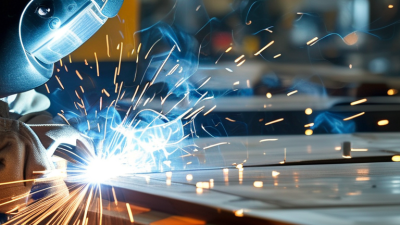
2026 How to Choose Stainless Steel Welding Suppliers?
Choosing a stainless steel welding supplier in 2026 requires more than comparing hourly prices. The right partner must prove technical control, material knowledge, and dependable delivery. A polished website is not enough.
Dr. John C. Lippold, a respected welding-metallurgy expert, has stated, “The performance of a weldment is determined by the interaction of materials, process, and design.” This principle should guide every supplier evaluation. Ask whether the company understands austenitic, ferritic, and duplex stainless steels. Request welding procedure specifications, welder qualifications, inspection records, and material certificates. Standards such as ISO 3834, ASME Section IX, and AWS D1.6 may provide useful evidence, depending on the project.
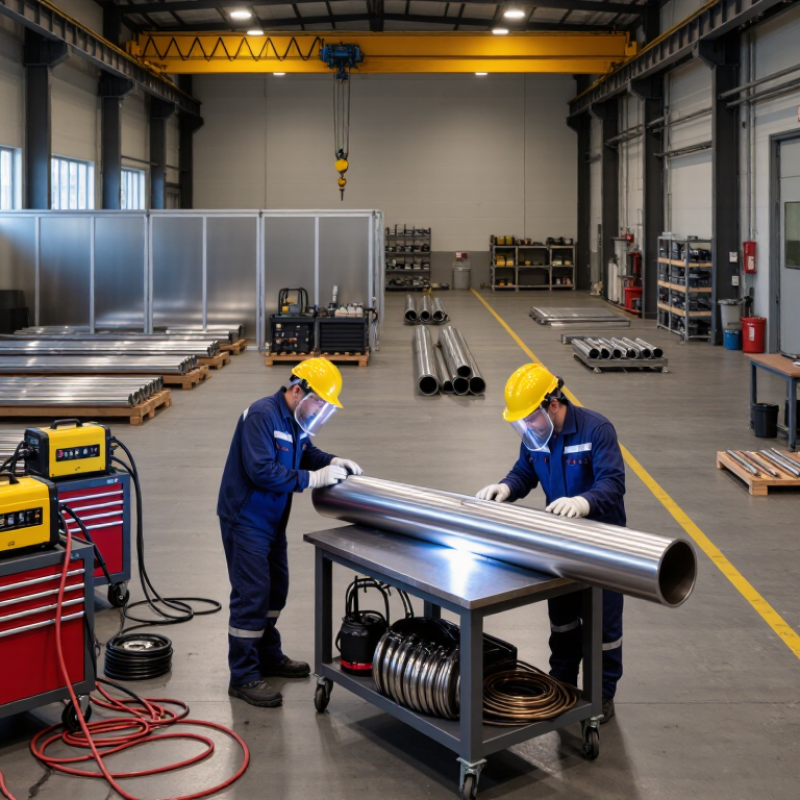
Look closely at the workshop. Are stainless and carbon steel fabrication areas separated? Are filler metals stored correctly? Can technicians show gas-purge practices for pipe interiors and clean tools for finished surfaces? Small details matter. A contaminated brush can leave iron particles, while excessive heat may cause distortion or corrosion problems.
Experience should be visible in samples, not only in claims. Ask for references from similar industries, production volumes, thicknesses, and delivery conditions. Confirm how the supplier manages nonconforming welds. Honest reporting builds trust.
Still, no checklist guarantees a perfect result. Specifications can be unclear, and real projects change. I would also question suppliers that promise everything immediately. A careful supplier may ask difficult questions before quoting. That hesitation can be valuable. Choose the team that documents its work, explains its limits, and treats every weld as part of a larger service life.
Define Your Stainless Steel Welding Requirements
Before comparing stainless steel welding suppliers, define the job in measurable terms. Specify the stainless grade, plate or tube thickness, joint design, weld position, and production volume. Include the required surface finish, dimensional tolerance, and corrosion environment. A food-processing frame needs different controls from an outdoor structural bracket.
World Stainless reported global crude stainless steel production of about 58.4 million tonnes in 2023. This scale shows the material’s importance, but it also hides major differences between applications. Grade selection matters. For example, 304 may suit many indoor uses, while 316 can perform better near chlorides. Your engineer should verify this choice, not assume it. Welding procedures should reference suitable requirements, such as ISO 3834 or AWS D1.6, when applicable. A clean bead is not automatically a durable weld.
Tips: Give suppliers a one-page requirement sheet. Add drawings, material certificates, weld size, inspection method, and acceptance criteria. State whether visual inspection, dye penetrant testing, radiography, or pressure testing is needed. Ask for procedure qualifications and welder qualifications before quoting. Also define packaging and delivery conditions; polished stainless steel can arrive scratched after excellent fabrication.
Real projects are rarely tidy. I have seen teams specify “high quality welding” without defining quality. That phrase creates disputes. Recheck your assumptions. Even a small change in thickness or finish may alter the process, filler metal, shielding gas, and final cost. Clear requirements make supplier comparisons fairer and expose weak proposals early.
Evaluate Supplier Certifications and Manufacturing Capabilities
When choosing stainless steel welding suppliers, certifications reveal how consistently a factory controls quality. Look for ISO 9001 and welding-specific certification, such as ISO 3834. Confirm that certificates are current, correctly scoped, and issued by recognized bodies. A certificate alone proves little. Ask for audit records, welder qualifications, and material traceability documents.
Manufacturing capability should match your product’s real demands. Check whether the supplier can manage TIG, MIG, laser, or orbital welding for stainless steel. Review their equipment list, weld procedure specifications, and inspection methods. In an experienced workshop, operators should control heat input, shielding gas, joint fit-up, and distortion. Request sample welds with macro sections, dimensional reports, and surface-finish measurements. Records matter. I have seen polished samples hide weak process controls, so factory visits remain valuable. This step may feel slow, but it exposes gaps that documents cannot show.
Tips: Ask how rejected welds are handled. A reliable supplier should explain root-cause analysis, rework approval, and corrective actions clearly. Check production capacity during peak periods, not only in ideal conditions. Also, discuss your drawings with the welding engineer, not only a sales contact. Some suppliers may lack perfect documentation while showing strong practical skills; that deserves careful review, not automatic approval.
Assess Quality Control, Lead Times, Pricing, and Technical Support
How to Choose Stainless Steel Welding Suppliers in 2026
A reliable supplier should show more than attractive certificates. Ask for weld procedure specifications, operator qualifications, inspection records, and material traceability. Experienced teams can explain how they control heat input, distortion, porosity, and surface contamination. Request sample reports from recent projects. Real evidence matters.
Lead time needs careful testing. Ask whether production schedules include material purchasing, fixture preparation, welding, inspection, and rework. A supplier promising ten days may exclude testing or transport. Confirm weekly updates and escalation contacts. Small delays can damage an entire installation schedule. I have seen polished timelines fail when one missing fitting stopped final assembly.
Pricing should be compared line by line. Check labor, consumables, testing, packaging, freight, and possible design changes. The lowest quote may use thinner margins for inspection. Technical support also deserves attention. Can engineers review drawings, suggest joint improvements, and answer urgent questions during production? Clear responses usually reveal practical competence. Still, no supplier performs perfectly. A trial order exposes weaknesses better than a confident sales call.
Tips: Visit the workshop if possible. Inspect storage areas, welding bays, and measurement tools. Ask how rejected welds are recorded and corrected. Confirm response times in writing. Keep a small contingency for rework. That detail is often overlooked.
Verify Supplier Reliability Through Samples, Audits, and References
2026 How to Choose Stainless Steel Welding Suppliers?
A reliable supplier must prove performance, not merely promise it. Request production samples made from the same stainless grade, thickness, and welding process as your project. Examine bead profile, penetration, distortion, and surface contamination. Ask for material certificates, heat numbers, weld procedure specifications, and inspection records. A polished coupon can look convincing. It may still hide poor root penetration.
Use independent testing where risk justifies the cost. Tensile, bend, hardness, ferrite, and corrosion tests can expose weaknesses that visual inspection misses. The ISO Survey 2022 recorded 1,265,216 valid ISO 9001 certificates worldwide. That figure shows broad adoption, but certification alone does not guarantee consistent welding quality. Review how the supplier controls traceability, welder qualifications, calibration, nonconforming work, and corrective actions.
Audit the workshop before signing a long-term contract. Watch one live weld, inspect storage conditions, and check whether stainless steel is separated from carbon steel. Contact at least three recent customers. Ask about delivery accuracy, repair rates, documentation, and communication during failures. References should be specific.
Do not ignore small warning signs.
A supplier may pass one sample and fail during volume production. Therefore, request a pilot batch with agreed acceptance criteria. My own evaluation can still be imperfect; an audit captures only one day. Repeat checks, updated samples, and honest supplier discussions create stronger evidence than a perfect presentation.