
Why Choose Stainless Cable for Your Project?
Stainless cable is often chosen for its strength, corrosion resistance, and clean appearance. Yet the right option depends on where and how it will be used. A cable beside a saltwater deck faces different conditions from one supporting an indoor railing. Small details matter. Exposure, contact with other metals, and regular maintenance can all affect long-term performance.
When comparing stainless cable, look beyond the material name. Check the alloy grade, cable construction, diameter, and stated working-load limits. These specifications help determine whether a product suits a railing, architectural feature, or other application. They are not interchangeable. A qualified supplier or engineer can help assess loads, fittings, and installation requirements, especially in safety-critical projects. Installation matters. Tight bends, poorly matched terminals, or neglected inspections may undermine a well-chosen cable.
This guide explores the practical reasons project teams consider stainless cable, along with the trade-offs worth weighing. Stainless steel can resist corrosion, but it is not immune to every environment or maintenance issue. That distinction is easy to overlook. I would avoid treating “stainless” as a guarantee of lasting performance; the grade and conditions still need attention. By reviewing durability, appearance, upkeep, and selection criteria, readers can make a more informed choice for their project.
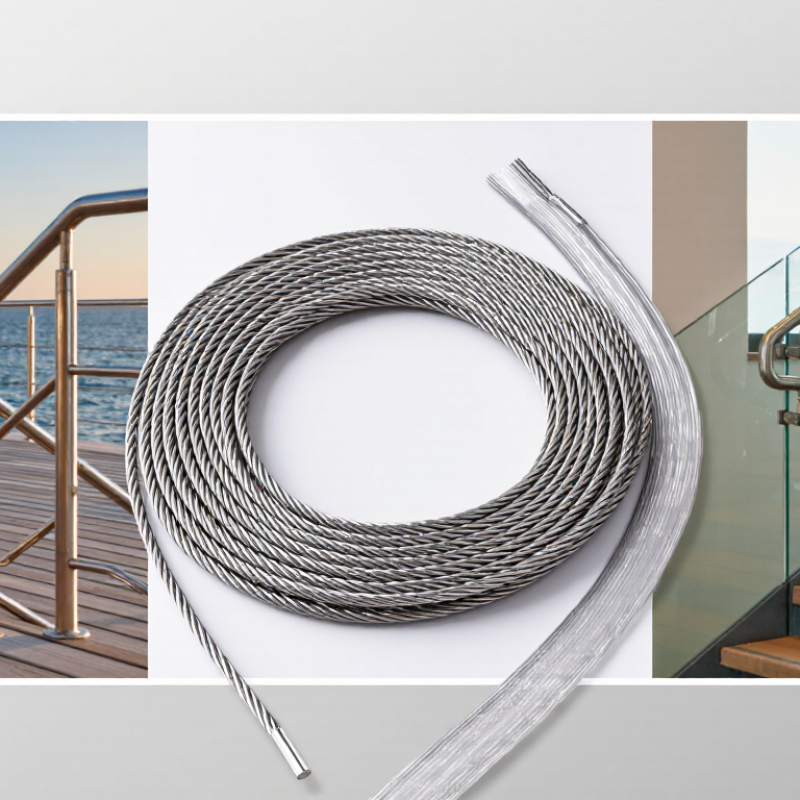
What Is Stainless Cable and How Is It Made?
Stainless cable is a flexible assembly made from many stainless steel wires. Individual wires are drawn through dies to reduce their diameter and improve surface smoothness. Several wires then twist together into strands. Those strands wrap around a central core, creating the finished cable. The structure looks simple, but every twist affects strength, flexibility, and fatigue resistance.
Manufacturing usually includes heat treatment, cleaning, stranding, and controlled closing. Heat treatment can relieve internal stress after drawing. Cleaning removes residue that could encourage surface contamination. During closing, machinery applies steady tension so the strands sit evenly. Quality checks may measure diameter, breaking strength, lay length, and corrosion resistance. Small production variations still happen, so reliable suppliers document test results and production tolerances.
The word stainless can be misleading. Stainless steel resists corrosion; it does not become completely immune to rust. Salt spray, trapped moisture, chemicals, and poor maintenance can damage the surface. Choosing a suitable steel grade matters, especially for marine or outdoor projects. Cable diameter, construction, end fittings, and working load should match the actual design. A cable that feels strong by hand may still fail under repeated bending. That detail is easy to underestimate. Regular inspection should look for broken wires, flattened strands, discoloration, and loose fittings.
Why Choose Stainless Cable for Your Project? — What Is Stainless Cable and How Is It Made?
| Topic | Typical Details | Why It Matters for a Project |
|---|---|---|
| What stainless cable is | A flexible assembly made by twisting individual stainless-steel wires into strands and then laying those strands around a core. It is also commonly called stainless wire rope. | The construction provides flexibility and tensile capacity for support, restraint, rigging, and architectural applications. |
| Common stainless grades | Type 304 is widely used for general-purpose indoor and outdoor applications. Type 316 contains molybdenum and is often selected for improved resistance to chlorides and marine exposure. | Choose the grade according to the environment. Neither grade is immune to corrosion, and exposure conditions, cleaning, and maintenance affect service life. |
| Common constructions | 7×7 cable typically has seven strands of seven wires each. 7×19 has seven strands of nineteen wires each and is generally more flexible than 7×7 of the same nominal diameter. | More flexible constructions can bend more easily around sheaves or fittings. The suitable construction depends on the load, bend radius, and application. |
| How it is made | Wire is drawn to size, stranded into helically arranged groups, and laid around a core to form the finished cable. The cable may then be cut, inspected, and supplied with compatible end fittings. | Consistent wire quality, strand geometry, and termination work all contribute to dependable performance. |
| Corrosion resistance | Stainless steel forms a passive chromium-rich surface film that helps resist corrosion. Grade 316 is often preferred over 304 in chloride-rich environments. | Rinsing away salt and contaminants and avoiding incompatible contact materials can help reduce staining and localized corrosion. |
| Strength and load rating | Breaking strength and working load depend on the cable diameter, grade, construction, condition, and end termination. A working load limit is lower than breaking strength and must be established for the specific product and application. | Use verified product specifications and an appropriate safety factor. Do not estimate load capacity from diameter alone. |
| Common applications | Examples include guardrail infill, balustrades, architectural supports, marine hardware, lifting assemblies, and general restraint systems. | Confirm that the cable, fittings, installation method, and inspection plan are suitable for the intended use and applicable codes. |
| Selection checklist | Confirm the stainless grade, nominal diameter, construction, required flexibility, operating environment, termination type, and documented load rating. | Matching all components to the project conditions helps avoid premature wear, corrosion, or an unsuitable load capacity. |
Specifications vary by product and manufacturer. Confirm material grade, dimensions, load ratings, and installation requirements against the applicable product documentation and project standards.
Related Posts
-
What Are the 2026 Top Stainless Steel Cable Suppliers?
-
The Versatility of Stainless Steel Cable: Applications, Benefits, and Innovations
-
How to Choose the Right Steel Wire Rope for Your Project?
-
7 Best Steel Rope Manufacturers for Global Buyers?
-
What Is Stainless Steel Wire Used For?
-
Top Stainless Steel Wire Types for Global Buyers?